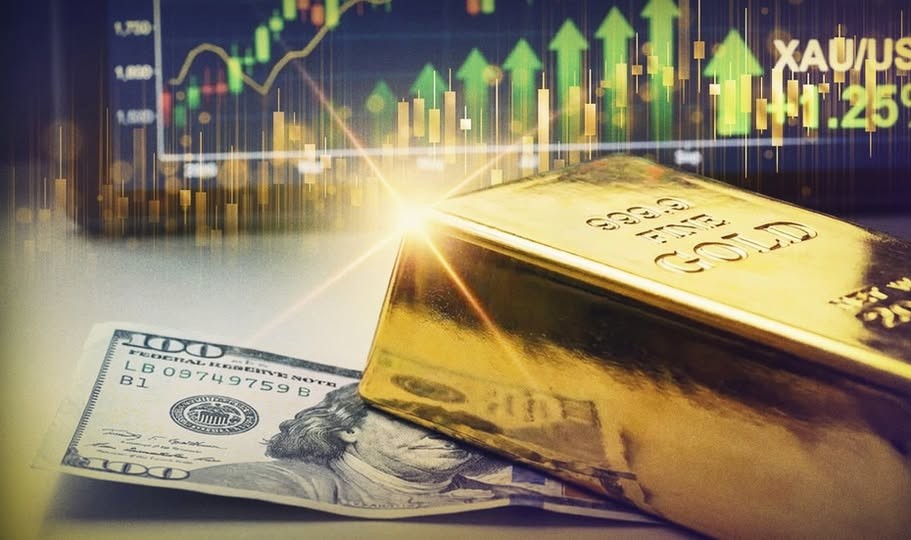
Outflows from Dollar Assets Make Gold a Major Refuge
Gold remained comfortably above the psychological $5,000 level for the second day. The boost came from a classic combination: geopolitical uncertainty, policy concerns, and investors shifting away from bonds and sovereign currencies.
The weakening dollar also fueled gold's rise to a new record high of $5,151 a troy ounce in trading on Tuesday (January 27th). When the greenback weakens, the precious metal feels cheaper to global buyers—and that typically fuels stronger demand for gold.
Behind the scenes, the market is once again abuzz with talk of a "debasement trade": a pattern where market participants reduce exposure to currency/bond-based assets and shift to real assets like gold. The selloff in the bond market (including Japan) has reinforced the narrative that investors are becoming increasingly sensitive to fiscal burdens and policy risks.
The situation is heating up as Trump's tariff agenda has again triggered a defensive wave. After the tough signals regarding Canada, there are renewed threats of tariff increases for South Korea—making the uncertainty premium even more deeply embedded in safe-haven prices.
On the other hand, market participants are also holding back ahead of the Fed's decision. Although expectations are that interest rates will remain on hold, close attention is focused on Powell's tone and the issue of central bank independence—as changes in interest rate/liquidity expectations typically quickly spill over into gold.
Silver is also moving more wildly than gold. Besides its safe-haven factor, silver is often swept up in speculative flows because its market is thinner, so when demand rises, its movements can be more explosive and volatile.
Source: Newsmaker.id