Collins: Fed Statement Too Pro-Cut
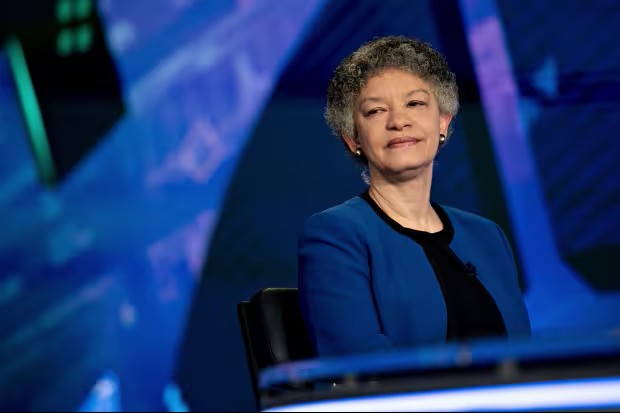
Federal Reserve Bank of Boston President Susan Collins said she supported the decision to hold interest rates at the April 29 meeting, but disagreed with the wording of the post-meeting statement, which she considered too presumptively presuming that the next step would be a rate cut. In an interview with Bloomberg News, Collins said she preferred more “agnostic” language regarding the next policy direction.
Dallas Fed President Lorie Logan, Cleveland Fed President Beth Hammack, and Minneapolis Fed President Neel Kashkari also voiced objections to the statement's wording. All three supported the decision to hold rates but argued that the statement contained an “easing bias” that could signal premature easing. Hammack called the wording “a little misleading” regarding her views on economic conditions.
Although Collins is not a voter this year on the FOMC, her comments highlight internal dynamics that are leading to a weakening of the discussion of a rate cut in the near future. Several officials, including Collins, want the Fed to be more explicit in conveying that the next step could be either a rate cut or a rate hike, depending on the evolution of inflation data and economic activity.
Collins believes interest rates will likely need to remain at their current levels for longer, with further easing “further down the road,” as energy shocks related to the Middle East conflict could delay achieving the 2% inflation target. However, he also allows for a rate hike to be “strongly considered” in certain scenarios, though not his baseline scenario.
Collins’ primary focus remains persistent inflation risks. He highlights the Fed’s increase in its preferred inflation measure to 3.5% in March, when gasoline prices are said to have surged to their highest level since 2022. Collins also cautions against supply chain disruptions that could cause price pressures to spread from energy to food as a global spillover effect of the war.
In his “modal scenario,” Collins estimates inflation could rise in the coming months to just above 3.5%, before tapering off to near 3% by year-end. He adds that the increased duration of the war and the chance of “more severe repercussions” increase the likelihood of alternative scenarios, while new tariffs—if some of the levies blocked by the Supreme Court are reinstated—could add to upward pressure.
Regarding the employment mandate, Collins described the job market as being in an "unusual balance": low unemployment but also low hiring. He believes demand remains resilient amid strong consumer spending, although the April employment report, scheduled for release Friday, is expected to show a slowdown in payroll growth, with the unemployment rate projected to remain at 4.3%, according to economists' consensus.
For the market, a shift in the Fed's statement language toward a more neutral stance typically means the reopening of "policy options," which could maintain uncertainty about interest rate expectations. This could potentially maintain volatility in bond rates and heighten the sensitivity of risk assets to inflation and employment data releases, especially when the primary narrative shifts from "when will tapering begin" to "whether a longer hold or even a further hike should be considered."
Variables to monitor next include the release of the April jobs report, developments in core inflation and energy components, indications of supply chain disruptions, and the consistency of FOMC officials' messaging regarding whether policy will remain "mildly restrictive" for longer or begin opening up the door to a tightening scenario if the inflation trajectory moves against expectations.
Source: Newsmaker.id