

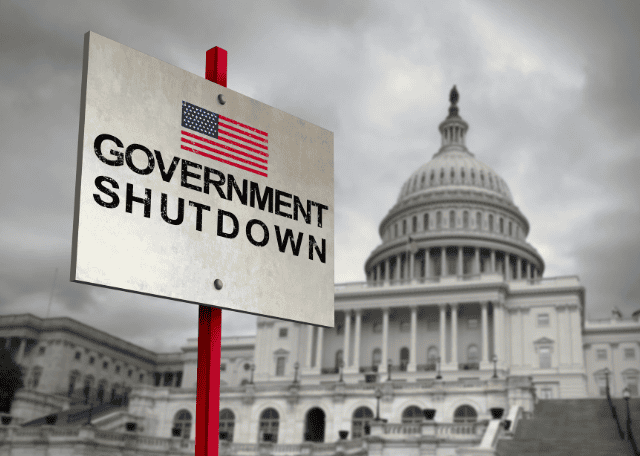
The Shutdown Hasn't Ended, the Fed Struggles to Read the Economy's Direction!
The United States government crisis is deepening after the government shutdown entered its third week without any concrete signs of resolution. As of Monday local time, Congress had failed to reach an agreement on a funding package, sparking renewed concerns about the economic impact and fiscal instability later in the year.
The Senate again rejected two bills that sought to pay federal workers during the shutdown. This leaves more than 2 million government employees at risk of missing their full paychecks this week. "We can't continue to allow people to be victims of political tug-of-war," said Senator Chris Murphy (Democrat–Connecticut), as quoted by CBS News.
Economic Impacts Beginning to Be Felt
According to a Reuters report, this shutdown has the potential to cut fourth-quarter economic growth, with a domino effect on household consumption and business confidence. Analysts from JPMorgan estimate that GDP output could fall by 0.3–0.5% if the impasse continues for more than a month.
Furthermore, delays in the release of official economic data make it increasingly difficult for the Federal Reserve to assess the direction of inflation and employment. "The absence of reliable data will cloud the Fed's view of the real state of the economy," wrote JPMorgan Global Research in its report.
Political Tensions Mount
President Donald Trump reportedly rejected a partial compromise proposed by Democrats and instead tightened his negotiating position by demanding significant cuts to certain social programs. Meanwhile, Treasury Secretary Alex Bessent called "Democrats negotiating like fiscal terrorists" in an interview with the New York Post, signaling a deepening political divide.
However, public pressure is mounting. A recent survey showed nearly two-thirds of Americans oppose a prolonged shutdown and urged both parties to reach a bipartisan agreement soon.
Hope for an End to the Shutdown
Several members of Congress from both sides reported that cross-party talks have intensified since last weekend. Senator Lindsey Graham called the situation "slowly improving," adding that a compromise could be reached "in the next few days" if both sides are willing to relax budgetary terms.
Newsweek reported at least three scenarios for the end of the shutdown: (1) a full compromise between Democrats and Republicans; (2) temporary funding (a Continuing Resolution) until the end of November; or (3) public pressure forcing the government to unilaterally reopen services for vital sectors such as the military and air transportation.
Market Outlook and Global Reaction
The protracted shutdown has increased volatility in global financial markets. Investors have begun to shift to safe-haven assets such as gold and bonds, while the US dollar index has experienced moderate pressure. However, analysts warn that if the fiscal impasse continues, international confidence in US fiscal stability could be eroded.
"Markets are starting to lose patience," Goldman Sachs economist Sarah Lin told The Guardian. "A prolonged shutdown not only weakens domestic growth, but also erodes the credibility of American fiscal policy in the eyes of the world."
Conclusion:
With more workers losing income and government programs delayed, political pressure on Congress to quickly agree on funding is growing. However, without a significant change in the negotiating positions of both parties, this impasse could become the longest in US history.
Source: Newsmaker.id








