The Fed Could Turn Hawkish, Oil Keeps Rising—Why Is Gold Refusing to Fall?
Gold remains resilient despite growing expectations that the Federal Reserve will keep interest rates unchanged and maintain a hawkish policy stance. The precious metal has experienced several corrections, but buyers continue to return whenever prices decline. This shows that the gold market is currently being pulled between the negative influence of higher interest rates and the positive influence of geopolitical uncertainty.
Normally, high interest rates and rising U.S. Treasury yields are negative for gold. Gold does not provide interest or regular income, so investors may prefer government bonds when yields increase. A hawkish Federal Reserve can also strengthen the U.S. dollar, making dollar-denominated gold more expensive for buyers using other currencies.
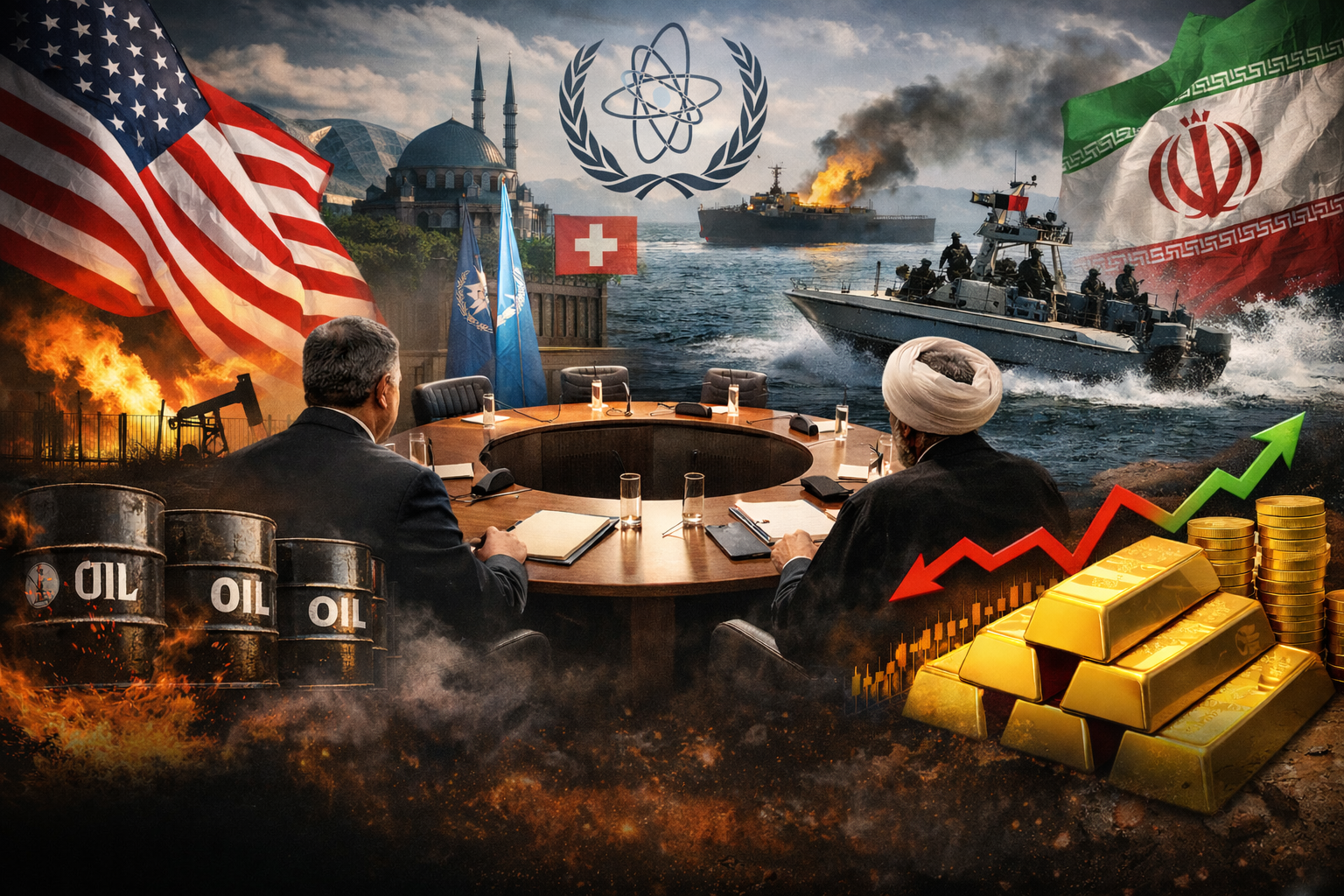
However, gold is currently receiving strong support from the escalating conflict between the United States and Iran. The war has increased concerns about energy supplies, global economic stability, inflation, and financial-market volatility. Under these conditions, investors often increase their exposure to gold as a safe-haven asset.
This explains why gold is finding it difficult to decline sharply. Selling pressure caused by higher yields and hawkish Federal Reserve expectations continues to be offset by demand for protection against geopolitical and economic risks.
Gold is therefore facing two opposing forces. On one side, rising oil prices may increase inflation and encourage the Federal Reserve to keep monetary policy restrictive. This is generally negative for gold. On the other side, the same conflict driving oil prices higher is also increasing uncertainty and safe-haven demand, which supports gold.
Why Is Gold Not Falling Despite Expectations of Unchanged Interest Rates?
The key point is that keeping interest rates unchanged does not automatically mean the Federal Reserve has become dovish.
There is a major difference between a dovish hold and a hawkish hold. In a dovish hold, the Federal Reserve keeps rates unchanged while indicating that cuts may be considered soon. In a hawkish hold, rates remain unchanged, but policymakers warn that inflation is still too high and further tightening may be necessary.
The market is currently leaning toward the second scenario. The Federal Reserve may keep interest rates unchanged at its upcoming meeting while emphasizing that inflation remains above target, energy costs are rising, and rate cuts are not yet appropriate.
A hawkish statement could temporarily pressure gold by pushing Treasury yields and the U.S. dollar higher. However, the reaction may remain limited as long as geopolitical risks continue to support safe-haven demand.
This creates an unusual market situation. The war is simultaneously creating a negative and positive influence on gold.
The first channel works through inflation:
War → oil prices rise → inflation risks increase → the Federal Reserve becomes more hawkish → pressure on gold.
The second channel works through safe-haven demand:
War → geopolitical and economic risks increase → investors seek protection → demand for gold rises.
Because both channels are operating at the same time, gold may remain highly volatile without experiencing a deep and sustained decline.
Is the Federal Reserve Likely to Be Hawkish?
The Federal Reserve is increasingly likely to maintain a hawkish tone, even if it does not immediately raise interest rates.
Policymakers remain concerned that inflation is still above the central bank’s target. Higher oil prices could also spread through the economy by increasing gasoline, transportation, production, and distribution costs.
If these higher costs are passed on to consumers, inflation may become more persistent. The Federal Reserve could then keep interest rates elevated for longer or leave the possibility of another rate increase open.
A hawkish Federal Reserve message may include several key points: inflation remains too high, energy prices present an additional risk, rate cuts are not currently being considered, and further tightening may be required if inflation accelerates again.
Therefore, the most likely scenario is not necessarily an immediate interest-rate increase. It is more likely to be an unchanged rate decision accompanied by a warning that monetary policy may need to remain restrictive.
For gold, the tone of the Federal Reserve’s statement may be more important than the interest-rate decision itself. If policymakers sound more aggressive than expected, gold could face short-term selling pressure. If they acknowledge growth risks and avoid signaling further rate increases, gold may remain supported.
Why Are Oil Prices Continuing to Rise?
Oil prices remain supported by the ongoing conflict between the United States and Iran because the war is creating both actual and potential supply disruptions.
The market is particularly concerned about the security of major oil-producing facilities and strategic shipping routes in the Middle East. Any disruption to production, exports, tanker operations, pipelines, ports, or maritime transportation could reduce the amount of oil available to the global market.
The Strait of Hormuz remains one of the most important areas to watch because a significant portion of global oil shipments passes through the route. Even if the strait is not completely closed, attacks, military activity, higher insurance costs, and shipping delays can increase the cost of transporting oil.
Oil prices are also receiving support because the conflict has expanded beyond market speculation. Attacks on tankers and infrastructure mean that supply risks are becoming more tangible.
As long as shipping through the Strait of Hormuz remains disrupted, attacks on tankers continue, insurance and freight costs rise, and production from Gulf countries is threatened, oil prices may remain elevated.
However, oil will not rise indefinitely. Prices could decline if the United States and Iran move toward a ceasefire, shipping routes return to normal, strategic petroleum reserves are released, global demand weakens, or producers increase supply.
What Does This Mean for Gold and Oil?
The short-term outlook for gold remains positive but vulnerable to pressure from Treasury yields and the U.S. dollar. Gold may continue to attract buyers as long as the conflict persists and investors remain concerned about economic and geopolitical risks.
A deeper gold correction would probably require several conditions to occur at the same time: tensions between the United States and Iran must ease, oil prices must decline, the U.S. dollar must strengthen, Treasury yields must rise, and the Federal Reserve must deliver a more aggressive policy signal.
Oil, meanwhile, continues to have a bullish short-term bias because the conflict is threatening both production and transportation. The greatest downside risk for oil would be a credible ceasefire or a clear normalization of shipping through major Middle Eastern routes.
Overall, gold is finding it difficult to fall because safe-haven demand continues to offset the negative impact of high interest rates. At the same time, oil remains strong because the U.S.–Iran conflict has moved beyond political uncertainty and is now creating genuine risks to global energy supplies.
The current market can be summarized as follows:
Gold remains resilient because geopolitical risks continue to support safe-haven demand, even as rising oil prices increase inflation concerns and encourage a more hawkish Federal Reserve. Oil, meanwhile, remains elevated because the conflict is threatening global supply and critical energy-shipping routes.
Source : Newsmaker.id