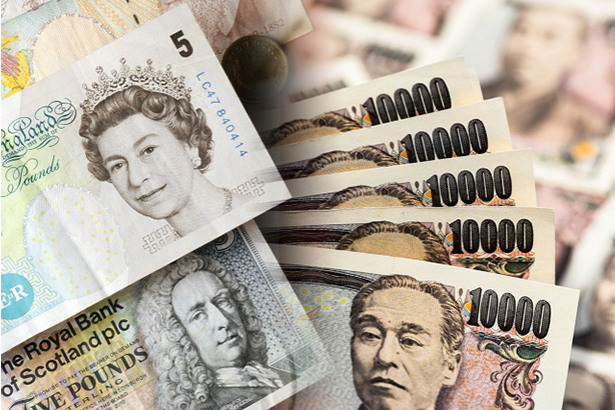
Yen and British Pound Drop Most Against US Dollar
The yen fell the most among its peers in the Group of 10, putting it on path for the longest losing streak since June, on speculation the Bank of Japan to hold interest-rates unchanged next week. The British pound was the second-worst performer as domestic economy shrank for a second straight month in October.
The Bloomberg Dollar Spot Index was little changed and is up 0.8% for the full week.
The Federal Reserve will cut interest rates by quarter-percentage point next week and “likely” pause in January, wrote JPMorgan’s Michael Feroli.
“The market is still underpricing Fed easing in 2025 and probably early 2026,” analysts at Wells Fargo said. “We are on board with the idea that the Fed will signal a slower pace of easing, but the market seems ahead of the Fed”.
USD/JPY headed for its best week in more than two months after Reuters reported that the BOJ is leaning toward skipping a rate hike in December.
Pair rises 0.7% to 153.76, highest since Nov. 26; confidence among Japan’s large firms edged up in December, according to the BOJ’s quarterly Tankan report Friday.
GBP/USD dropped 0.4% to 1.2623, lowest since Dec. 2; Britain’s economy contracted for a second straight month in October as consumers braced for a painful budget, while economists had expected a 0.1% gain.
The pair is down 0.9% this week.
The Bank of England will likely stick to the script at its final meeting of the year, keeping rates steady and signaling that it intends to ease gradually through 2025, according to Bloomberg Economics.
EUR/USD rose 0.3% to 1.0496; it’s down a second week.
Governing Council member Francois Villeroy de Galhau said the ECB will lower borrowing costs further in 2025 and investors’ bets on more than 100 basis points of easing look reasonable, adding that the central bank is still significantly above the neutral level at which rates are neither restrictive nor accommodative.
Governing Council member Martins Kazaks said the size of interest-rate reductions could be increased should economic developments warrant it.
The Australian and New Zealand dollars fell as investors weighed the outcome of a two-day conference in Beijing to boost public borrowing and spending next year. While the tone of the meeting appeared supportive for growth, a lack of concrete details on policies is denting demand for China-sensitive assets like the Aussie.
AUD/USD edged down 0.2% to 0.6357; NZD/USD slips 0.2% to 0.5757.
Source : Bloomberg