

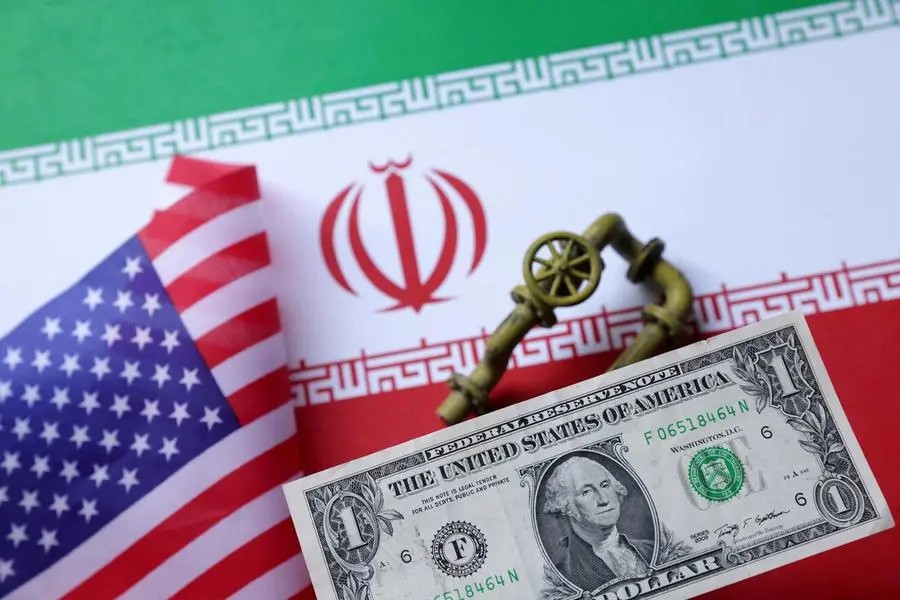
Dollar Rally Stalls, Middle East Ceases Panic
The US dollar weakened slightly on Monday (June 8), as improving risk sentiment outweighed demand for safe havens after Iran and Israel both signaled they would hold off on attacks. The dollar index (DXY) edged down around 0.1% and held near the 100.00 level in afternoon US trading, following a strong rally last week.
This weakening occurred despite the DXY just posting its best weekly gain since mid-March. Last week's surge was triggered by a repricing of interest rates after a much stronger-than-expected US Nonfarm Payrolls report, which led the market to re-up the odds of a Fed rate hike, putting pressure on bonds, while simultaneously boosting the dollar.
The market now shifts its focus to US inflation data, the main agenda item this week. The CPI is scheduled for release on Wednesday, followed by the PPI on Thursday. This data will be a "real test" of how much the recent surge in oil has begun to filter through to prices at the consumer and producer levels, and whether the Fed has reason to become more hawkish.
Geopolitically, the escalation peaked over the weekend after Iran and Israel exchanged attacks for the first time since a fragile ceasefire came into effect in April. The spat was reportedly triggered by an Israeli attack on Beirut, before Iran retaliated, and Israel responded with attacks on Iranian targets. Trump then called for a ceasefire on both sides and pushed for an immediate ceasefire.
Sentiment improved after Iranian media reported that military operations against Israel had been halted, while Israeli Prime Minister Benjamin Netanyahu said Israel had halted attacks on Iran "for now," but still threatened to retaliate strongly if attacked again. The market interpreted this as a "temporary de-escalation," enough to ease the safe-haven pressure on the dollar, although the risks remain.
Among other major currencies, the yen strengthened slightly but remained above 160, a level sensitive to rumors of Japanese intervention. Japanese data showed that GDP in Q1 2026 rose 1.8% (annualized)—weaker than previous estimates, but above consensus. The euro edged up to around $1.1530, while the pound remained relatively flat at $1.3340. (arl)
Source: Newsmaker.id








