Trump Threatens Iran, Oil Prices Soar
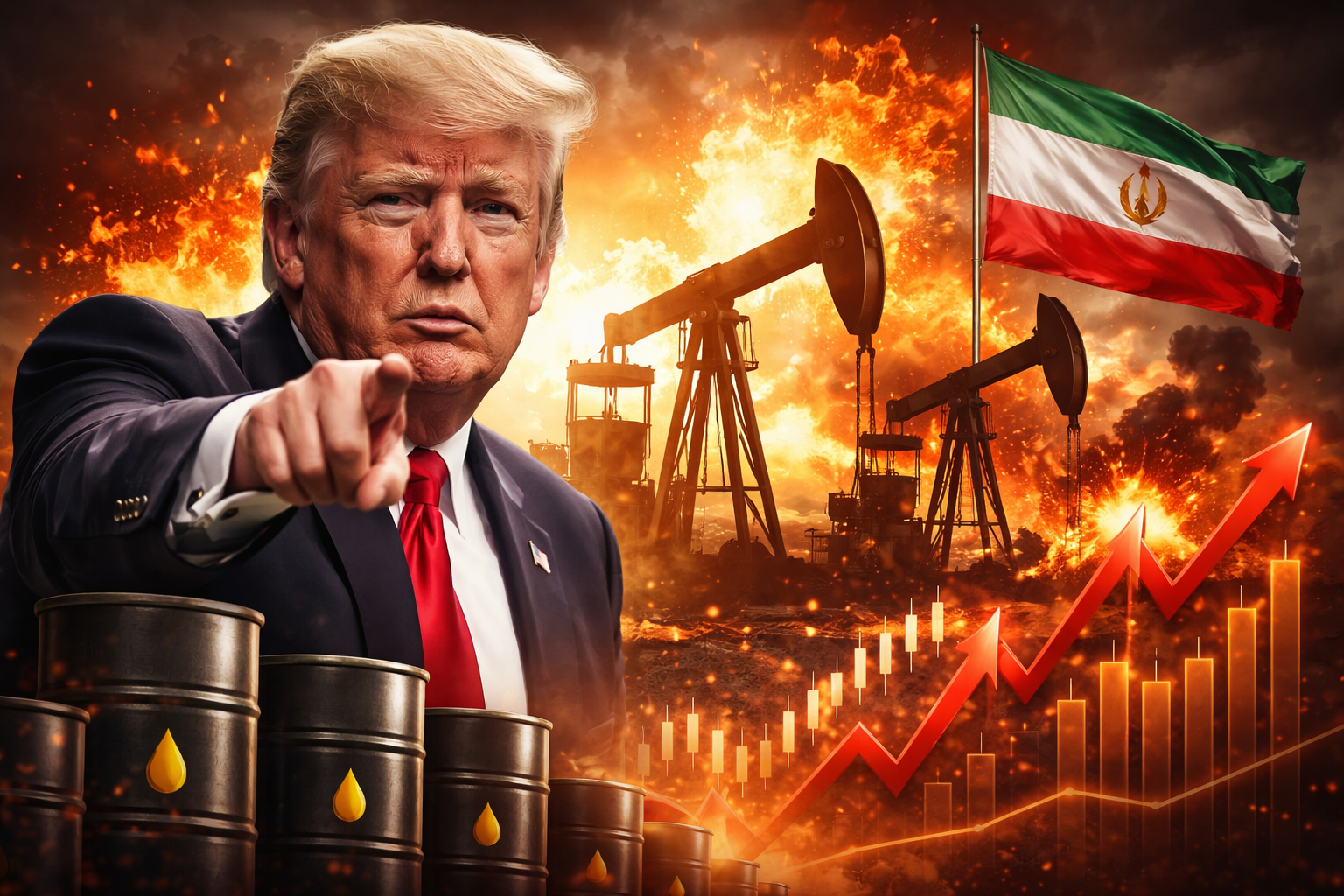
Oil prices rebounded on Wednesday (January 28th), hitting a four-month high, fueled by rising risk premiums after US President Donald Trump issued a stern warning to Iran. Trump urged Tehran to immediately open negotiations for a nuclear deal, while hinting at the potential for further attacks.
In a post on Truth Social, Trump wrote that he hoped Iran would soon "sit down at the negotiating table" to reach a "fair and equitable" agreement. He also asserted that the next attack would be "far worse" than last year's.
The threat to potential Iranian supply has added to the risk premium in oil prices. Consequently, futures have started the year solidly—up more than 10% this month—despite the ongoing narrative of a potential oversupply. In the derivatives market, this also keeps the cost of options betting on price increases (bullish) relatively expensive compared to bearish options.
The WTI contract closed above $63 per barrel after Trump's post, its highest level since late September, and extends the 2.9% gain of the previous session.
However, after briefly reaching an intraday peak, oil prices eased slightly. One trigger was a statement by Iran's mission to the UN via Platform X: Iran stated its readiness for dialogue based on mutual respect and shared interests, but also emphasized that it would defend itself and respond "like never before" to any US aggression.
Currency-wise, the US dollar strengthened again after Treasury Secretary Scott Bessent confirmed that the "strong dollar" policy would remain in effect under Trump, while also denying rumors of foreign exchange intervention—particularly regarding the alleged selling of dollars against the yen. A stronger dollar typically makes dollar-denominated commodities, including oil, relatively less attractive to non-US buyers.
Trump also made other comments regarding the deployment of a US fleet of ships to the Middle East, which he said was larger than the one previously sent to Venezuela (which he said underwent a change of leadership by US forces earlier this year).
These signals sparked a regional response. The foreign ministers of Iran and Qatar emphasized the importance of diplomacy to defuse tensions. Meanwhile, Saudi Arabia's crown prince stated that his territory would not be used for operations against Tehran.
Standard Chartered assesses that oil market sentiment is shifting more positively as the dominant oversupply narrative in the second half of 2025 begins to weaken. They expect volatility to increase, with market attention refocusing on the balance of supply and demand risks.
Market indicators are also evident in the price structure: the spread between the two nearest contracts on both benchmarks is widening in a bullish backwardation pattern, suggesting tighter supply. For Brent, this indicator briefly broke above $1 on Wednesday.
On the physical data front, a government report showed that US crude oil stocks fell by 2.3 million barrels last week—more than expected. However, this was offset by a rise in refined product stocks: gasoline rose to its highest level since 2020.
At the latest close: March WTI rose 1.3% to $63.21 per barrel in New York, while March Brent rose 1.2% to $68.40 per barrel.
Source: Newsmaker.id