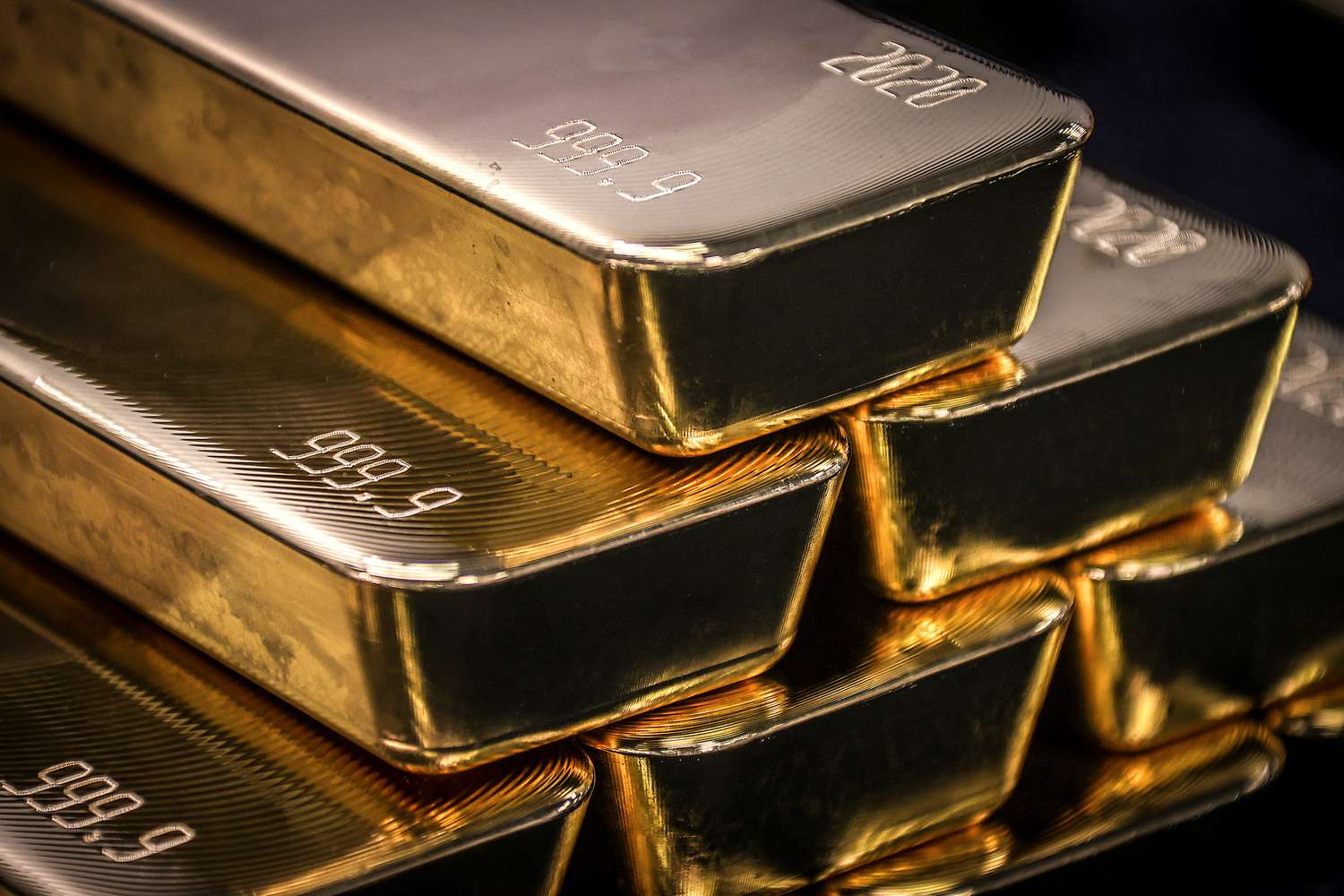
Gold Holds Near Record High as Trump Tariff Promise
Gold held steady near a record high after President Donald Trump’s order for reciprocal tariffs on several countries raised uncertainty about global trade and the economy.
Bullion traded around $2,930 an ounce, putting it on track for a seventh weekly gain — the longest streak since August 2020. Trump on Thursday signed an act directing the U.S. Trade Representative and Commerce secretary to propose new levies on a country-by-country basis, a process that could take a long time to complete.
The reciprocal tariffs would be Trump’s broadest action to address the U.S. trade deficit, but his decision not to immediately implement them could be seen as an opening offer for negotiations rather than a sign that he is committed to following through. The president has already imposed 10% levies on Chinese goods and plans to impose 25% duties on all U.S. steel and aluminum imports next month.
Gold hit a record $2,942.68 an ounce on Tuesday, with Trump’s disruptive moves on trade and geopolitics underscoring bullion’s role as a store of value in uncertain times. Investors are trying to get a sense of the potential implications for the U.S. economy and monetary policy if the White House’s policies set inflation and dampen growth.
Banks have called for gold to reach $3,000 an ounce amid continued demand for haven assets, with Citigroup Inc. saying last week it expects prices to reach that level within three months. Central banks, including China’s, have added to holdings, while bullion-backed exchange-traded funds have surged — also supporting bullion’s 12% gain so far this year.
Spot gold rose 0.1% to $2,930.93 an ounce as of 8:04 a.m. in Singapore, for a weekly gain of 2.4%. The Bloomberg Dollar Spot Index was flat, after dropping 0.7% in the previous session. Silver, platinum and palladium were steady.
Elsewhere, investors shrugged off hot inflation data amid signs that the Federal Reserve’s preferred price gauge will be softer than expected. The producer price index rose more than expected in January, but some of its components that feed into the Fed’s preferred inflation measure — the personal consumption expenditures price index — were more favorable last month. Traders will dissect the next PCE report on Feb. 28 for further clues on the central bank’s easing path. Lower borrowing costs typically benefit gold, since it doesn’t pay interest.
Source: Bloomberg