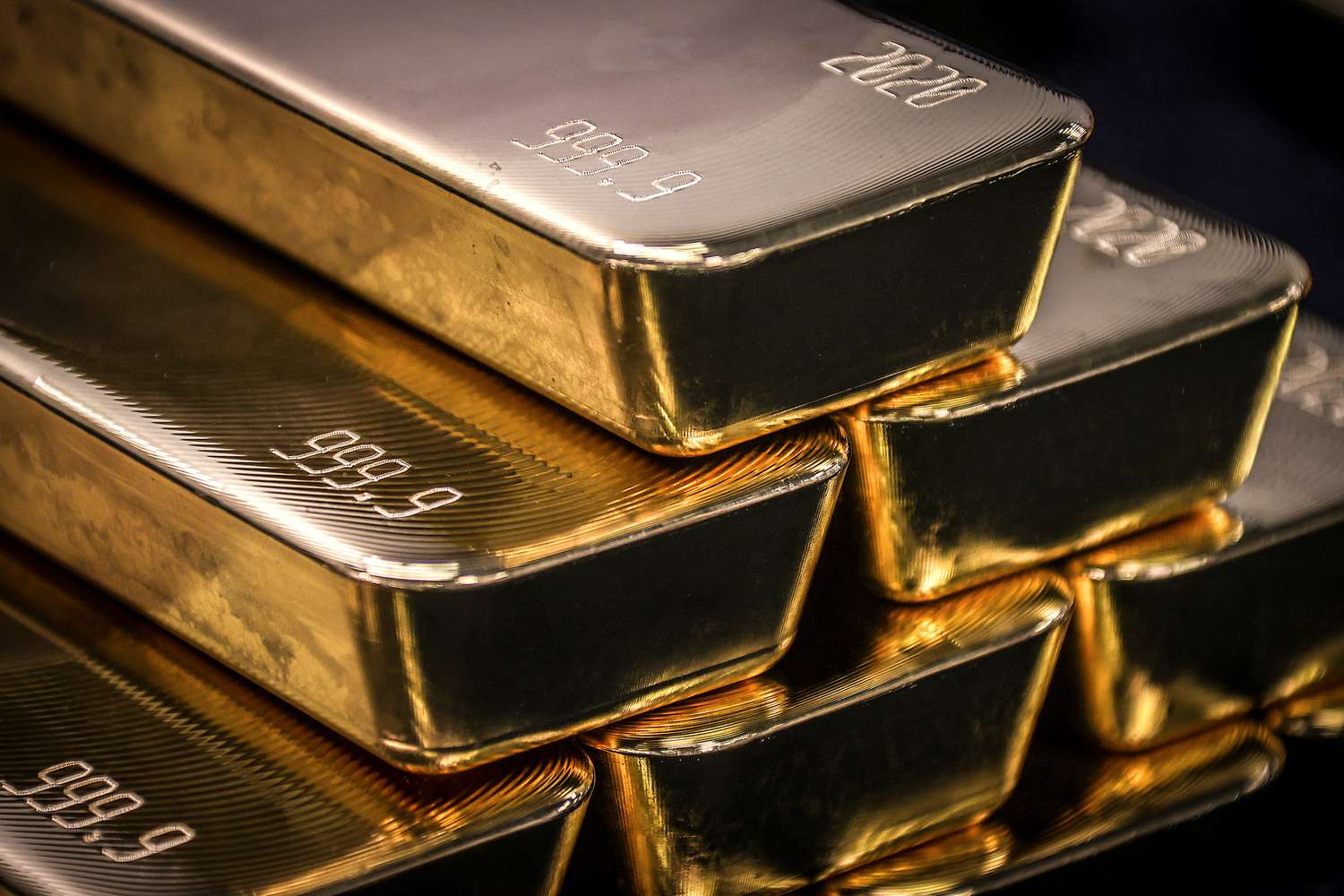
Gold Down as Dollar Strength Outweighs Safe-haven Demand
Gold fell slightly after President Donald Trump imposed tariffs on imports from Canada, Mexico and China, with the surging dollar outweighing safe-haven demand as the world braces for a trade war.
Bullion traded near $2,790 an ounce, but remained close to a record high hit on Friday, while the U.S. currency gauge rose as much as 1%. The inflationary impact of tariffs between the world’s largest economies could keep borrowing costs high, a drag on non-interest-bearing bullion, while a stronger dollar makes it more expensive for many buyers.
The U.S. announced tariffs of 25% on goods from Canada and Mexico, and 10% on goods from China, which will take effect on Tuesday. Canadian energy imports will face a 10% levy. Ottawa unveiled 25% tariffs on U.S. goods, Mexico vowed retaliatory action and Beijing issued a statement vowing to “take appropriate countermeasures.” Trump also threatened tariffs on the European Union, which said it would respond forcefully.
A global trade war would be a major drag on growth, would force a reorganization of global supply chains, and threaten to destabilize financial markets around the world. While gold would typically benefit from safe-haven demand in such a scenario, the dollar’s moves and the outlook for interest rates offset those pressures. Some of the impact may already be priced in, with the precious metal up 6% so far this year, hitting a record high on Friday, following a 27% rally in 2024.
The Federal Reserve has “a sort of ‘watch and see’ mantra, and so I wouldn’t trade gold on a potential Fed reaction,” said Chris Weston, head of research at Pepperstone Group Ltd. “Gold is more of a play right now against worsening trade policy and higher frictions coming.” Spot gold fell 0.2% to $2,794.30 an ounce as of 8:03 a.m. in Singapore, after rising 1% last week. The Bloomberg Dollar Spot Index rose 0.9%, after rising 1% last week. Silver, platinum and palladium all fell.
Source: Bloomberg