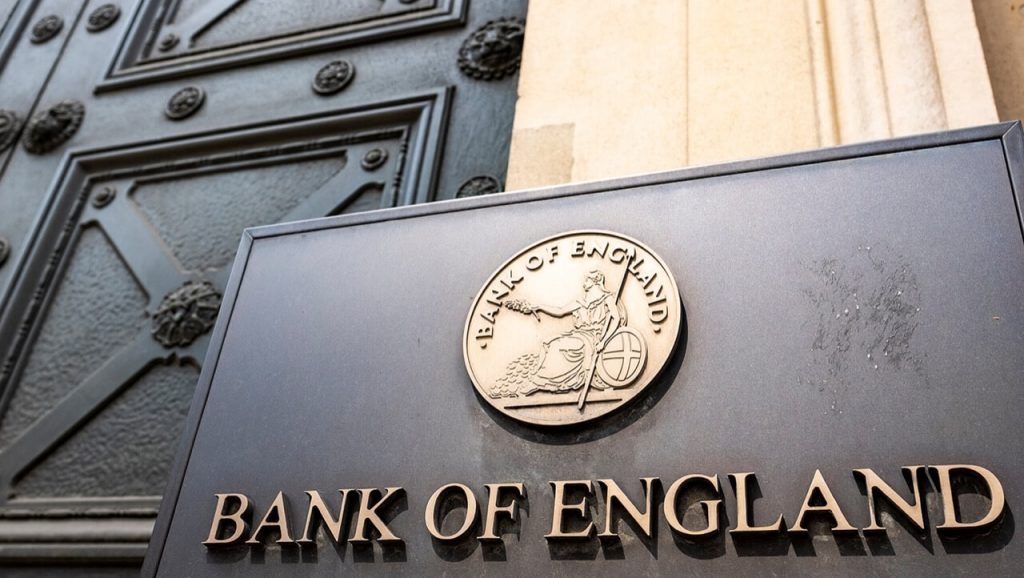
Bank of England Holds Interest Rate at 3.75% as Energy Risks Drive Inflation
The Bank of England (BoE) held its benchmark interest rate (Bank Rate) at 3.75% on Thursday, in line with market expectations, amid uncertainty over the impact of the Iran war on global energy prices and the UK inflation outlook.
The decision was made by an 8-1 vote at the Monetary Policy Committee, with BoE Chief Economist Huw Pill the only member voting for a 25 bps increase, reflecting concerns about resurgent price pressures.
Following the decision, the pound strengthened around 0.4% against the dollar to US$1.3473, while the yield on 10-year gilts fell 6 bps to 5.014%, indicating that the market does not believe the central bank is in any immediate position to tighten policy.
The BoE believes the Middle East conflict has the potential to drive up energy and fuel costs, but emphasized that monetary policy cannot directly influence energy prices; the central bank's focus is on ensuring economic adjustments remain consistent with its 2% inflation target on a sustained basis.
The latest inflation data cited by the Bank of England (BoE) shows the CPI rose to 3.3% in March from 3% previously, and the central bank expects inflation to be “likely higher” in the second half of this year as energy increases spill over into prices, with attention paid to the risk of second-round effects through wages and pricing.
The BoE also outlined several scenarios: in the mildest scenario, inflation could rise to 3.5% later this year before declining. While the worst-case scenario suggests inflation could peak at 6.2% in early 2027 and remain above target until 2029, with implications for potentially more aggressive interest rate increases but increasing the risk of weaker growth. The market will now monitor the path of energy prices, wage dynamics, labor market easing, and movements in financial conditions. (gn)*
Source: Newsmaker.id