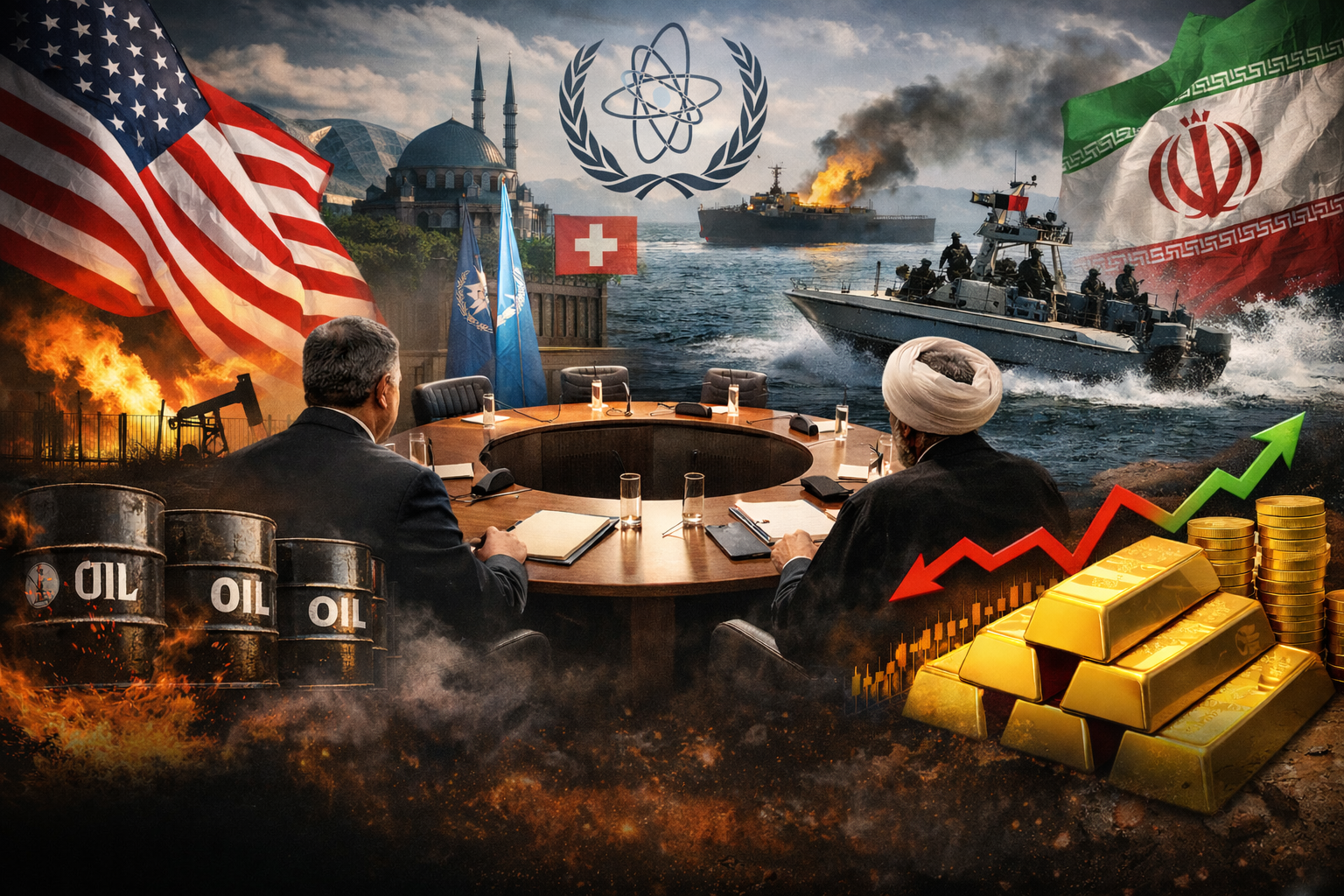
Washington Talks: Lebanon Remains a Dangerous Point, Here's What Will Happen!
The Israel-Lebanon talks in Washington on Tuesday have become a new focus, potentially determining whether border tensions can be de-escalated while regional stability remains fragile. For the market, this forum is being read as a barometer of whether the risk of regional escalation is shifting from a widespread to a more manageable scenario.
The significance goes beyond bilateral relations, but also the ripple effects on risk perceptions in the Middle East, which are rapidly influencing energy prices and global risk appetite. Any sign of de-escalation on one front could alleviate concerns about disruptions to regional economic and logistical activity, while failure adds to the market's reasons for maintaining a risk premium.
However, the chances of a breakthrough are considered slim because these talks do not involve Hezbollah, a key actor influencing security dynamics on the ground. Without their involvement, the scope for agreement is likely limited to a political or technical framework that does not necessarily bind developments on the border.
Another obstacle stems from deeply rooted differences in demands. When the definitions of "security" and "termination of the threat" are incompatible, talks can easily devolve into a position-setting process rather than a readily executable solution. In such a context, the most realistic outcome is usually a temporary de-escalation or a communication channel, rather than a comprehensive resolution.
The impact on regional stability will depend on whether the talks produce credible measures to prevent further incidents. If tensions ease, global risk sentiment could potentially improve and the energy risk premium could shrink; conversely, if tensions escalate, the market is likely to return to the defensive, with the dollar gaining safe-haven support while gold continues to benefit from hedging demand.
In the short term, the market is likely to test not only statements but also the consistency of follow-up actions after the meeting. The focus will be on whether the talks reduce uncertainty or confirm that the conflict remains on a difficult escalation path.
Going forward, the direction of gold, oil, and the dollar will depend largely on whether these talks reduce uncertainty or signal a stalemate. If credible signs of de-escalation emerge, the energy risk premium tends to decrease, potentially stabilizing oil, while hedging needs could diminish, causing gold to lose some geopolitical support. In the opposite scenario, when escalation risks rise again, oil typically responds quickly through a supply risk premium, while gold tends to be supported by safe-haven demand. The dollar has the potential to find defensive support, although its sensitivity will remain influenced by the direction of overall global sentiment. (asd)*
Source: Newsmaker.id