
Trending
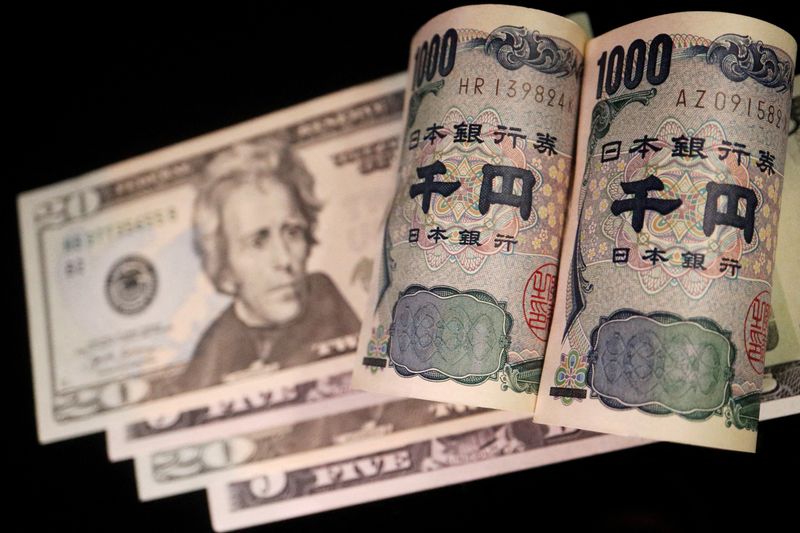
usdjpy
Source: Newasmaker.id
The USD/JPY currency pair remained relatively stable above the psychological level of 159.00 during Asian trading on Wednesday (November 25), following moderate gains in the previous two sessions. This narrow-range movement suggests that investors are still weighing several conflicting fundamental factors. The Japanese Yen has found support from growing expectations of an interest rate hike by the Bank of Japan (BoJ), while the US Dollar remains bolstered by the prospect of a hawkish monetary policy from the Federal Reserve (the Fed). Market participants are currently exercising caution ahead of the release of US Personal Consumption Expenditures (PCE) inflation data, which could provide fresh clues regarding the trajectory of interest rates and determine the next momentum for the USD/JPY pair.
On the Japanese fundamental front, the Services Producer Price Index (SPPI) report indicates intensifying inflationary pressure, having risen to 4.2% year-on-year in October—up from 3.8% in the previous period. This marks the fastest pace of increase since 1990, signaling that price pressures are broadening across the services sector. Such developments strengthen the case for the BoJ to proceed with further interest rate hikes in the near term, particularly at its December meeting. The prospect of monetary tightening provides support for the Yen, as it could narrow the interest rate differential between Japan and other major economies. Furthermore, concerns regarding potential government intervention to curb the Yen’s weakness have made investors more cautious about pushing the USD/JPY pair toward higher levels.
Nevertheless, the Yen’s appreciation remains constrained by uncertainty surrounding the BoJ’s policy path beyond December. Given that Japanese interest rates remain relatively lower than those in the United States, the "carry trade"—borrowing in a low-interest-rate currency to invest in higher-yielding assets—continues to be attractive to some investors. This dynamic keeps the Yen under pressure, even as the outlook for interest rate hikes begins to gain traction. On the other hand, the US dollar has regained support as investors took advantage of a correction from a 20-month high to increase long positions. Expectations of a 25-basis-point interest rate hike by the Federal Reserve in December, coupled with the possibility of further tightening in early 2027, have helped sustain the dollar's appeal against the yen.
Geopolitical tensions in the Middle East are also influencing USD/JPY movements, as demand for the dollar—viewed as a safe-haven asset—has risen. Security risks around the Strait of Hormuz have intensified following reports of several attacks on vessels in the region. Meanwhile, the Houthi group in Yemen has reportedly threatened to target Saudi Arabian ports along the Red Sea coast in retaliation for attacks by a Saudi-led coalition on the port of Hodeidah. Separately, Iran’s Islamic Revolutionary Guard Corps (IRGC) stated that it had targeted a container ship deemed to have violated maritime regulations in the Strait of Hormuz. These developments have heightened concerns regarding the security of global energy trade routes, potentially sustaining demand for the dollar—though the yen may also find support as investors seek safe-haven assets.
The movement of the USD/JPY pair above 159.00 reflects a balance between growing expectations for interest rate hikes by the Bank of Japan (BoJ) and strong fundamental support for the US dollar. From a fundamental perspective, a surge in Japan’s service-sector producer inflation serves as a positive factor for the yen, while the prospect of Federal Reserve tightening and ongoing geopolitical risks continue to bolster the dollar. Technically, the 159.00 level acts as the nearest indicative psychological support, with 158.50 serving as the next level should selling pressure intensify. Resistance, meanwhile, lies in the 159.50 to 160.00 range. Should US PCE inflation exceed forecasts—thereby reinforcing expectations for a Federal Reserve rate hike—the USD/JPY pair could potentially retest the 159.50 to 160.00 level. Conversely, if US inflation weakens and expectations for a tightening by the Bank of Japan (BoJ) intensify, the pair could see a correction toward 158.50. Thus, the short-term outlook for USD/JPY remains in a consolidation phase, with the US PCE inflation data and the direction of BoJ policy serving as the primary factors that will determine its next move.