Bad Loans Explode, Asia Weakens
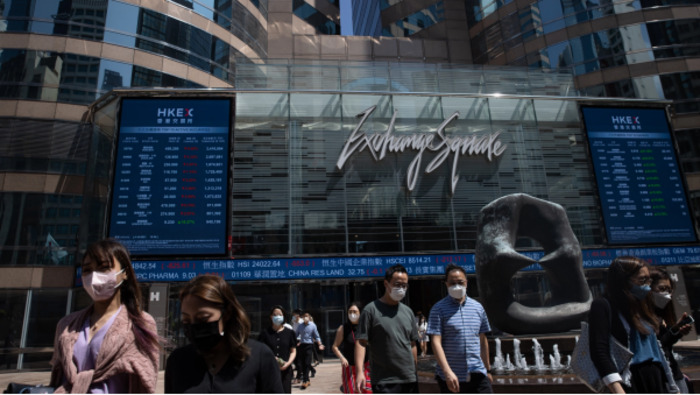
Asian stocks slipped at the open on Friday after risk sentiment faded on Wall Street, following news of bad loans at two US banks that heightened credit market concerns. US index futures also indicated further weakness. Japan, Australia, and South Korea all fell, in line with Wall Street's overnight slump: the S&P 500 fell 0.6% (financials -2.8%) and the Nasdaq 100 fell 0.4%.
Hedging assets rallied: gold and silver hit record highs, while Treasury yields continued to fall—the 2-year yield to its lowest level since 2022 and the 10-year below 4%. The dollar index weakened, heading for its worst week since late July. On the US regional banking front, the sell-off continued as the impact of the collapse of subprime auto lender Tricolor Holdings widened: Zions Bancorp plunged 13% after a $50 million charge-off related to a California Bank & Trust loan, and Western Alliance Bancorp fell 11% due to exposure to the same borrower.
Market concerns are mounting: the US government shutdown, the potential for an AI bubble, and US-China trade tensions. However, Steve Sosnick (Interactive Brokers) assesses that the current problems are still "isolated" to the two banks—not yet systemic. From Japan, Bank of Japan Governor Kazuo Ueda opened the door to an interest rate hike if confidence in the economic outlook strengthens; the yen extended its three-session rally. On trade, the White House is preparing to ease tariffs on the US auto industry. From the Fed, Christopher Waller supports a gradual 25-bps reduction, while Stephen Miran advocates for a deeper cut in 2025. The September inflation release was delayed due to the shutdown, shifting the market's short-term focus to the earnings season. On the geopolitical front, Trump and Putin agreed to meet in Budapest; oil fell to a five-month low on expectations of potentially looser Russian oil flows. (asd)
Source: Newsmaker.id