

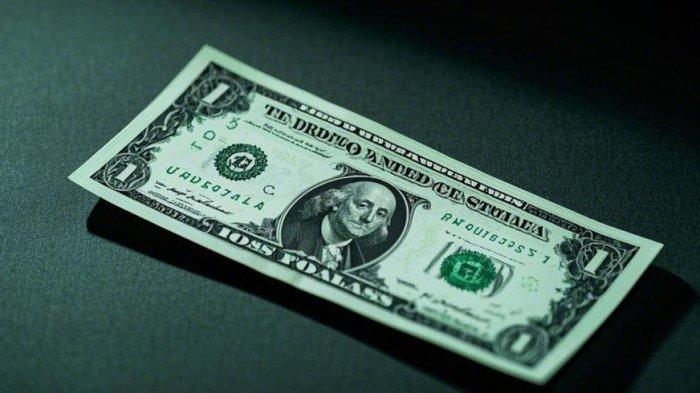
Dollar Moves Narrowly, Markets Focus on Hormuz and US Jobs Data
The dollar moved within a narrow range on Tuesday (June 2nd) as investors awaited developments on a potential deal to reopen the Strait of Hormuz, while awaiting the release of US economic data that could influence the Federal Reserve's policy direction.
The dollar index (DXY), which measures the greenback's performance against six major currencies, edged down 0.05% to 99.05. Since May 15th, the DXY has tended to hover around 98.9 to 99.5, reflecting a cautious market stance amid geopolitical risks and a busy data schedule.
The market views a US-Iran peace breakthrough as potentially easing pressure on the currencies of oil-importing countries like Japan and the eurozone, while reducing safe-haven demand for the dollar. US President Donald Trump said talks with Iran were ongoing, despite reports that Tehran had suspended indirect negotiations to end hostilities, which contributed to a slight decline in oil prices.
However, investor response to any signs of progress tended to be measured, given the fragility of the Washington-Tehran ceasefire reached in early April. Lebanon's announcement of a limited ceasefire between Iran-backed Hezbollah and Israel on Monday was also deemed insufficient to provide new impetus to the currency market. "On Monday night, a sense of relief returned as the US president appeared to secure another ceasefire in Lebanon," said Michael Pfister, FX strategist at Commerzbank, adding that the market would remain dominated by headline developments, and any news of a breakdown in negotiations would be treated with great caution.
The dollar strengthened at the start of the Iran conflict, which began on February 28, supported by safe-haven demand and the perception that the US economy was relatively less exposed to energy-driven inflation. However, some of that strength was eroded as uncertainty over the direction of the conflict shifted market focus to a combination of economic data and central bank communications.
On the data front, the US Department of Labor is scheduled to release job openings data ahead of the closely watched monthly employment report on Friday. The market expects the US central bank's next policy move to be a hike in its benchmark interest rate. Paul Mackel, HSBC's global head of FX research, believes the combination of loose US financial conditions, waning safe-haven support, and the Fed's more patient tone is keeping the dollar on hold. However, a turning point could be approaching, as it increasingly depends on key data and the direction of central bank policy, particularly the Fed, which will meet in two weeks.
In Asia, attention is also focused on the yen, which is approaching 160 per dollar, an area widely viewed by markets as a potential trigger for intervention. The yen last weakened slightly to 159.72 per dollar, while Japanese Finance Minister Satsuki Katayama said authorities are ready to respond to the forex market if necessary. Masafumi Yamamoto, chief currency strategist at Mizuho Securities, believes that if the dollar/yen breaks 160, the risk of exceeding the April 30 peak increases and could trigger stronger verbal warnings, possibly even exchange rate reviews or intervention.
The market is also awaiting Bank of Japan Governor Kazuo Ueda's speech on Wednesday for clues on the likelihood of an interest rate hike next week, amid the view that further tightening remains possible even as inflation has eased, with the risk of lagging behind the policy curve.
Source: Newsmaker.id








