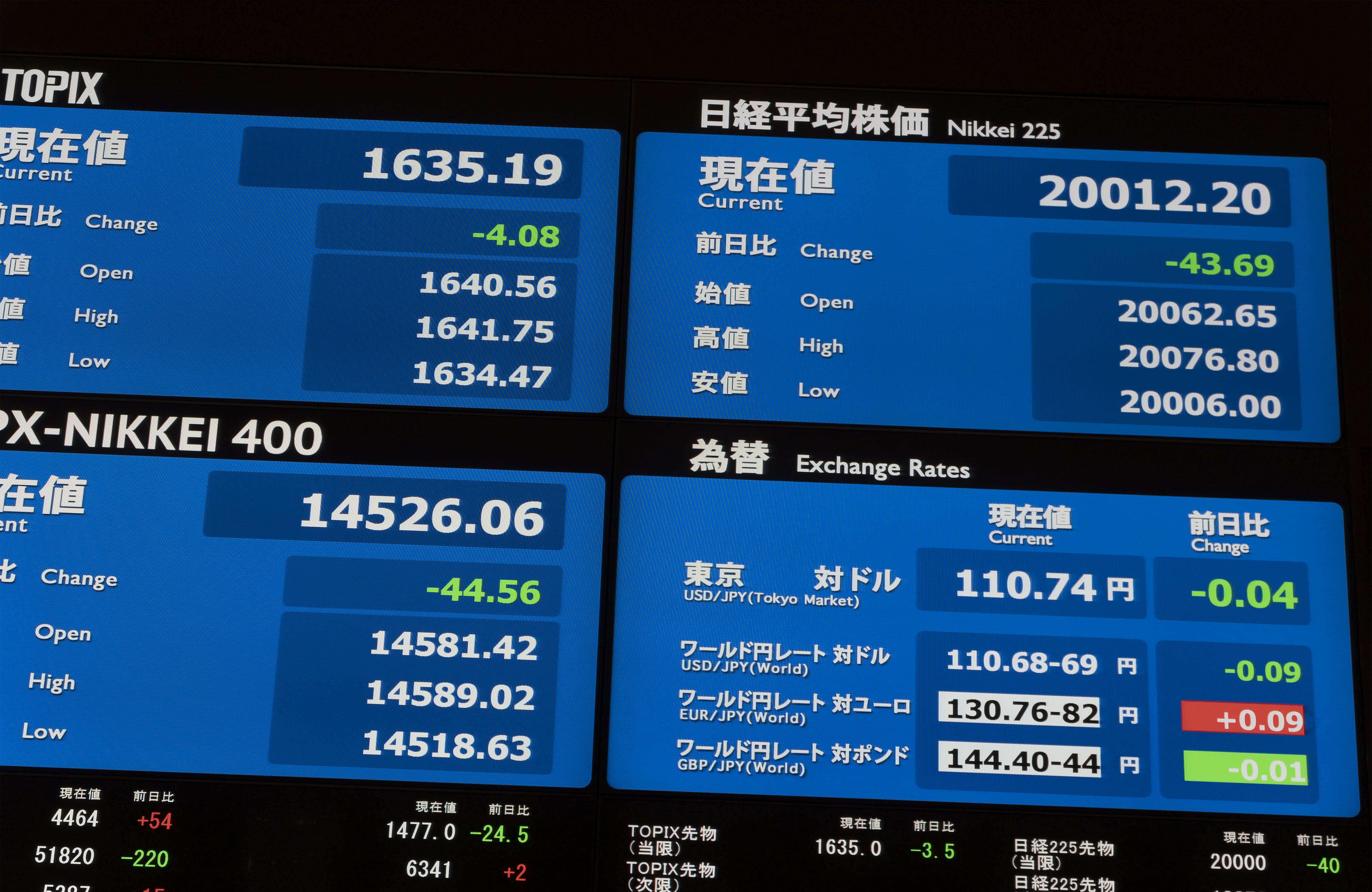
Asian Stocks Drop After US Chip Stock Selloff!
Asian stocks fell after a selloff in US chipmakers rekindled concerns that the artificial intelligence-fueled rally has outpaced fundamentals.
South Korean stocks fell more than 5%, dragging the broader MSCI Asia Pacific Index down 0.9%. US equity index futures retreated 0.3%. This move came after Wall Street benchmarks fell on Wednesday and the semiconductor stock index plunged 6.3%.
Some good news for the market came as crude oil prices continued their decline. Brent fell 0.8% to $71 a barrel, its lowest level since late February, when the US and Israel attacked Iran.
Much of the market focus remained on Federal Reserve Chairman Kevin Warsh, who said price risks had declined in recent weeks, while reiterating his determination to return inflation to the US central bank's 2% target. Two-year Treasury yields were steady during early Asian trading. Gold maintained its gains from the previous session. Speaking at the European Central Bank's annual forum in Sintra, Portugal, Warsh said inflation expectations had eased over the past month. He also reaffirmed the Fed's commitment to restoring price stability, reinforcing expectations that policymakers are in no rush to raise interest rates. Although the selloff in semiconductor stocks continues to weigh on equity market sentiment, investors were somewhat relieved by comments by Warsh and other central bankers suggesting inflation risks have become more balanced. Attention now turns to Thursday's US jobs report for fresh signals on the policy outlook after Warsh's remarks dampened expectations of a July rate hike.
"At the very least, his comments didn't fuel speculation about an imminent July rate hike, and in our view suggest that the new Fed chair—while keeping all options open by holding a meeting—currently sees no reason for an imminent hike," said Krishna Guha of Evercore.
Meanwhile, US manufacturing expanded for the sixth straight month in June as the war-driven surge in input costs eased, adding to signs that the economy remains resilient. Printing, electrical equipment, and textiles led the gains, while paper products, furniture, and wood products contracted.
"Overall, the report shows continued resilience in the manufacturing sector and supports our view that the U.S. economy is reaccelerating, with growth remaining on track to reach around 2.4% this year," said Eugenio Aleman, chief economist at Raymond James. Attention now turns to Thursday's U.S. jobs report for fresh clues about the economy.
Warsh has made inflation a key focus for the Fed, meaning June payrolls "are unlikely to change interest rate expectations on their own," said Julien Lafargue, chief market strategist at Barclays Private Bank and Wealth Management. Hiring related to the FIFA World Cup is also expected to distort the data.
Elsewhere, U.S. negotiators Steve Witkoff and Jared Kushner held positive discussions in Qatar, and progress is being made in technical talks with Iran, according to a senior administration official, as the countries seek to turn an interim peace deal into a permanent end to the war.
Tehran has established a working group to discuss implementing the current agreement and negotiating a final peace deal, though no talks have yet taken place, the Islamic Republic of Iran's state-run news agency reported, citing Deputy Foreign Minister Kazem Gharibabadi.
"We are on the optimistic side of geopolitics," said Mohit Kumar of Jefferies. "That doesn't mean we think there will be a comprehensive agreement. It will likely be more of a compromise. But as long as the Strait remains open and oil continues to flow, the market will likely become less sensitive to geopolitics." S&P 500 futures fell 0.2% as of 9:05 a.m. Tokyo time.
Hang Seng futures were unchanged.
Japan's Topix was little changed.
Australia's S&P/ASX 200 fell 0.7%.
Euro Stoxx 50 futures fell 0.6%. (asd)
Source: Newsmaker.id