

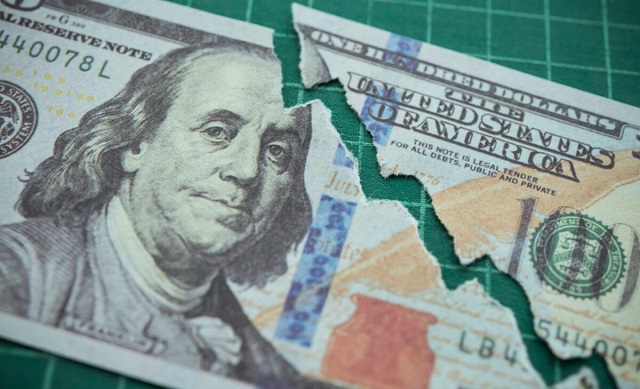
US Dollar Weakens as Markets Eye End to Iran Conflict
The US dollar index weakened for the second straight session on Wednesday (April 1), falling to a one-week low, as growing hopes for an end to the war in the Middle East diminished the dollar's appeal as a safe haven. At 8:09 a.m. ET (12:09 GMT), the US dollar index, which tracks the greenback against a basket of major currencies, was down 0.5% at 99.43.
The euro strengthened 0.4% to $1.1602, hitting a one-week high, while the British pound also strengthened 0.7% to $1.3319. In Japan, the yen recovered from a yearly low of 160.46 per dollar, easing concerns that Japanese authorities might need to intervene to stabilize the currency.
US President Donald Trump is scheduled to address the nation with an "important update on Iran" at 9:00 p.m. ET (1:00 a.m. GMT) tonight. In a conversation with reporters in the Oval Office on Tuesday, Trump stated that the US would be "leaving soon," possibly within two to three weeks, and added that the White House's goal of addressing the Iranian nuclear threat had been achieved, without the need for a formal agreement to end the conflict.
Secretary of State Marco Rubio also told Fox News that the US could see the "finish line" in the war that has been going on for more than a month.
Brent crude futures, the global benchmark, briefly fell below $100 per barrel after the comments, but remain well above pre-war levels. However, Trump has not yet outlined his plans regarding the Strait of Hormuz, a vital waterway that has been virtually closed to tanker traffic for several weeks, leading to a spike in oil prices and fears of widespread inflation in countries around the world.
Trump, who has expressed frustration with the refusal of some US allies to allow their bases to be used for military action against Iran, has previously called for these countries to forcefully "take" the strait. These divisions became even more apparent on Wednesday, when Trump said in an interview with the British newspaper, the Telegraph, that he was seriously considering withdrawing the US from NATO, calling the long-standing alliance a "paper tiger."
Meanwhile, fighting in the Middle East continues, with Israel targeting sites in Tehran and central Iran, as well as Beirut in Lebanon, while Iran is sending projectiles toward Israel and the Persian Gulf states.
Causes and Effects
The US dollar's weakening is due to hopes for a de-escalation of the Iran war, as well as uncertainty regarding US strategy and the future of foreign policy. With Trump hinting that the US may soon withdraw its troops, this has eased the tensions that had previously boosted demand for the dollar as a safe haven. However, this has resulted in greater uncertainty regarding the stability of energy markets, particularly oil prices, which remain volatile due to tensions in the Strait of Hormuz and the uncertainty surrounding the future of US policy in the Middle East.
Source: Newsmaker.id








