

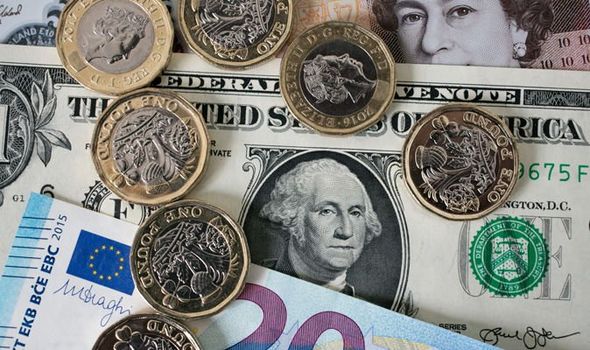
Risk Premium Rises, Dollar Struggles
The US dollar weakened on Monday (January 19th) as market participants shifted to safe haven assets following US President Donald Trump's threat of new tariffs against several European countries linked to the Greenland issue.
At 4:20 a.m. Eastern Time (09:20 GMT), the Dollar Index (DXY), which measures the dollar's strength against a basket of six major currencies, fell 0.2% to 99.050.
Greenland tug-of-war puts pressure on the dollar
Trump announced last weekend that the US would impose an additional 10% import tariff starting February 1st on goods from Denmark, Norway, Sweden, France, Germany, the Netherlands, Finland, and the UK. The tariff could rise to 25% in June if no agreement is reached that would allow the US to "take control" of Greenland, a semi-autonomous territory that is part of Denmark.
Several media reports indicate the European Union is considering reviving a retaliatory package of tariffs worth €93 billion on US goods. If confirmed, this move could potentially escalate tensions and open the door to a broader transatlantic trade dispute.
Although the dollar is under pressure, its decline is limited due to relatively quiet US markets—the US is on holiday to commemorate Martin Luther King Jr. Day.
ING analysts believe the market has not yet fully returned to the "Sell America" narrative, but investor caution is growing.
"It may be premature to return to the 'Sell America' theme... but this development will add volatility to an otherwise calm investment environment," ING wrote.
Euro & Pound Strengthen, Supported by Dollar Political Risk
In Europe, EUR/USD rose 0.3% to 1.1630, capitalizing on the rising political risk premium that has pressured the US dollar.
Market participants are also awaiting confirmation of the Eurozone's annual CPI data for December, which is expected to come in at 2.0%, a level in line with the ECB's target, down from 2.1% in November. The ECB has maintained interest rates since ending its rate cut cycle in June and has signaled no rush to change policy again.
ING noted that EUR/USD has found support below 1.1600, with intraday resistance at 1.1650. A breakout would open the door to a rise to 1.1690–1.1700.
Meanwhile, GBP/USD edged up 0.2% to 1.3403. The pound is potentially volatile this week as the UK releases monthly unemployment and inflation data.
ING believes the release of November's employment data and December's CPI could be positive catalysts that extend the short squeeze in sterling since late November.
Yen sought after, Japanese election also in focus
In Asia, USD/JPY fell slightly to 158.05. The yen received support from safe-haven demand amid global trade uncertainty.
Market focus is also on Japanese politics, following reports that Prime Minister Sanae Takaichi is considering the option of a snap election in the coming weeks to strengthen her government's mandate.
Yuan Strengthens, China Data Slightly Above Forecasts
On the other hand, USD/CNY fell 0.1% to 6.9636, near its lowest level since May 2023. Sentiment was boosted by data showing China's economy grew slightly better than expected in the fourth quarter.
Strong exports helped China's quarterly GDP growth reach 4.5% (y/y), although disappointing December retail sales highlighted weak domestic demand.
In commodity markets, AUD/USD rose 0.2% to 0.6696, while NZD/USD strengthened 0.4% to 0.5774. (yds)
Source: Newsmaker.id








