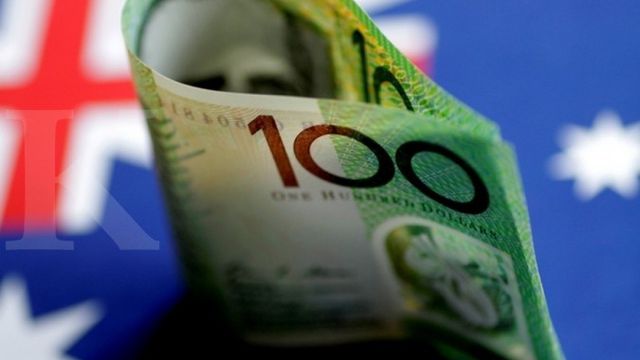
Australian Dollar Weakens Near 0.6900
The Australian dollar weakened against the US dollar in early Asian trading on Friday (June 26th). The AUD/USD pair hovered around the 0.6900 level as the greenback gained renewed support from expectations that the Federal Reserve is still likely to raise interest rates this year.
Pressure on the Aussie emerged after US inflation data showed that price pressures remain high. The headline Personal Consumption Expenditures (PCE) price index rose 4.1% annually in May, up from 3.8% in April. Meanwhile, the core PCE, the Fed's preferred inflation measure, rose to 3.4% annually from 3.3% previously.
On a monthly basis, the core PCE rose 0.3%, in line with market expectations. While not a major surprise, the inflation figures still indicate that price pressures in the United States have not completely subsided. This condition has led the market to maintain the possibility of a Fed rate hike in the coming months.
BMO Capital Markets' Chief US Economist, Scott Anderson, believes that PCE inflation remains too high and will force the Fed to maintain a tight policy stance while considering a possible interest rate hike at the upcoming meeting. He also highlighted that service inflation will not be easily tamed by falling energy prices alone.
Meanwhile, Australian labor data helped limit the Australian dollar's weakness. The unemployment rate fell to 4.4% in May from 4.5% in April, in line with market expectations. This decline indicates that the Australian labor market remains resilient, especially following a rebound in hiring.
However, the support from Australian labor data was not enough to push the AUD/USD higher. The US dollar remains dominant as investors are more focused on the direction of the Fed's policy. As long as US inflation remains high and the possibility of an interest rate hike remains open, pressure on riskier currencies like the Australian dollar is likely to persist.
Market participants will next be watching the US Michigan Consumer Sentiment report, released on Friday. This data will provide additional clues regarding the condition of the US consumer and inflation expectations. If consumer sentiment and inflation expectations remain strong, the US dollar has the potential to maintain its strength against the Australian dollar.
Technically, the AUD/USD pair remains under pressure as it remains stuck around the 0.6900 area. If the US dollar continues to strengthen, the pair risks testing the next support area. However, if US data begins to weaken or expectations for a Fed rate hike decline again, the Aussie could attempt a limited rebound. (asd)*
Source: Newsmaker.id