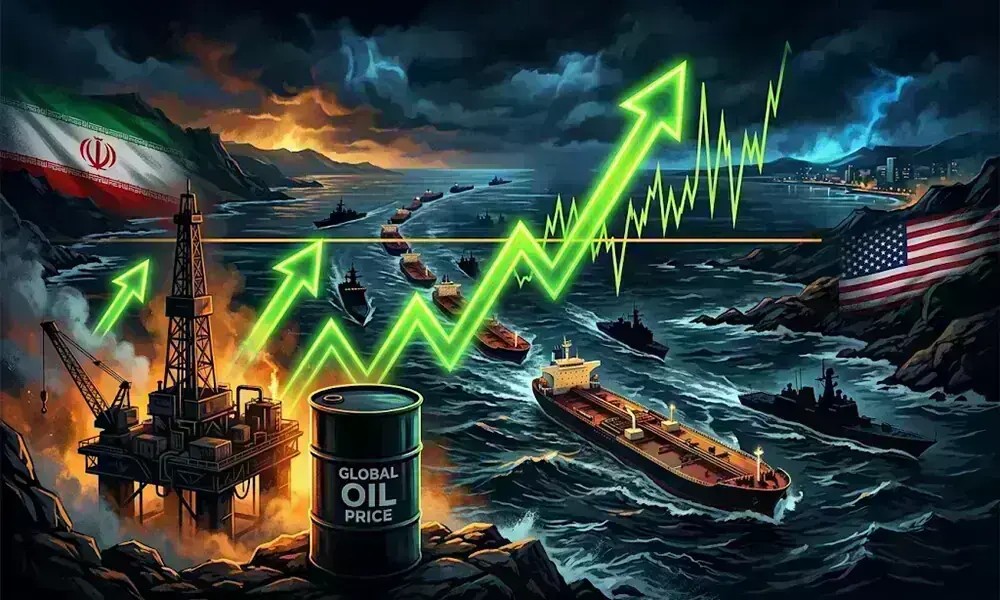
Red Sea Becomes New Threat, Brent Soars
Oil prices edged closer to the psychologically important US$100 per barrel on Thursday (July 23rd) after the Iran-backed Houthi group claimed to have attacked two Saudi Arabian tankers in the Red Sea. This attack escalated the Middle East conflict and raised concerns about global supply disruptions.
Brent briefly surged above US$98 per barrel and moved up 4% to around US$97.98. Meanwhile, WTI strengthened 3.2% to US$89.59 per barrel. This increase extended the oil rally, which has already risen more than 30% this month.
The Houthis said they fired missiles and drones at tankers they deemed to be violating a blockade of Saudi ports. One of the tankers hit, the Encelia, reportedly displayed a "not under command" status, indicating the vessel may have lost maneuverability due to damage.
The attack in the Red Sea opens a new front in the regional conflict. This waterway has become crucial for Saudi Arabia as it serves as an alternative oil export route when flows from the Persian Gulf and the Strait of Hormuz are disrupted by the US-Iran conflict.
Meanwhile, the US military has again attacked Iranian targets, including maritime capabilities and coastal surveillance facilities. Washington and Tehran have both dampened the chances of peace talks, raising market concerns that the conflict will drag on for a longer period.
As a result, oil prices still have the potential to test US$100 per barrel if disruptions in the Red Sea, Bab el-Mandeb, and the Strait of Hormuz continue. However, because the price has risen so aggressively, oil is also vulnerable to profit-taking if diplomatic signals emerge or shipping routes are restored. As long as Brent remains above US$96, the short-term bias remains bullish. (arl)
Source: Newsmaker.id