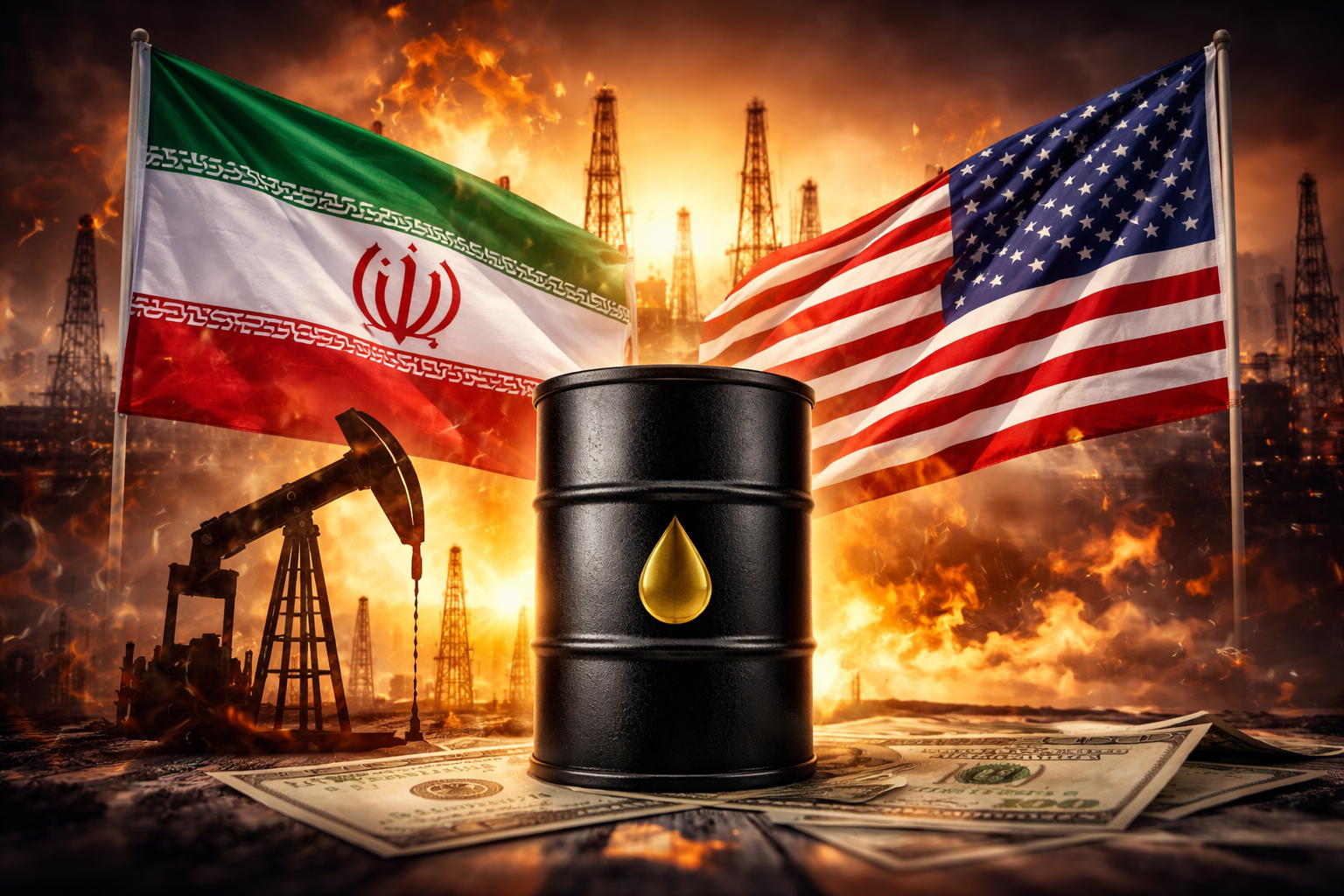
Oil Falls After US Allows Iranian Oil Sales
World oil prices weakened on Monday (June 22, 2026), after the United States Treasury Department granted temporary permission for the sale of Iranian crude oil. This policy eased market concerns about global supply disruptions and bolstered hopes that oil flows from the Middle East could recover.
Brent crude futures, the international benchmark, fell 3.3% to close at US$77.90 per barrel. Meanwhile, West Texas Intermediate (WTI) weakened 2.3% to US$74.82 per barrel. This decline indicates that market participants are beginning to consider the potential for additional supply from Iran following positive developments in peace talks with the United States.
The US Treasury Department issued a 60-day license permitting the production, shipment, and sale of Iranian oil. The license also covers petroleum and petrochemical products, and allows for supporting transactions such as payments, banking, insurance, and transportation. This policy is valid until August 21, 2026, and is part of Washington's efforts to maintain the momentum of peace negotiations with Tehran.
Market sentiment improved after US Vice President JD Vance stated that talks between the United States and Iran in Switzerland had made significant progress. Mediators from Qatar and Pakistan also stated that the two sides had agreed on a roadmap toward a final agreement within the next 60 days. Furthermore, technical negotiations will continue throughout this week, with the formation of a high-level committee to oversee the mediation process.
However, geopolitical risks have not completely disappeared. US President Donald Trump previously renewed threats of military action against Iran, raising doubts about the durability of the newly reached interim agreement. Meanwhile, the Swiss meeting was also overshadowed by Tehran's renewed claim to have closed the Strait of Hormuz, one of the world's main oil shipping routes.
For energy markets, the US decision provides space for Iranian oil to re-enter the global market more openly. If this additional supply is realized, pressure on oil prices could continue in the short term. However, investors should continue to monitor the security of the Strait of Hormuz, the continuation of US-Iran technical talks, and the responses of other oil-producing countries.
Under these conditions, oil prices still have the potential to fluctuate. Current short-term sentiment tends to depress prices as the market sees opportunities for supply recovery. However, if negotiations are disrupted again or the situation in the Strait of Hormuz worsens, Brent and WTI could again benefit from concerns about disruptions to global energy distribution.
Source: Newsmaker.id