Gold Slips as Oil Surge Rekindles Higher-Rate Fears
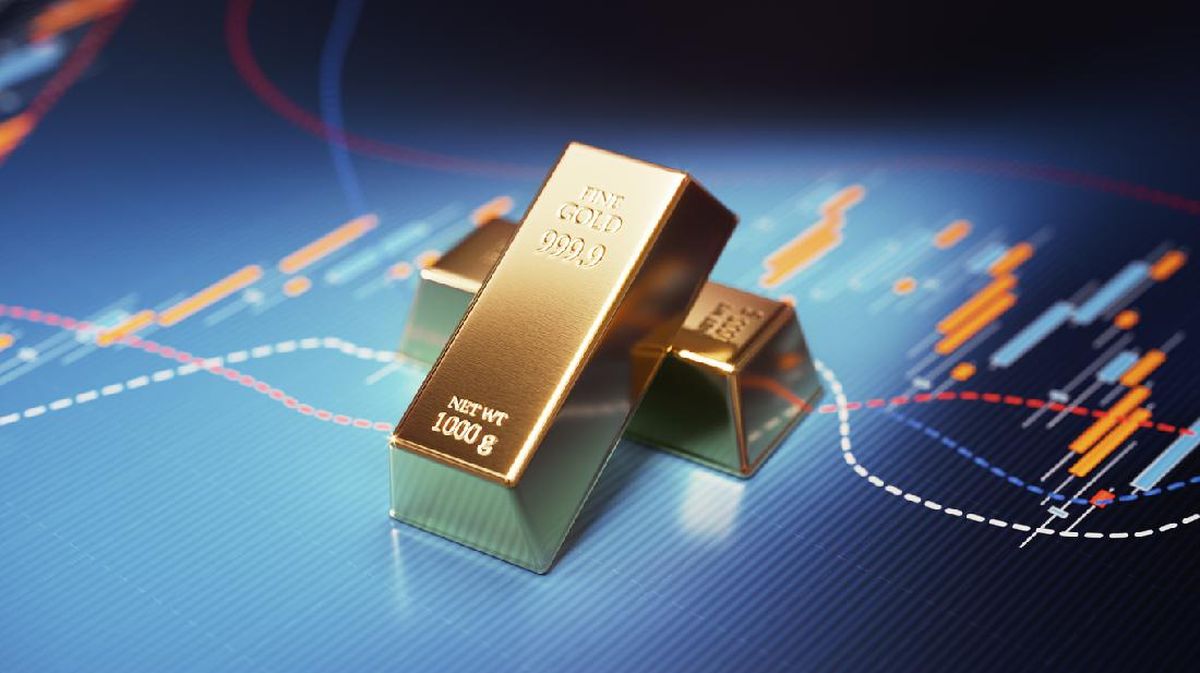
Gold fell as a stronger U.S. dollar and renewed worries about higher interest rates outweighed safe-haven demand, with the Middle East war entering a second week and oil prices rallying sharply.
Bullion dropped as much as 3% to around $5,015/oz before trimming losses. Oil jumped—Brent at one point neared $120 a barrel before easing—as producers across the Persian Gulf curtailed output and the U.S.-Israeli war with Iran showed no clear path to resolution. A key dollar gauge rose as much as 0.7%.
Gold has come under pressure because crude’s rally is reviving inflation fears in the U.S., increasing the likelihood that the Federal Reserve will keep rates unchanged for longer—or even consider further tightening. Higher borrowing costs and a stronger dollar are typically negative for non-yielding precious metals. Gold has also served as a source of liquidity amid a deepening selloff in global equities.
“In periods of geopolitically driven market stress, investors sometimes sell assets such as gold to raise cash,” said Christopher Wong, a strategist at Oversea-Chinese Banking Corp. “Once that phase passes, geopolitical uncertainty typically continues to underpin demand for safe havens on dips.”
Even with choppy trading and stalled upside momentum, gold is still up roughly 18% this year. Demand has been supported by President Donald Trump’s disruption of global trade and geopolitics, along with concerns over the Fed’s independence. Persistent central-bank buying has also helped, and the People’s Bank of China added more gold in February, extending its purchasing streak to 16 months.
The war has now entered its 10th day. Over the weekend, Tehran selected a new supreme leader and kept up attacks across the Gulf region, while Israel struck fuel depots in Tehran and threatened Iran’s power grid. Attacks on energy infrastructure and a halt in shipping through the Strait of Hormuz—which normally handles about a fifth of the world’s oil—have pushed crude and natural gas prices higher.
A relatively swift end to the conflict would likely weaken the dollar and lift gold, while a prolonged war could push the U.S. currency and Treasury yields higher on expectations of stronger inflation and higher interest rates, Ed Meir of Marex wrote in a March 7 note. “There is a time to buy, a time to sell and a time to simply wait,” he said, adding that waiting is the preferred approach for now.
As of 9:50 a.m. in London, spot gold was down 1.4% at $5,100.67/oz. Silver fell 0.9% to $83.82/oz. Platinum dropped 1.8% and palladium slipped 1.7%. The Bloomberg Dollar Spot Index rose 0.3% after gaining 1.3% last week.