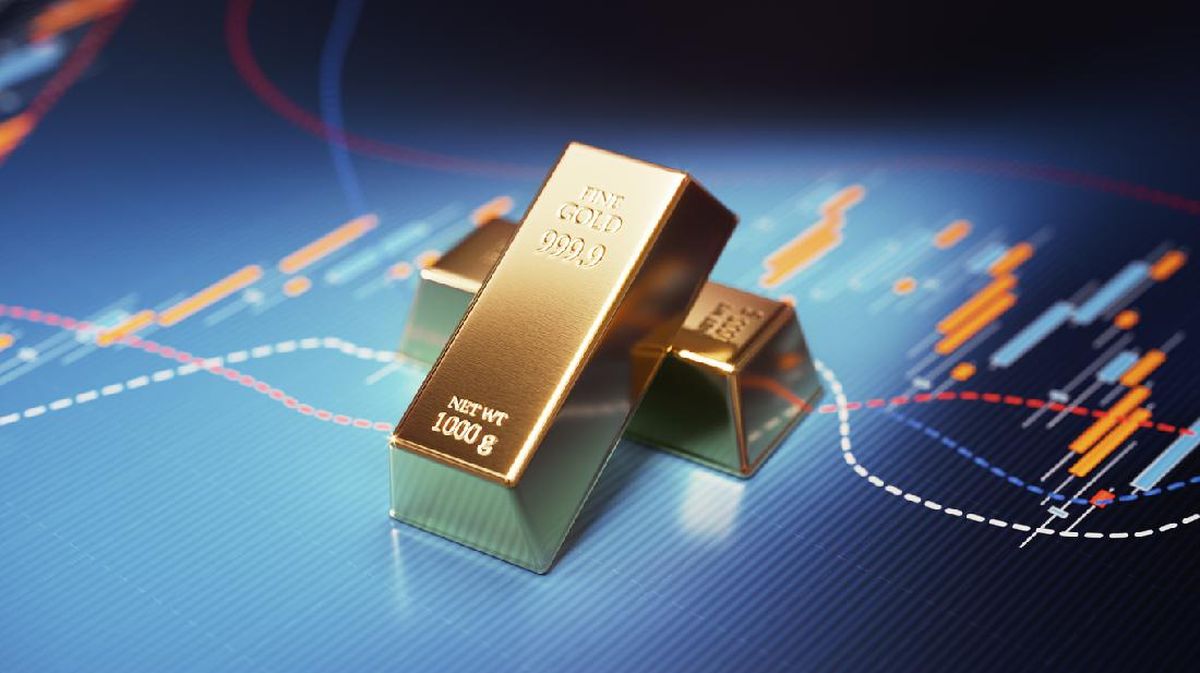
Gold: Calm, But Vulnerable, Here's Why!
Gold prices moved barely changed in early Asian trading, as market liquidity thinned as most exchanges in the region were closed for the Lunar New Year holiday, plus US markets were closed on Monday. The precious metal held around the psychological level of $5,000 per ounce.
This relatively flat movement came after gold fell 1% in the previous session. Gold briefly rallied on Friday, when moderate US inflation data rekindled hopes that the Federal Reserve could cut interest rates. Generally, the prospect of lower borrowing costs is a supportive factor for non-yielding precious metals.
However, gold's volatility remains a key factor. A wave of speculative buying drove the multi-year rally to its extreme in late January, pushing prices to a record high above $5,595 per ounce. Subsequently, a sharp two-day correction at the turn of the month dragged gold down to nearly $4,400, before recovering and recovering about half of the losses.
Several major banks still project gold's upward trend to continue. BNP Paribas, Deutsche Bank, and Goldman Sachs are among the institutions assessing the potential for price appreciation, supported by lingering geopolitical tensions, rising questions about the Fed's independence, and a shift in investor preferences away from currencies and government bonds.
From a research perspective, Jefferies believes there are two main macro drivers for gold: inflation and dollar debasement. In its latest note, Jefferies raised its 2026 gold price projection to $5,000 per ounce from $4,200, arguing that investors and central banks concerned about these factors will ultimately shift to hard assets.
As of the update at 7:45 a.m. Singapore time, spot gold was nearly flat at $4,990.08 per ounce. Silver edged down 0.1% to $76.58, platinum weakened slightly, and palladium rose 0.4%. In the currency market, the Bloomberg Dollar Spot Index was relatively flat after closing up 0.1% in the previous session. (asd)
Source: Newsmaker.id