New Dangers Are Lurking? This is What the World's Money Masters Say!
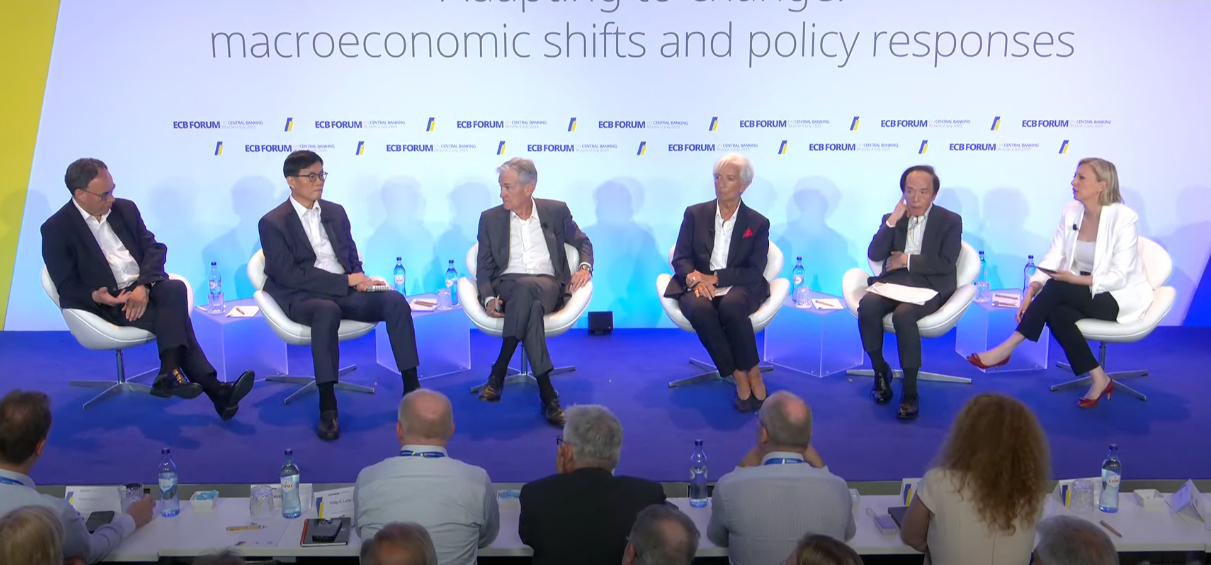
At the annual central bank forum held in Sintra, Portugal, global leaders discussed a number of important issues ranging from tariffs, inflation, stablecoins, to fiscal and technological risks. Fed Chairman Jerome Powell warned that the impact of tariffs on inflation would likely begin to be seen this summer. He emphasized that the Fed is still being cautious and will make interest rate decisions based on data developments. Powell also stated that he still has 10 months left as Fed Chairman and his focus remains on price stability, maximum employment, and financial stability.
Bank of England Governor Andrew Bailey highlighted that low levels of household and corporate debt make high interest rates less effective in curbing inflation in the UK. He said that monetary policy will remain tight even though the effects are now being felt more lightly. Bailey also touched on stablecoins, saying that digital assets that claim to be money must really be able to maintain their nominal value in order to be trusted.
Meanwhile, ECB President Christine Lagarde again pushed for the importance of issuing a digital euro. She reminded that the privatization of money in the digital era could disrupt the effectiveness of monetary policy and weaken state sovereignty. However, he acknowledged that the digital euro project is still awaiting approval from EU politicians and is stalled in Parliament.
Elsewhere, South Korea Bank Governor Rhee Chang-yong stressed the importance of having the Fed’s foreign exchange reserves and swap facilities ready to deal with a potential local dollar crisis. He also said Korea remains vulnerable to the risk of global financial fragmentation. Powell, when asked to comment on US fiscal risks, acknowledged that government debt is increasingly unsustainable and needs to be addressed more quickly, though he declined to comment directly on Congress’ fiscal policy.
Source: (ayu-newsmaker)