Fed's Powell Addresses Shadow Chair Proposal, Says He Expects to Work With Treasury Secretary Bessent
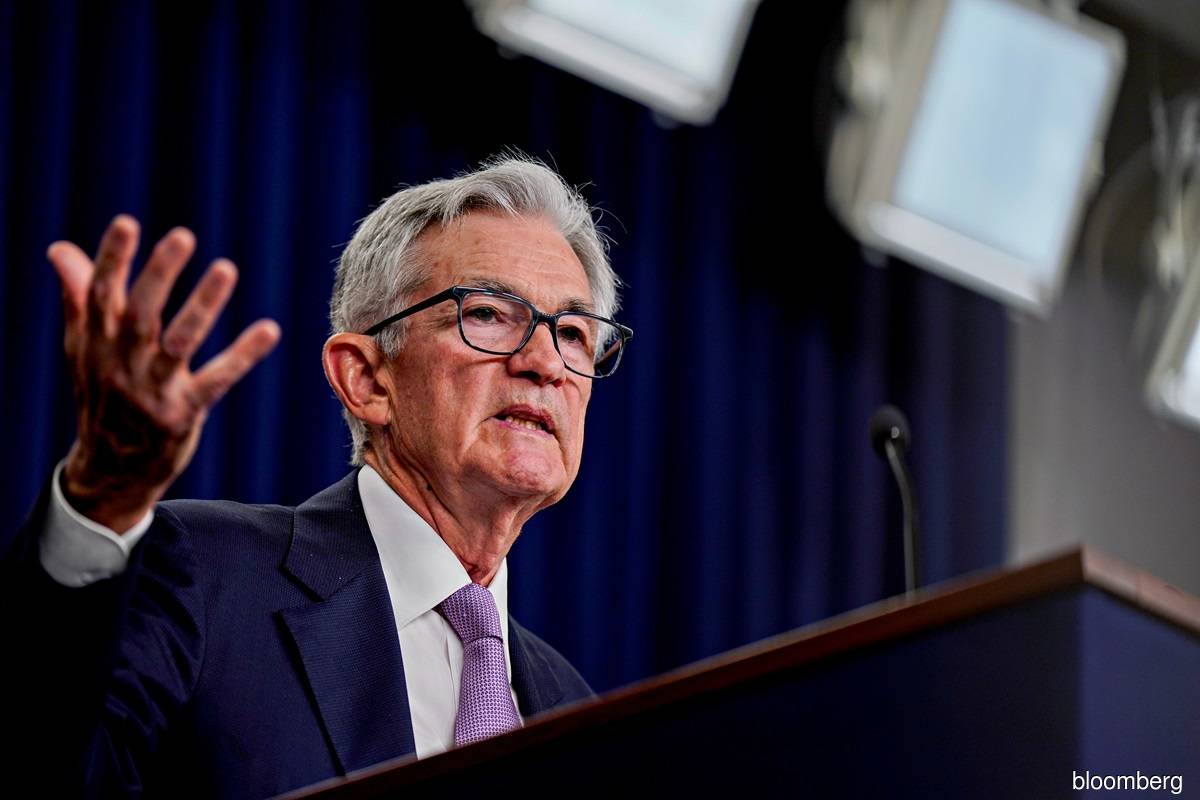
Asked about Treasury Secretary nominee Scott Bessent's proposal in Barron's that president-elect Donald Trump publicly name a successor to Federal Reserve Chair Jerome Powell -- whose term as chair expires in early 2026 -- as soon as he takes office, creating a "shadow Fed chair," Powell demurred.
"I don't think that's on the table at all," Powell said on Wednesday at the New York Times DealBook Summit. "There's a set of institutional relationships between the Fed and every administration. I fully expect that we'll have the same general kinds of relationships."
Powell noted the Fed chair and Treasury Secretary have shared a weekly meal for 75 years. Powell said he hoped that would continue, adding that he didn't know Bessent well and hasn't spoken to him since the election.
An earlier question to Powell addressed the central bank's independence from other parts of the U.S. federal government.
"We're a creature of Congress, we're not in the Constitution," Powell said. "We're a creature of statute...That gives us the ability to make decisions for the benefit of all Americans at all times, not for any particular political party or political outcome. We're supposed to achieve maximum employment and price stability for the benefit of all Americans, and keep out of politics, completely."
On the current state of the economy, Powell described a solid backdrop with lingering inflationary pressures. He reiterated recent remarks that the Fed is in no rush to further lower interest rates given recent data.
"The economy is strong, and it's stronger than we thought it was going to be in September," Powell said. "The downside risks appear to be less in the labor market, growth is definitely stronger than we thought, and inflation is coming a little higher. So the good news is that we can afford to be a little more cautious as we try to find neutral."
The Fed has lowered the federal-funds rate by 0.75 percentage point since September, leaving it at a target range of 4.5% to 4.75%. Powell and other officials have referred to the destination of their rate cuts as the neutral rate of interest, at which monetary policy neither boosts nor restricts economic activity.
Federal Reserve Chair Jerome Powell is about to deliver his final publicly scheduled comments on the state of the economy before the central bank's last rate-setting meeting this year.
Powell will be interviewed by Andrew Ross Sorkin at the New York Times DealBook Summit on Wednesday, beginning at 1:40 p.m. Eastern. That will give investors another look at his views before a quiet period ahead of the Federal Open Market Committee's Dec. 17-18 meeting begins on Saturday.
The FOMC has lowered the federal-funds rate by 0.75 percentage point since September, leaving it at a target range of 4.5% to 4.75%. Interest-rate futures market pricing on Tuesday implied a roughly 72% likelihood of another quarter-point decrease on Dec. 18, with the balance of odds in favor of a pause.
"The economy is not sending any signals that we need to be in a hurry to lower rates," Powell said during his most recent public appearance, on Nov. 14. "The strength we are currently seeing in the economy gives us the ability to approach our decisions carefully."
Officials are contending with stubborn inflation readings and a foggy picture of what is happening in the labor market as they weigh what to do next in terms of monetary policy. Data to be released later this month may well make the outlook clearer.
The November employment report is scheduled for Friday, while the November consumer price index lands on Dec. 11. A stronger-than-expected jobs report or hotter-than-forecast inflation could nudge Fed officials to support a rate-cut pause.
Economists' consensus estimate calls for a rebound in hiring in November, to 215,000 new jobs, after a hurricane and strike-impacted October total of just 12,000. The unemployment rate is forecast to hold steady at 4.1%.
Inflation is expected to remain solidly above the Fed's 2% annual target. The November CPI is expected to be up 2.6% from a year earlier, while core prices -- which exclude food and energy components -- are forecast to be 3.3% higher.
"Inflation is running much closer to our 2% longer-run goal, but it is not there yet," Powell said on Nov. 14. "We are committed to finishing the job. With labor market conditions in rough balance and inflation expectations well anchored, I expect inflation to continue to come down toward our 2% objective, albeit on a sometimes-bumpy path."
The median forecast in policymakers' September update to their quarterly Summary of Economic Projections was for one percentage point of rate cuts in 2024, followed by another point of cuts in 2025. Officials will update the projections, known as the dot plot because it charts individual Fed officials' forecasts of rates, at the December meeting.
That will give them a chance to signal the path of policy in 2025 and beyond.
Source : Dow Jones Newswires