US Government Shutdown Enters Fifth Week, No Clarity Yet!
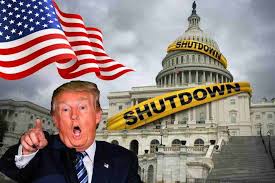
The United States government has entered its fifth week of partial shutdown, which began on October 1, 2025. Negotiations between Republicans and Democrats in Congress have yet to produce an agreement to reopen federal funding, further straining the political and economic situation.
Deadlock in the Senate and House of Representatives
Attempts at compromise failed again in the Senate last weekend. A continuing resolution (CR) proposed by the House failed to garner enough support to advance.
According to a report by The Washington Post, senators from both parties have been meeting informally to find a solution, but "there is no sign of a concrete bipartisan agreement."
The tension between the two sides stems primarily from differing views on additional policies in the budget package. Democrats are insisting on including an extension of the tax credit for the Affordable Care Act (ACA) health insurance program, while Republicans want a "clean" bill without additional social policies.
Second-Longest Shutdown in History
According to CBS News, this shutdown has become the second-longest in American history, surpassing the previous record of 2018–2019. Thousands of federal employees are now working without pay or have been furloughed, while many government agencies are experiencing disruptions to essential services.
House Speaker Mike Johnson expressed deep concern in a Sunday press conference:
“While this is already the second-longest government shutdown in U.S. history, it is shameful that Congress still cannot come together to serve the American people,” CBS News quoted him as saying.
The Politics of Blame
A recent Politico/Morning Consult survey shows that the public divides blame almost evenly between President Donald Trump, Republicans in the House, and Democrats in the Senate.
Approximately 89% of respondents called the shutdown a major problem, with 54% viewing it as a national crisis.
According to Politico, many independent voters now view the Congressional deadlock as “evidence of extreme political dysfunction,” tarnishing the image of both parties ahead of the 2026 midterm elections.
Chances of a Deal Remain Slim
Although some moderate senators from both parties have begun pushing for cross-party talks, The Washington Post noted that “there has been no real breakthrough in the draft of a new compromise,” while the White House has made it clear it will not sign a bill without adequate social protections.
A White House official quoted by AP News said:
“The president will not agree to a bill that eliminates healthcare subsidies or food stamps, while demanding cuts that actually hurt working families.”
With time running out and the threat of a delay in federal payrolls next week, pressure on Congress is mounting. However, without a shift in political stance on both sides of the aisle, reopening the government appears far from reach.
Conclusion
The nearly month-long US government shutdown has now become a symbol of the most serious political deadlock in modern times.
While millions of citizens face immediate economic impacts, legislators continue to blame each other. If no agreement is reached by November 1, this crisis has the potential to be the longest in US history—and a major test of Washington’s political credibility with the public and global markets.
Source: Newsmaker.id