Will US-China Tariffs Ease? Markets Ready for Action!
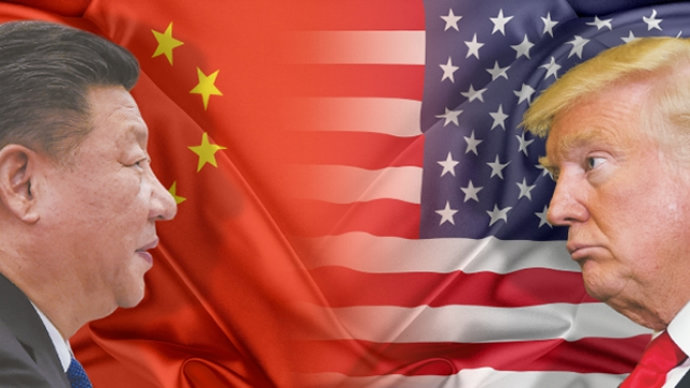
US Treasury Secretary Scott Bessent said Friday that he hopes to meet next week with Chinese Vice Premier He Lifeng in Malaysia to try to prevent an escalation in US tariffs on Chinese goods that President Donald Trump has called unsustainable.
Bessent made the announcement during a White House cabinet meeting and later confirmed the planned meeting after a phone call with He on Friday evening. Bessent told X that the two officials "engaged in a frank and detailed discussion on trade between the United States and China."
"We will meet in person next week to continue our discussions," Bessent wrote.
China's state-run news agency, Xinhua, reported that He and Bessent had a "frank, in-depth, and constructive discussion on key issues in bilateral economic and trade relations" via video call and agreed to begin a new round of trade talks as soon as possible.
The two officials previously met in four European cities over six months to reach a tariff truce that lowered import duties from triple-digit levels for each country. The agreement expired on November 10.
The meeting in Malaysia will shift the venue to a Southeast Asian exporter that trades heavily with both China and the US, whose goods are now subject to the 19% tariffs imposed by Trump. Malaysia also faces the threat of 100% tariffs from the US on semiconductors and related electronic devices under a national security trade review.
On Friday, Trump had previously blamed Beijing for the latest standoff, a dispute over China's sweeping new export restrictions on rare earth minerals and magnets. He threatened to impose additional 100% tariffs on Chinese imports starting November 1 unless Beijing lifted the restrictions.
When asked if such high tariffs were sustainable and what impact they would have on the US economy, Trump replied: "They're not sustainable, but that's the number."
"They made me do it," he said in an interview with Fox Business Network that aired Friday.
Trump also threatened to impose new US export controls that would cut off the supply of "all critical software."
The new trade measures are Trump's response to China dramatically expanding its export controls on rare earth elements. China dominates the market for these elements, which are crucial for technology manufacturing.
Bessent and U.S. Trade Representative Jamieson Greer on Wednesday condemned the restrictions as a threat to the global supply chain.
Trump also confirmed that he would meet with Chinese President Xi Jinping in two weeks in South Korea and expressed his admiration for the Chinese leader.
"I think we'll be fine with China, but we have to have a fair deal. It has to be fair," Trump said on FBN's "Mornings with Maria," which was taped Thursday.
Later, as he prepared for lunch at the White House with Ukrainian President Volodymyr Zelenskiy to discuss ending the war with Russia, Trump said: "China wants to talk, and we're happy to talk with China." His softened tone and affirmation of his intention to meet with Xi helped cushion Wall Street's initial losses on Friday. Major US stock indexes, which have been shaken over the past week by Trump's sudden reimposition of sharp levies on Chinese imports and by credit concerns among regional banks, rallied in afternoon trading.
Market Impact if US-China Tariffs Ease
Equity Markets:
If negotiations progress well and tariffs are lowered or canceled, global stock markets are likely to strengthen. The technology and manufacturing sectors, which have been directly impacted by the trade war, could lead gains.
USD (US Dollar):
Easing tensions could weaken the US dollar moderately, as demand for safe-haven assets would decrease. Investors could return to riskier assets in emerging markets or currencies like the yuan.
Gold and Silver:
Gold and silver prices could decline as easing uncertainty reduces the need for safe-haven assets. Gold, which has been rising due to concerns about the trade war and geopolitical risks, could experience a correction.
Oil:
Positive sentiment from the easing trade war could push oil prices up. The market will view this as a sign of recovery in global energy demand, as the prospect of smoother trade will support economic growth and fuel consumption. (asd)
Source: Newsmaker.id