China Keeps US Communication Lines Open as Tensions Flare Up
China has signaled it’s keeping communication channels open with the US after a series of tit-for-tat moves that intensified a confrontation between the world’s two biggest economies.
The Ministry of Commerce on Tuesday reiterated “the door is open” to talks even as it defended China’s decision to implement export curbs on rare earths amid escalating trade tensions in recent weeks.
Separately, Vice Finance Minister Liao Min, a key member of Beijing’s trade negotiating team who’s in Washington this week, has held a meeting with his counterpart at the US Treasury, according to a person with knowledge of the matter. Liao is attending the annual gathering of the International Monetary Fund and World Bank and is expected to have further discussions with the US official later in the week, the person said, asking to remain anonymous because the talks weren’t public.
“Both sides have been in communications all along under the China-US economic and trade consultation mechanism and we had a working-level meeting just yesterday,” an unnamed spokesperson for the Ministry of Commerce said in a statement.
The remarks came just hours after Treasury Secretary Scott Bessent said Beijing had failed to respond to US inquiries over the weekend following China’s announcement of export controls on products containing traces of certain rare earths. It marked China’s first major attempt to exercise long-arm jurisdiction over foreign companies that target the chip industry.
The ministry called the wide-ranging global curbs a “legitimate measure” and accused the US of introducing new restrictions targeting China since talks between the two superpowers in Madrid in September.
“I want to point out that the US cannot call for dialogue while at the same time threatening and intimidating China with new restrictive measures,” the ministry official said. “This is not the right way to engage with China.”
Treasury Secretary Scott Bessent has said there would be “staff-level meetings” with Chinese officials in Washington this week during the IMF and World Bank annual huddle, likely referring to discussions to be held with Liao’s team.
The US embassy in Beijing didn’t reply to an emailed request for comment on Liao’s talks in Washington. China’s Ministry of Commerce didn’t respond immediately to queries about which departments were involved in the working-level meeting on Monday.
Also on Tuesday, the Ministry of Commerce said it was placing limits on five US entities of Hanwha Ocean Co., one of South Korea’s biggest shipbuilders. Hanwha Ocean was the first Korean yard to acquire an American one.
The company has been seeking to transfer some of that know-how to American shores, as South Korean shipbuilders offer Washington sweetners to help the US revive its shipbuilding sector.
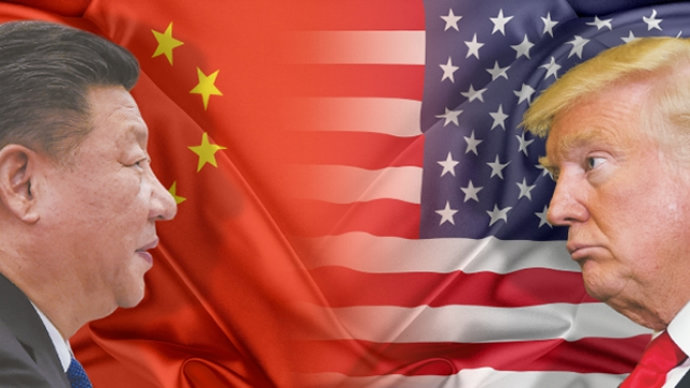
The new rare earths curbs announced by Beijing last week prompted US President Donald Trump to fire back on Friday by threatening to cancel a planned meeting with his Chinese counterpart Xi Jinping at the Asia-Pacific Economic Cooperation summit in South Korea later this month. The president also announced plans to put an additional 100% tariff on Chinese goods starting Nov. 1.
More recently, Trump softened the tone by signaling openness to doing a deal with Beijing, and Bessent said overnight he still expects Trump to meet with Xi in South Korea. The treasury secretary said he expects to meet with China’s vice premier “in Asia” before the Trump-Xi encounter.
Zhou Mi, a senior researcher at the Chinese Academy of International Trade and Economic Cooperation — a think tank affiliated with the Ministry of Commerce — downplayed concerns that Beijing’s latest move will disrupt a global supply chain involving rare earths.
Speaking during a Bloomberg TV interview on Tuesday, he indicated the country is still keen on exporting the minerals critical to electric vehicles, advanced electronics and military hardware. China’s manufacturers need customers to buy more of their rare earths products, he said.
“China is the No. 1 country for international trade,” Zhou said. “We do not want to put us in the very dangerous position of interrupting that.”
Source : Bloomberg.com