Trump, Ishiba Fail to Reach Trade Deal at G-7 Summit
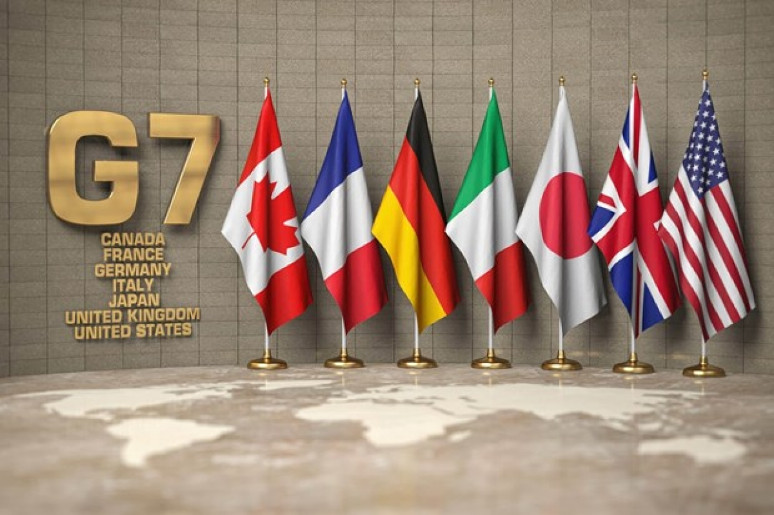
U.S. President Donald Trump and Japanese Prime Minister Shigeru Ishiba failed to reach an agreement on a trade package on the sidelines of the G-7 summit, an outcome that has pushed the Asian nation closer to a possible recession as U.S. tariffs batter its economy.
"There are still some points that both sides disagree on, so we have not reached an agreement on a trade package," Ishiba told reporters Monday in Calgary on the sidelines of the G-7 meeting.
The failure to reach a concrete agreement will raise questions about Ishiba's effectiveness as leader ahead of a crucial upper house election next month, after he called the summit a possible "milestone" opportunity in tariff negotiations that have dragged on for about two months. With a 25 percent car tax in particular dealing a direct blow to the country's most important export source, Ishiba's standing with Japanese voters is likely to suffer.
"We will continue to actively coordinate with the United States to reach an agreement that benefits both countries, without compromising Japan's national interests," he said. He added that he could not say when a deal would be reached and that negotiations would continue at the ministerial level.
Like other countries, Japan is subject to 25% tariffs on cars and auto parts and 50% tariffs on steel and aluminum. The 10% tariffs on other goods are set to rise to 24% in early July. Asked if the July deadline would be extended, Ishiba declined to comment.
There has been particular focus on auto tariffs, which Trump has threatened to raise further. The auto industry is crucial to Japan’s economy, employing about 5.6 million people, about 8.3% of the country’s workforce, and generating about 10% of gross domestic product, according to the Japan Automobile Manufacturers Association. Major automakers including Toyota Motor Corp., Honda Motor Co., Mazda Motor Corp. and Subaru Corp. are bracing for collective losses of more than $19 billion this fiscal year alone from the tariffs. “For Japan, cars are absolutely a matter of national interest.
We will do whatever it takes to protect our national interests,” Ishiba told reporters. The impact on major automakers will reverberate through the network of small and medium-sized businesses that are the backbone of the industry. Two-thirds of Japan’s workforce is employed by companies with fewer than 1,000 employees, and many of those jobs are related to the auto industry. Read more: Trump’s Auto Tariffs Strike at the Heart of Japan’s Economy
In the run-up to the summit, local media reported a range of potential concessions suggested by Japan in an effort to close the trade gap with the U.S., from importing more U.S. soybeans to shipbuilding cooperation.
Tokyo has also tried to negotiate with the U.S. by citing its position as a major U.S. investor as leverage, saying tariffs would hurt Japan’s ability to invest in the U.S. by cutting into its domestic economy.
Japan’s accumulated foreign direct investment in the U.S. reached $783 billion by the end of 2023, and Ishiba pledged to increase Japan’s overall investment in the U.S. to $1 trillion during his summit with Trump in February.
In return, Ishiba and his chief negotiator Ryosei Akazawa have consistently pushed for a complete elimination of all tariffs imposed by the U.S.
In the end, those promises appear to have failed to impress the U.S.
Ishiba has enjoyed a recent boost in his ratings, thanks in part to Agriculture Minister Shinjiro Koizumi’s response to rising rice prices — an issue that has become a symbol of how inflation is hitting households. His approval rating rose 5 percentage points to 38%, according to a poll conducted over the weekend by broadcaster FNN.
But the lack of substantial progress on a trade deal even after meeting with Trump threatens to erase that progress.
Japan was one of the first countries to start talks with the U.S. and was seen as the first to reach a deal. But it appears to be lagging behind other countries as the U.S. reaches a deal with the U.K. and reaches a truce over tariffs with China.
Source: Bloomberg