Trump’s 25% US Auto Import Tariff Takes Effect, Upping Costs
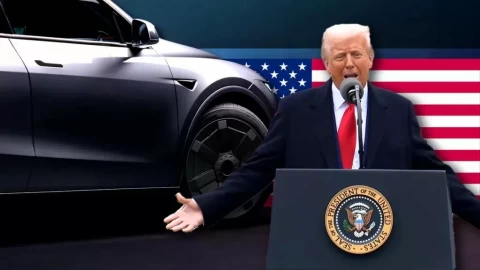
President Donald Trump’s 25% tariff on US auto imports took effect on Thursday in a move expected to dramatically increase costs and upend industry supply chains.
Certain auto parts will also be hit by an equivalent levy no later than May 3 under a plan Trump announced last week. The measures are expected to potentially add thousands of dollars to new-vehicle prices and weigh on industry sales.
The implementation came a day after Trump said the US would impose a 10% tariff on every country that exports to the US, plus additional duties targeting about 60 nations. Although imported cars and parts are exempt from those so-called reciprocal tariffs, carmakers are already reeling from Trump’s escalating trade war.
“While the sector may feel it just dodged a bullet, we remain concerned that vehicle and parts tariffs are here to stay and will add a substantial cost burden,” Bernstein analyst Daniel Roeska said in a note to clients.
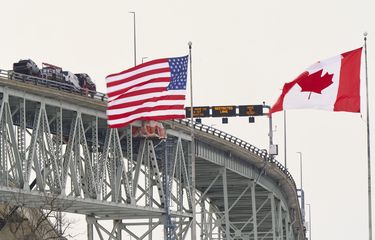
The US will also keep existing 25% tariffs on Canada and Mexico, and an exemption for goods that comply with the free trade agreement between the countries will remain indefinitely, officials said. Those levies were initially imposed to urge action to curb the flow of fentanyl. The countries would switch to the new tariff regime if those initial levies are lifted, officials said.
Car buyers have been rushing to US showrooms to lock in deals before potential price hikes from the levies. That drove March sales to an annual rate of about 17.8 million vehicles, the most since April 2021, according to JP Morgan analyst Ryan Brinkman. But as that supply runs out, automakers are bracing for significant potential cost increases and supply chain turmoil from Trump’s new tariffs specifically targeting imported vehicles and parts.
Automaker shares fell as Trump announced the much-anticipated measures before paring losses. General Motors Co. was down 1.3% in premarket trading in New York, while Tesla Inc. tumbled 5% and Ford Motor Co. slipped 1%. Shares of Chrysler parent Stellantis NV were flat.
Auto executives continue to lobby the administration to limit the fallout, with Ford, GM and Stellantis focusing their efforts on excluding certain low-cost car components from the tariffs.
Source: Bloomberg