Trump To Escalate Global Trade Tensions With 'Liberation Day' Tariffs
US President Donald Trump is expected to impose sweeping new reciprocal tariffs on global trading partners on Wednesday, ending decades of rules-based trade, risking higher costs and likely drawing retaliation from all sides.
Details of Trump's "Liberation Day" tariff plan are still being formulated and are being closely guarded ahead of an announcement ceremony in the White House Rose Garden scheduled for 4 p.m. Eastern Time (2000 GMT).
The new duties will take effect immediately after Trump announces them, while a separate global tariff of 25 percent on auto imports will take effect on April 3.
Trump has said his reciprocal tariff plan is a move to match generally lower U.S. tariffs with those imposed by other countries and counter non-tariff barriers that hurt U.S. exports.
However, the format of the tariffs has been unclear amid reports that Trump is considering a universal 20 percent tariff.
"I can't recall a situation where the stakes are this high, but the outcomes are so unpredictable," said Steve Sosnick, chief strategist at Interactive Brokers (NASDAQ:IBKR). "Unexpected things are going to happen and nobody knows the details."
A former first-term Trump trade official told Reuters that Trump would likely impose comprehensive tariffs on individual countries at somewhat lower levels.
The former official added that the number of countries facing tariffs would likely exceed the roughly 15 countries that Treasury Secretary Scott Bessent has previously said the administration is focusing on because of their large trade surpluses with the U.S.
Bessent told House Republicans on Tuesday that the reciprocal tariffs are a "limit" on the highest U.S. tariff levels that countries would face and could be lowered if they meet the administration's demands, according to Republican Representative Kevin Hern.
Ryan Majerus, a former Commerce Department official, said that a universal tariff would be easier to implement given the limited timeframe and could generate more revenue, but that individual reciprocal tariffs would be more tailored to a country's unfair trade practices.
“Either way, the impact of today’s announcement will be significant across a range of industries,” said Majerus, a partner at the law firm King and Spalding.
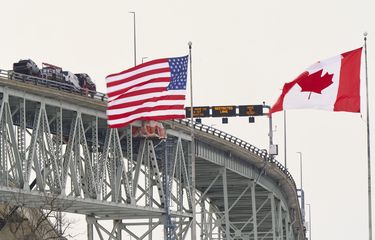
In just 10 weeks since taking office, the Republican president has imposed new 20% tariffs on all Chinese imports for fentanyl and fully restored 25% tariffs on steel and aluminum, expanding them to nearly $150 billion in downstream products. A monthlong reprieve for most Canadian and Mexican goods from the 25% fentanyl-related tariffs is set to expire Wednesday.
Administration officials have said that all of Trump’s tariffs, including previous ones, stack up, so Mexican-made cars that previously had a 2.5% tariff on entry into the U.S. would be subject to fentanyl tariffs and auto sector tariffs, at 52.5% — plus any reciprocal tariffs Trump may impose on Mexican goods.
The growing uncertainty over tariffs is eroding investor, consumer and business confidence.
Nervous investors have been selling stocks aggressively for more than a month, wiping nearly $5 trillion off the value of U.S. stocks since mid-February.
"Ideally, we would just get a number and then we could figure out the downstream impact," said Sonu Varghese, global macro strategist at Carson Group.
"But my fear is we won't get that, or even if we do get a number it will be subject to negotiation," he said.
The dollar edged higher and other currencies held in tight ranges on Wednesday as traders awaited details of Trump's plan.
"Markets will be nervous ahead of the announcement," said Carol Kong, a currency strategist at Commonwealth Bank of Australia.
Source: Investing.com