Trump Criticizes the Fed, Urges Faster US Interest Rate Cuts
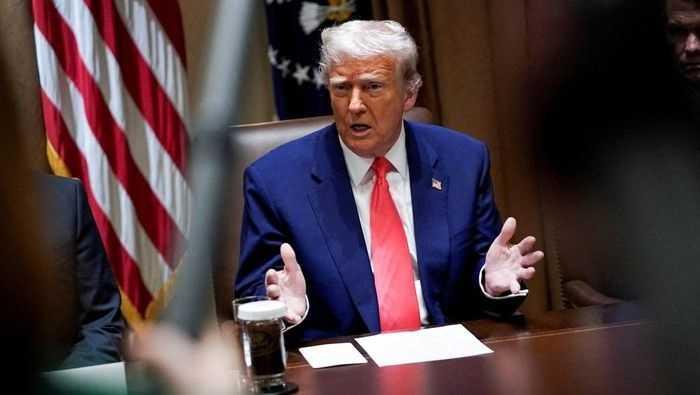
US President Donald Trump once again criticized Federal Reserve policy on Wednesday, arguing that interest rates should be lowered more quickly despite relatively strong economic data. Trump believes that favorable economic conditions should not serve as a reason for the central bank to maintain tight monetary policy for too long.
Trump questioned the stance of certain Federal Open Market Committee (FOMC) members, even as he expressed support for Fed Chair Kevin Warsh, who assumed office in May. According to Trump, interest rate decisions are influenced not only by economic conditions but also by the dynamics of differing views within the Fed's board.
This criticism comes amidst high US borrowing costs. Trump argues that lower interest rates are needed to sustain economic growth momentum while easing the burden of government debt financing, which is approaching US$40 trillion. The US economy grew by only about 1.5% year-on-year in the second quarter, a slowdown from the 2.1% growth recorded in the previous quarter.
However, minutes from the July FOMC meeting indicate that many Fed officials are still considering the need for rate hikes should inflation fail to slow further. Although recent inflation data show signs of improvement, the annual inflation rate remains above the Fed's 2% target, meaning the risk of further tightening has not been entirely eliminated.
Trump also compared US borrowing costs with those of other nations, such as Switzerland, which maintains significantly lower interest rates. Nevertheless, he emphasized that he sees no serious crisis in the US bond market. On the same day, the US Treasury Department expanded its long-term Treasury buyback program to help alleviate a surge in yields and improve market liquidity.
Newsmaker Analysis: Political pressure to lower interest rates is increasingly clashing with the Fed's cautious stance on inflation. If economic data continues to weaken and inflation falls, the likelihood of policy easing could increase, putting downward pressure on the dollar and Treasury yields. Conversely, if inflation rises again due to energy prices and Middle East conflicts, the Fed might keep interest rates high for longer, potentially widening the rift between the White House and the central bank.
Source: Newsmaker.id