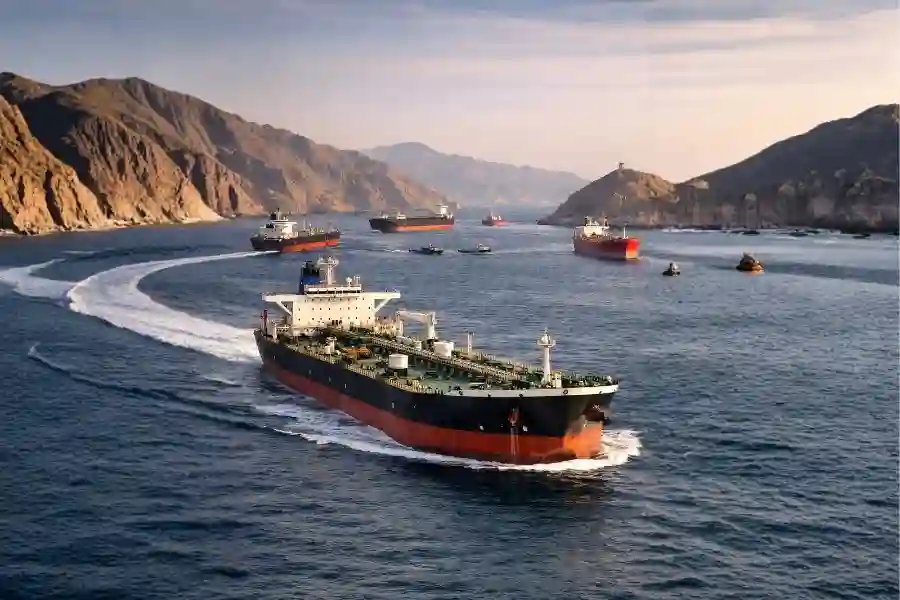
Hormuz Shipping Slows; Risk of Oil Supply Disruption Rises Again
Shipping activity through the Strait of Hormuz slowed sharply over the weekend following attacks on several tankers. Vessel tracking data from Kpler shows that only five commodity vessels traversed the strait on Saturday, while no ships were recorded on Sunday.
This figure represents a drastic drop compared to the previous weekend, when 31 vessels passed through. The slowdown occurs amidst stalled talks between the United States and Iran aimed at resolving Middle East conflicts and reopening this vital energy shipping lane.
Kpler data indicates that vessels entering on Saturday included an empty Very Large Crude Carrier (VLCC) with its automatic identification system (AIS) turned off, and an Indian-flagged Very Large Gas Carrier (VLGC) utilizing an Iranian route. Meanwhile, a small tanker carrying Iranian fuel oil was recorded leaving the area.
Shipping activity appeared to come to a near-halt after the United Arab Emirates announced that three vessels operated by the Abu Dhabi National Oil Company had been attacked while in transit last week. The United States has also stated it could maintain a naval blockade against Iran indefinitely, while Tehran insists Washington must meet Iranian conditions for shipping to return to normal.
From a market perspective, the slowdown in vessel traffic through the Strait of Hormuz could once again heighten the risk of global oil and gas supply disruptions. Prior to the conflict, this route handled approximately one-fifth of global crude oil and LNG shipments. If vessel activity remains restricted, risk premiums on Brent and WTI could rise, while energy-driven inflationary pressures might once again loom over global markets. (asd)*
Source: Newsmaker.id