Canada to Add New Tariffs to US Steel, Curb Foreign Imports
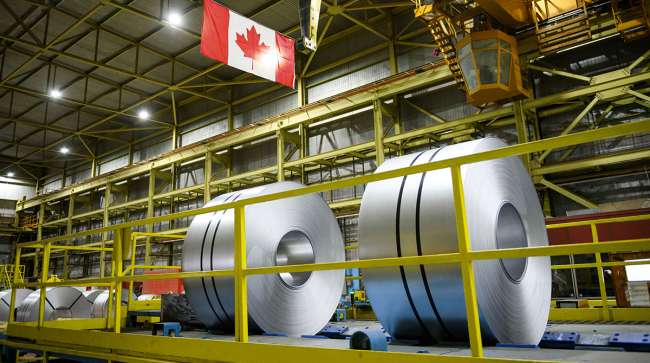
Canada will add new tariffs to a list of steel derivative products, including many US-made items, as Prime Minister Mark Carney seeks to protect an industry badly hurt by the trade war and a flood of cheap Chinese metal.
Carney announced the new 25% levy Wednesday as part of a suite of measures to help steel and softwood lumber producers. The tariff will apply to products including wind towers, prefabricated buildings, fasteners and wires. About 40% of the items on the list are typically imported from the US, a government official said in a background briefing.
The new tariff will apply starting Dec. 26.
The move marks the first time Carney has added new import taxes to US products since he dropped most of Canada’s retaliatory tariffs in September. A broad 25% tariff on US steel and aluminum remains, and the prime minister has resisted calls to match Trump’s 50% levy on those metals.
Carney has struck a conciliatory tone with Trump for months in an effort to reach a deal to lower the US sectoral tariffs. But Trump called off the talks on Oct. 23 after he was angered by an Ontario government anti-tariff ad, and it appears unlikely the negotiations will resume anytime soon.
The prime minister also said he would extend a timeline — for the final time — for Canadian companies to apply for remission from tariffs on steel they import from the US to use in manufacturing, food packaging and agriculture. After Jan. 31, firms will no longer be able to seek tariff relief for those uses.
Carney also announced plans to lower the tariff-rate quota level for steel imports from countries with which Canada doesn’t have a trade agreement to 20% from 50%, confirming an earlier report from Bloomberg News. That means steel produced in those nations will face a tariff when their volumes exceed 20% of what they sold to Canadian buyers last year.
For countries with which Canada does have a trade agreement, such as South Korea, Canada will start applying tariffs when shipments hit 75% of 2024 levels. Previously, that was 100%. But that particular rule doesn’t apply to the US and Mexico.
Lumber Aid
As well, the government will add C$500 million ($355 million) to a loan program administered by the Business Development Bank of Canada to help companies in the softwood lumber business. It will also earmark C$500 million under the Large Enterprise Tariff Loan facility to support firms in the sector.
In an effort to boost domestic sales in both industries, the government will work with railway companies including Canadian National Railway Co. so they can offer a 50% discount on shipments of steel and lumber within Canada. This may include providing subsidies.
Carney also plans to top up a program that provides benefits to employees who agree with their employers to work reduced hours, due to a decrease in business activity. The government will earmark more than C$100 million over two years to help up to 26,000 workers in various sectors.
In addition, the prime minister pledged to implement his government’s Buy Canada policy later this year, requiring that all defense and construction contracts worth over C$25 million prioritize Canadian materials, including steel and lumber. It will also apply across federal grants and contribution programs.
He also promised a task force to examine and report on how the forest industry can maintain its competitiveness over the long-term.
The protections for Canadian steel producers extend measures announced by Carney in July, which placed a tariff on steel from non-trade-deal countries when volumes hit half of 2024 levels. Above that threshold, a 50% tax applies. That move was denounced by China, which warned it would damage economic and trade co-operation between the countries.
Canadian steel companies that export to the US market have been hurt by the Trump administration’s 50% tariff on an array of foreign-made steel and aluminum products. The Canadian and Ontario governments extended an emergency loan to Algoma Steel Group Inc., an Ontario producer that’s highly exposed to the problem.
The main steel industry group in Canada has been asking for the government to erect a higher tariff wall, to prevent foreign steel producers that no longer have easy access to the US from simply dumping the metal into the Canadian market.
Source : Bloomberg.com