

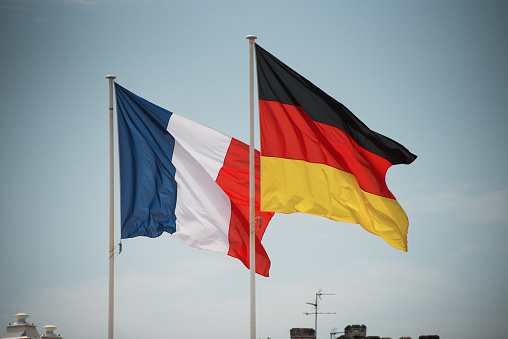
Germany’s Private Sector Keeps Growing Before US Trade Deadline
Germany’s private sector kept growing in July, a sign of resilience in the face of Donald Trump’s intensifying tariff threats and optimism over the government’s spending push.
While S&P Global’s Composite Purchasing Managers’ Index for Europe’s largest economy slipped to 50.3 from 50.4 in June, it remained above the 50 threshold separating expansion from contraction, data Thursday showed. Analysts had expected a reading of 50.7.
Manufacturing conditions continued to improve, with its PMI index climbing to 49.2 — the highest level in three years. The services gauge came in just above 50.
“We see increasing signs of a recovery in the manufacturing sector,” Cyrus de la Rubia, an economist at Hamburg Commercial Bank, said in a statement, adding that a sustained rise in export orders means it’s “reasonable” to expect a continued advance in output. “Even higher US tariffs should not fundamentally change this outlook.”
The numbers suggest hope about Chancellor Friedrich Merz’s plans for defense and infrastructure outlays — worth hundreds of billions of euros over the coming years — is balancing out concerns about worsening trade ties with the US.
Rising real wages and expansionary fiscal policy should help the services industry “to regain its footing,” according to de la Rubia.
The European Union is trying to clinch a deal with the Trump administration after the president threatened to impose 30% duties on the bloc from Aug. 1. But diplomats briefed on the negotiations say progress is being made toward a rate of 15%.
Resilience in the PMI numbers supports the European Central Bank‘s plan to keep interest rates steady at its meeting later Thursday. Many policymakers have said that with inflation around the 2% target, they can afford to wait for more clarity on trade.
In France, meanwhile, activity improved. The composite PMI rose to 49.6 from 49.2 as both manufacturing and services fared better. Analysts had expected a slight deterioration.
“While momentum has been trending upward since the beginning of the year, the index remains below the critical 50-point threshold,” said Jonas Feldhusen, an economist at Hamburg Commercial Bank. “France remains under considerable pressure, both economically and politically. GDP growth is unlikely to exceed the 1% mark this year.”
The government is still consumed by efforts to rein in the euro zone’s widest budget gap, though Prime Minister Francois Bayrou’s latest proposal has sparked the ire of opposition parties, signaling more political turbulence ahead.
“Questions are mounting over whether Prime Minister Bayrou can sustain his austerity course politically,” Feldhusen said. “Should an agreement on the austerity package be reached, it would reduce disposable income for many households — posing clear downside risks for domestic demand and especially for the services sector.”
PMIs are closely watched by markets as they arrive early in the month and are good at revealing trends and turning points in an economy. A measure of breadth of changes in output rather than depth, business surveys can sometimes be difficult to map directly to quarterly GDP.
Earlier in the day, PMIs from Australia, Japan and India remained comfortably above 50. Later Thursday, the UK and US composite readings are also expected to signal growth.
Source : Bloomberg








