Does the Trump Deal Benefit or Lose ASEAN?
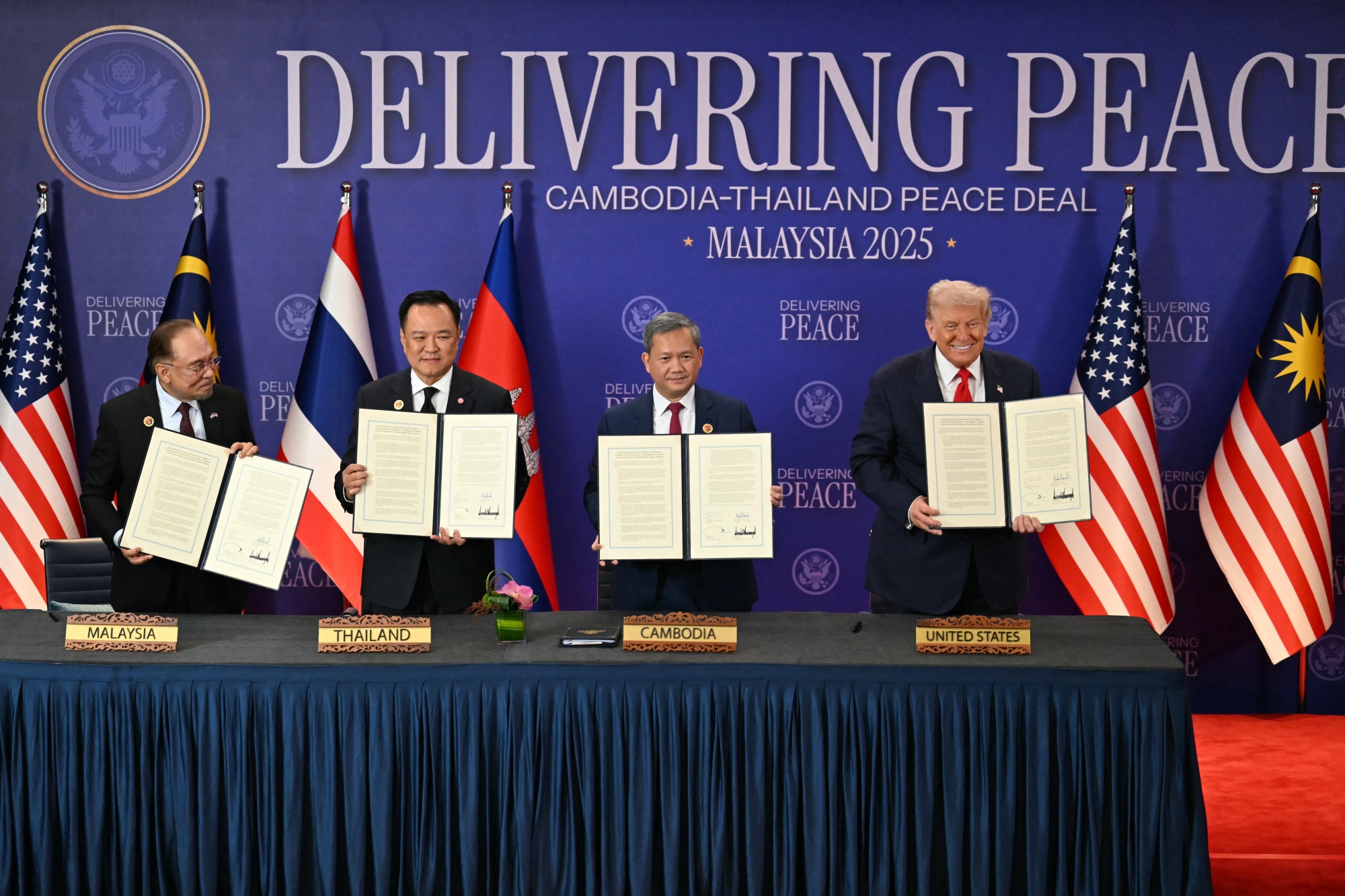
US President Donald Trump arrived in Southeast Asia with a package of trade deals he called "historic," landing in Kuala Lumpur and announcing deals with Malaysia and Cambodia, plus preliminary frameworks for Thailand and Vietnam. Essentially, these countries promised to buy billions of dollars worth of US goods and provide wider access for US exports, ranging from aircraft industry protections and technology components to strategic commodities. In return, the US promised to reduce certain trade barriers and ease some tariffs.
But a closer look at the details reveals that the deal is not entirely balanced. Southeast Asian countries have failed to lower the US's base tariffs, which are in the range of 19%-20%, the tariffs Trump initially aggressively imposed at the beginning of the year. Some products from Malaysia and Cambodia are exempt, but the categories are limited. Economists call this structure "one-way": it places more burdens on local Southeast Asian producers, while the US gains freer market access and promises of substantial purchases for its own industries.
Malaysia serves as a case study. According to preliminary calculations, the US tariff cuts for Malaysia only fully apply to a small portion of exports—roughly 0.2% of Malaysia's GDP—while the majority of products remain subject to high tariffs. The Malaysian stock market did rise about 0.3% on Monday, but that rally was still much smaller than the large rallies in Japan and South Korea, a sign that investors had anticipated the terms of the deal.
In exchange, Malaysia and other countries were asked to make concrete commitments: to purchase tens to hundreds of billions of dollars worth of US-made aircraft, data center equipment, semiconductor equipment, and industrial technology over the next few years. Malaysia also pledged to invest tens of billions of dollars in the US technology sector. Regional trade officials called this more than just trade—it was almost an “economic alliance package,” as Southeast Asian countries were also asked to align with US regulatory standards and limit certain ties with China, particularly in critical minerals and sensitive technology supply chains.
The stakes are high, as ASEAN is now a larger supplier of goods to the US than China, with Vietnam being the region's largest contributor. But a major question remains: how the US will assess “transshipment” goods, products originally from China but routed through Southeast Asia. Goods deemed transshipped could be subject to punitive tariffs of up to 40%. The detailed regulations are unclear, making industry players wary. All of this comes as Trump is also exerting direct pressure on China—he is scheduled to meet with Xi Jinping this week—so the future direction of US–China–ASEAN relations will also determine the direction of regional exports, especially for manufacturing countries like Vietnam. (asd)
Source: Newsmaker.id