Trump Claims Israel–Hezbollah Agree to Halt Attacks, Iran Talks Still Ongoing
US President Donald Trump said Israel and Hezbollah have agreed to halt attacks in Lebanon, saying talks with Iran are ongoing despite recent violence that has threatened negotiations. Trump said he spoke separately with Israeli Prime Minister Benjamin Netanyahu and representatives of Hezbollah, a group the US has designated a terrorist organization.
In a social media post on Monday (June 1), Trump stated that no troops would be heading to Beirut and that troops “on their way” had been turned back. He also claimed that after the call with Hezbollah, “all fire will cease,” with Israel not attacking Hezbollah and vice versa. To date, there has been no direct public confirmation from Israel or Hezbollah of the ceasefire claim.
Trump's statement comes amid concerns that escalation in Lebanon could derail indirect US–Iran talks to extend the ceasefire. Iran earlier that day announced it would suspend negotiations in protest of Israel's offensive in Lebanon. However, Trump, in a follow-up post, said talks with Iran were “continuing, rapidly,” despite Tehran’s narrative, reported by Tasnim, that the exchange of documents through a mediator would be halted and raised the threat of a complete closure of the Strait of Hormuz.
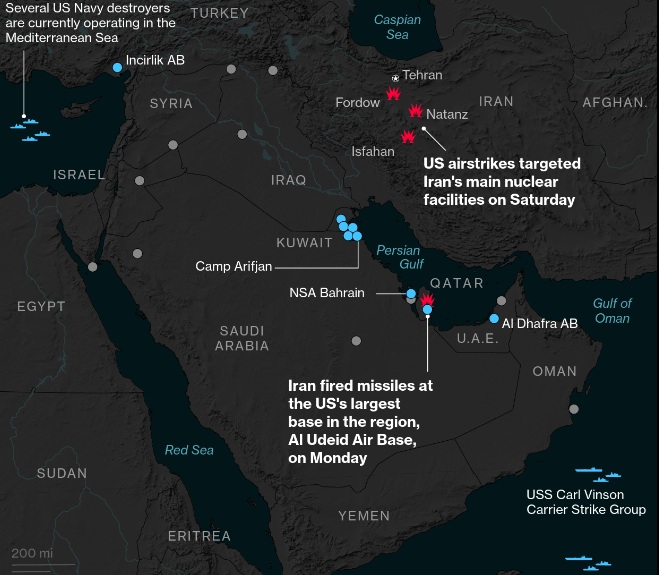
Tensions around Hormuz have also escalated. The US military reported attacks on Iranian radar and command-control sites over the weekend as a “measured” response to Iranian actions, including the shooting down of a drone in international waters. Central Command also said US forces intercepted two Iranian ballistic missiles targeting US forces in Kuwait, while reports said a total of three missiles were targeted at the Ali Al-Salem base, with one intercepted by Kuwait.
For its part, Tehran has insisted that any agreement with Washington must apply to all fronts of the conflict, including Lebanon. Iran has also warned that it could target northern Israel if attacks on Lebanon continue, according to semi-official media reports. Tasnim added that Iran and the “Axis of Resistance” network have also placed Hormuz and Bab el-Mandeb on the agenda, expanding the spectrum of geopolitical risks in key shipping lanes.
For the market, the combination of unverified ceasefire claims and escalation in Hormuz means the risk remains high and highly headline-driven. The next key variables will be whether Israel and Hezbollah confirm a halt to attacks, whether Iran actually suspends negotiations or returns to the negotiating table, and how Hormuz's operational status evolves in the coming days. (Arl)
Source: Newsmaker.id