Hormuz Still Blocked as Hundreds of Ships Queue to Exit Despite Fragile Ceasefire
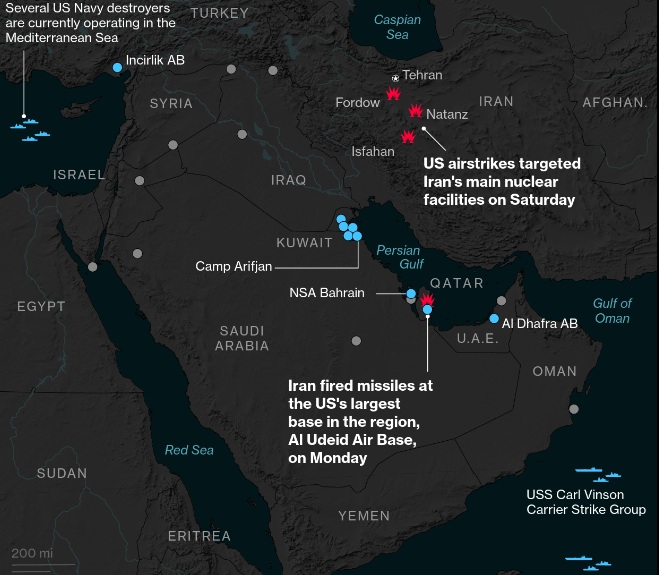
The Strait of Hormuz remained largely blocked on Wednesday as shipowners tried to determine whether it is safe to transit the vital waterway after a fragile U.S.-Iran ceasefire was announced overnight.
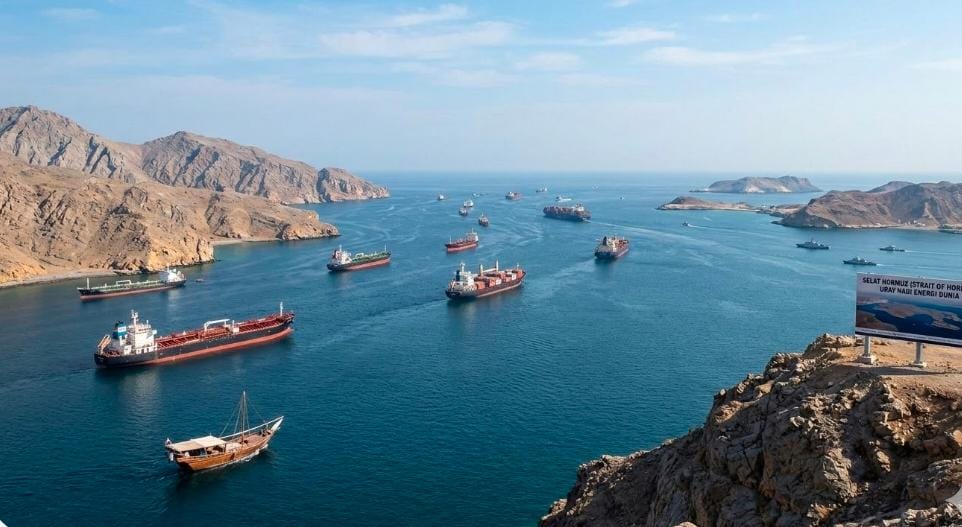
Only three ships were seen leaving the region on Wednesday, according to vessel-tracking data compiled by Bloomberg. Some had links to Iran, and Iranian media later reported that tanker passage would remain blocked following attacks on Lebanon. In normal times, roughly 135 ships cross the strait each day, and more than 800 freighters are now stuck inside the Gulf, most waiting to depart.
While shipowners and insurance groups welcomed the ceasefire, they said more detail is needed before safe transit can be confirmed. Iran has said a condition of the ceasefire is that its armed forces coordinate navigation through what is widely viewed as the world’s most important oil chokepoint. Tehran has also been charging tolls of as much as $2 million per transit for some carriers.
“Time will tell whether it is a pause or a peace but, in the meantime, it is highly unlikely that trade into the Gulf will simply resume,” said Neil Roberts, head of marine and aviation at the Lloyd’s Market Association. “The region remains at heightened risk with none of the underlying tensions resolved.”
Ships of all types were seen clustered on both sides of Hormuz on Wednesday morning, including around Dubai in the Persian Gulf and Khor Fakkan in the Gulf of Oman. One crew reported hearing a warning from Iran that navigation still requires permission from the Islamic Republic, according to a person familiar with the matter — underscoring the uncertainty shipowners face.
Major carriers struck a cautious tone. A.P. Moller-Maersk said the pause “may create transit opportunities, but it does not yet provide full maritime certainty.” Japan’s Nippon Yusen said it was monitoring the situation. Germany’s Hapag-Lloyd said it will continue to avoid Hormuz for now, while describing the ceasefire as a positive development. Bimco, whose members control almost two-thirds of global seaborne freight capacity, said it is still awaiting details of safe navigation plans from the U.S. and Iran. “Leaving the Persian Gulf without prior coordination with the U.S. and Iran would entail heightened risk and would not be advisable,” said Jakob Larsen, the group’s chief safety and security officer.
How quickly flows normalize will be a key variable for global commodity prices. The strait typically handles about a fifth of the world’s oil and liquefied natural gas, and has been all but closed since late-February U.S. and Israeli strikes prompted Iran to tighten its control, triggering an unprecedented supply squeeze. Throughout the conflict, shipowners have repeatedly cited crew safety as a reason to avoid transiting.
Confusion has also been compounded by what shipowners, brokers and insurers described as differing versions of Iran’s peace plan. Iran says it has agreed to two weeks of safe passage in coordination with its armed forces and within “technical limitations.” By contrast, Trump announced a “COMPLETE, IMMEDIATE, and SAFE OPENING,” and separately said the U.S. would be “helping with the traffic buildup” and “hangin’ around” to ensure smooth flows — an approach seen as unlikely to appeal to Tehran.
“You don’t switch global shipping flows back on in 24 hours,” said Jennifer Parker, an adjunct professor at the University of Western Australia Defence and Security Institute. “Tanker owners, insurers and crews need to believe the risk has actually reduced — not just paused.”
Energy carriers make up a large share of the fleet trapped inside the Gulf, according to Kpler: 426 tankers carrying crude and clean fuels, plus 34 liquefied petroleum gas carriers and 19 liquefied natural gas vessels. The remainder are hauling dry commodities or containers. As of Wednesday morning, more than 1,000 vessels were waiting on both sides of the strait, in clusters around Dubai and Khor Fakkan.
Two bulk commodity carriers — at least one of which had called at Iran — crossed Hormuz on Wednesday, Bloomberg vessel-tracking data showed. One took a route between Iran’s Larak and Qeshm islands, an area the shipping industry has dubbed the Iranian “tollbooth.” Kpler data also suggested a U.S.-sanctioned oil tanker flagged to Iran, Tour 2, may have crossed.
“It’s good to see that the market is reacting the way it is, but this is day one of a tentative ceasefire,” Michael Pregent, a former U.S. intelligence adviser, told Bloomberg Television. “We are likely to see the regime control who moves through, who is charged what, and who is denied.”
LNG movements will be watched particularly closely. No loaded LNG carrier has transited since the war began, and a recent attempt by two tankers ended in a last-minute U-turn. About 20% of global LNG traffic moved through Hormuz last year.
An International Maritime Organization tally at the end of March found around 20,000 civilian seafarers stuck aboard trapped ships and support vessels, facing dwindling supplies, fatigue and psychological stress, the UN agency warned. The IMO said Wednesday it welcomed the agreement. Secretary-General Arsenio Dominguez said he is working with relevant parties to implement an appropriate mechanism to ensure safe transit through the Strait of Hormuz, adding that the priority is to ensure an evacuation that guarantees navigational safety.
Source : Newsmker.id