The World Is Getting Worried: NATO Shaken, Ukraine Peace Path Completely Failed
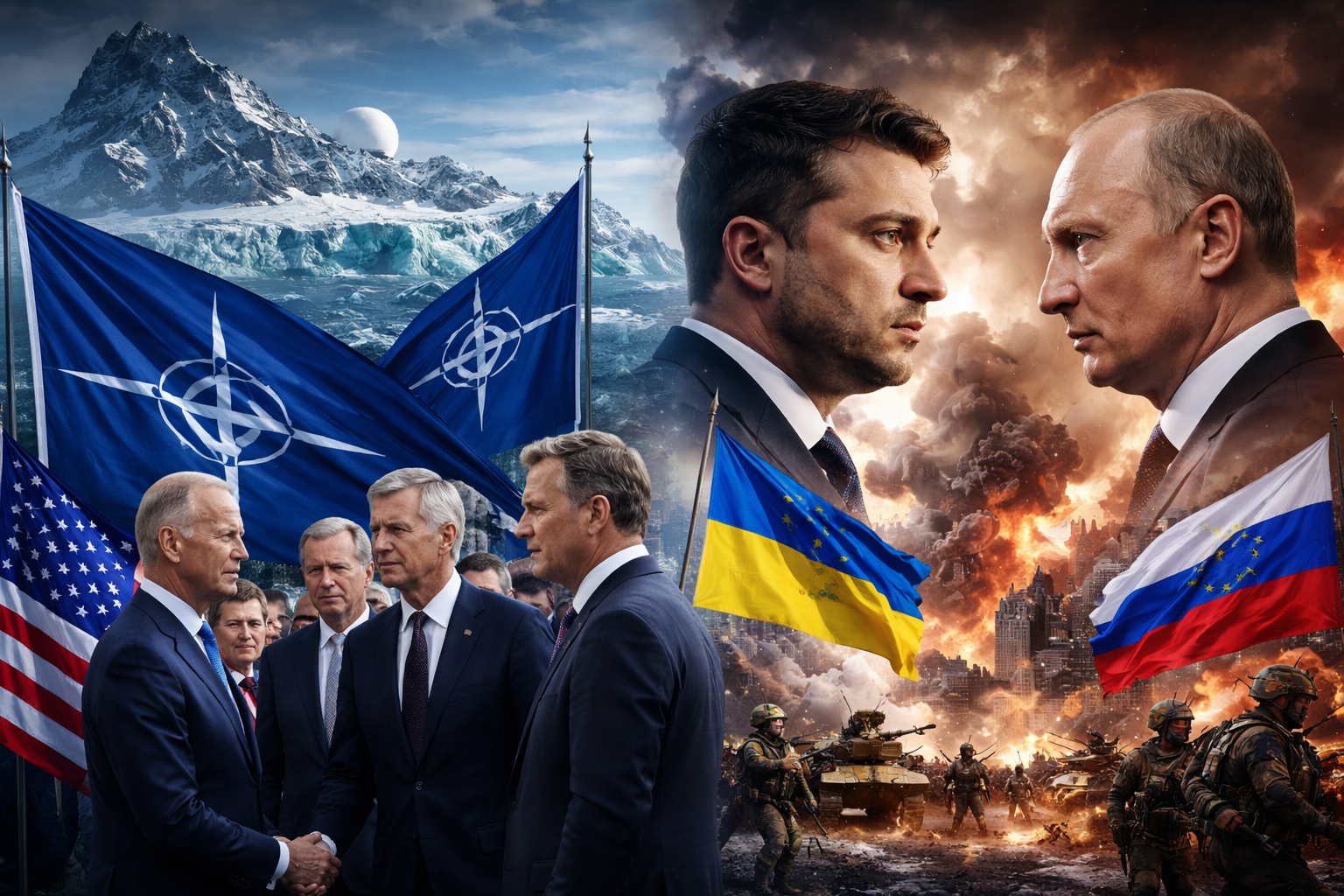
The brief tension over Greenland suddenly created a strange atmosphere in the Western camp. Within days, what initially seemed a distant issue turned into a test of trust: how solid is the relationship between the United States and NATO, if such a sudden difference in stance suddenly emerges in public.
The chronology began when Washington again pushed the Greenland agenda—with a tough and pressure-filled communication style. Many in Europe took this as a signal that strategic decisions could change quickly, and allies were forced to follow suit. At this point, what was disrupted was not just the Greenland issue, but also the sense of political security within the alliance.
The European reaction was swift. Several leaders voiced a firm stance, but also tried to de-escalate the situation to prevent it from escalating into open conflict. This tension did not last long, but was enough to raise a major question: if the Greenland issue alone could trigger friction, what would happen if a more serious crisis occurred?
The situation then cooled slightly after signs of a softening tone and talks to find a new format for cooperation or arrangements. But even though tensions have eased, the psychological impact has already set in: trust is fragile and takes time to rebuild.
At almost the same time, global attention was also drawn to the US-mediated Ukraine–Russia talks in Abu Dhabi. On Saturday, the negotiations entered their second day and concluded without an agreement. This means that diplomacy is still ongoing, but no common ground has been found that can be consolidated into concrete results.
The absence of an agreement indicates that the core issues remain fraught: security, territory, and the form of guarantees acceptable to both sides. In the negotiating room, this usually means talks will continue—but markets and the public see it as a signal that a “quick peace” is still a long way off.
The big picture: these two events both added layers of uncertainty. Greenland made NATO appear easily distracted by politics, while Abu Dhabi showed that the Ukraine–Russia war has no clear way out. And when uncertainty builds, the world tends to go into high alert mode—with all the attendant effects on the economy, markets, and geopolitics.
The impact on gold prices is usually positive because these two issues both add to the sense of uncertainty in the market: the Greenland tensions are making investors doubt Western/NATO unity, while the stalemate in Ukraine-Russia talks is prolonging the risk of conflict. This combination drives safe-haven flows into gold (as a hedge against crises), so gold tends to remain strong or easily rise when new headlines emerge—although there could still be a brief correction if tensions suddenly subside or the market takes profits. (asd)
Source: Newsmaker.id