BIAS23: Behavioral Audits That Create More Consistent Content
In recent months, many creators and marketing teams have begun looking for a more streamlined way to understand content performance—beyond simply looking at views and likes. In response, BIAS23 (Behavioral Intelligence Audit System) emerged as a focused approach: reading audience behavior and content patterns, then transforming them into actionable decisions. Simply put, BIAS23 helps answer frequently puzzling questions: why did this content explode, why did that one drop, and what's the next step to ensure consistent results?
Bias23.com operates on the concept of “audits.” This means it doesn't just display numbers, but also assesses the quality of audience response to content: how strong the hook is at the beginning of the video, how long people stay watching, how motivated they are to comment or share, and even which topic patterns stick most in the minds of audiences. This is where the key difference lies compared to traditional analytics. While analytics show “how much,” behavioral audits attempt to explain “why,” making the results easier to translate into future content strategies.
One of BIAS23's frequently discussed capabilities is analyzing other accounts (competitors). By comparing content patterns, theme consistency, delivery style, and posting rhythm, users can discover which formats are working in a particular niche. The goal isn't to copy them blindly, but rather to take proven effective structures—for example, how to open a video, how to build curiosity, or how to close with a clear call to action—and adapt them to your own brand's character.
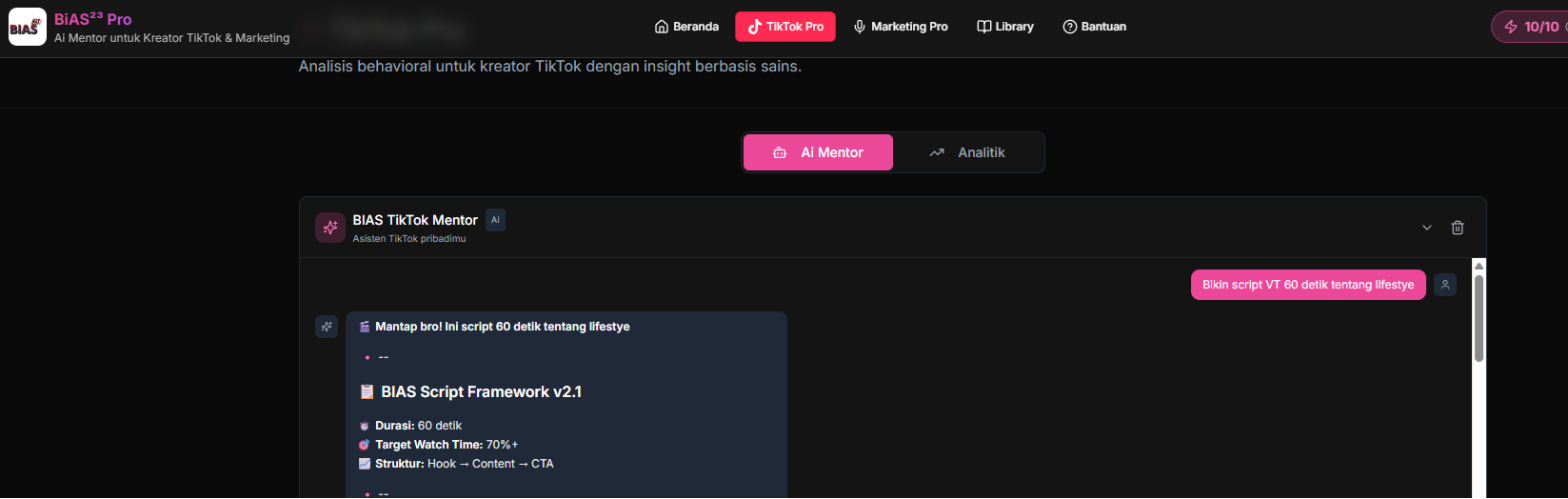
Beyond creators, @bias23_pro is also relevant for marketing teams because its output goes beyond reporting. Typically, the audit results are translated into an action plan: which content to keep, which to discontinue, and which experiments to test. From there, the content can be broken down into an "execution package"—for example, a list of video ideas, a hook template, a short script structure, a posting schedule, and KPIs to monitor weekly. This shifts the growth process away from relying on "gut feelings" and toward a system.
Among its advantages, @bias23_pro is often credited with helping reduce internal debate within content teams. Many teams often get caught up in the question "what makes good content?" and ultimately end up fighting over taste. With behavioral audits, decisions are more objective because they're based on audience response patterns. For organizations with multiple accounts or multiple hosts, this approach also facilitates standardization: proven winning formats can be benchmarked, then retested with small variations to stay fresh.
Ultimately, BIAS23 can be seen as part of a larger trend: content is becoming increasingly competitive, and growth is becoming increasingly difficult if you rely solely on instinct. By reading audience behavior patterns more deeply, BIAS23 aims to help users make faster and more informed decisions—from choosing topics and crafting hooks to setting realistic targets. For creators and brands seeking more consistent results, this kind of audit approach is becoming an increasingly popular alternative.
Source: bias23.com @bias23_pro