

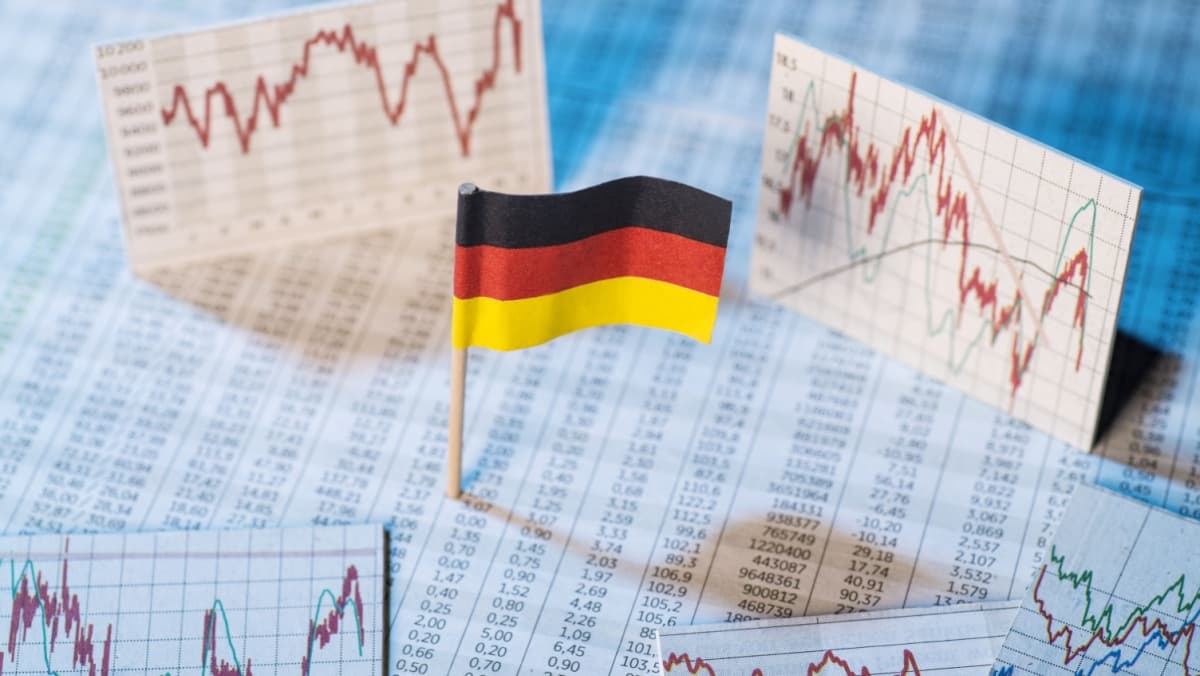
German Private-Sector Activity Contracts, Raising Risks to 2026 Growth Outlook
German private-sector activity contracted for a second consecutive month in May, signaling mounting headwinds for Europe’s largest economy amid elevated inflation and geopolitical tensions. S&P Global’s Composite Purchasing Managers’ Index (PMI) rose slightly to 48.6 from 48.4 in April, remaining below the 50 mark that separates expansion from contraction, while analysts had anticipated a modest improvement.
Both manufacturing and services sectors shrank, with services continuing to be the larger drag despite performing better than expected. S&P Global Market Intelligence economist Phil Smith noted that earlier manufacturing gains from stockpiling and efforts to offset supply bottlenecks are fading, contributing to a slowdown in output.
Germany’s economy, which began 2026 on a relatively strong footing, faces pressure with the government already halving its 2026 growth forecast to 0.5%. Neighboring France has experienced an even sharper slowdown, with its PMI dropping to a five-year low. Rising interest rates present an additional challenge, as the European Central Bank is considering a policy hike next month. Bundesbank President Joachim Nagel indicated that policymakers may need to act in June to mitigate the persistent energy shock stemming from Iran.
Inflation reached 3% in April, with input cost pressures continuing, although slower increases in output prices suggest companies are absorbing more of the burden. Smith highlighted that this dynamic may contain broader inflationary pressures but simultaneously squeeze profit margins.
PMIs remain key early indicators for market participants, capturing breadth in output changes and highlighting potential turning points, although they do not always directly translate to quarterly GDP movements. Markets will monitor upcoming ECB decisions and energy developments closely for signals on the trajectory of the German and broader eurozone economy.
Monitoring variables include: ECB policy announcements, energy price trends, upcoming PMI revisions, and quarterly GDP data.
Source : Newsmaker.id








