
Trending
hang-seng
Source: Newsmaker.id
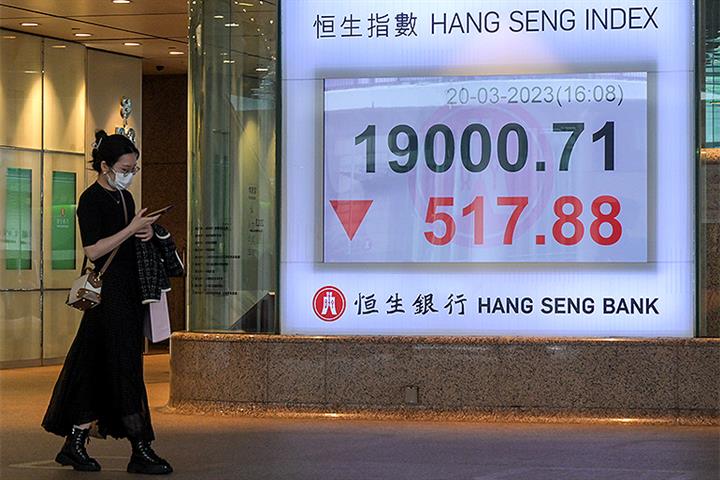
Hong Kong’s Hang Seng Index weakened again in Thursday’s trading session (November 12, 2026), falling by approximately 1.2%—or 287 points—and marking a decline for the second consecutive session. Selling pressure spread across the technology, retail, and financial sectors, reflecting growing investor caution regarding the outlook for global stock markets. The downturn was primarily triggered by uncertainty within the artificial intelligence (AI) industry, following a sharp drop in Nvidia shares during Wall Street’s after-hours trading. This development dampened sentiment toward Asian technology firms, which were already grappling with concerns over high valuations and the prospect of rising interest rates in the United States.
Pressure on the tech sector intensified after reports emerged that Nvidia shares had tumbled by about 8% in U.S. after-hours trading, following news that the company’s board of directors was considering replacing CEO Jensen Huang. The reports raised concerns regarding the continuity of leadership at a company that plays a pivotal role in the development of semiconductors and global AI infrastructure. However, it remains unclear whether a formal decision to remove the CEO has been reached. This uncertainty could weigh on investor confidence in the broader AI industry—particularly among Asian technology suppliers with ties to Nvidia.
Meanwhile, in Hong Kong, the initial public offering (IPO) market is also showing signs of a slowdown. Six companies that priced their shares this week reportedly set their offering prices near the low end of their marketed ranges, reflecting weaker demand from institutional investors. This trend suggests that appetite for new stock offerings is beginning to wane amid heightened market uncertainty. The weakening of IPO activity could exert additional pressure on the Hong Kong stock exchange, which has been striving to maintain its appeal as a major capital-raising hub in Asia.
Beyond issues within the technology sector, expectations of interest rate hikes by the Federal Reserve (the Fed) have also dampened investor appetite for risky assets. U.S. inflation data for October, which came in higher than anticipated, has strengthened the likelihood that the central bank will raise interest rates again in December. The prospect of higher borrowing costs could weigh on stock valuations—particularly for technology companies, which rely heavily on expectations of future earnings growth. In the Hong Kong market, shares of Tencent fell by 1.6%, AIA dropped 0.7%, Meituan declined 1.9%, Alibaba slid 2.6%, and CK Hutchison fell 3.3%. The decline in these key stocks indicates that selling pressure is not confined to the technology sector alone, but has also extended to companies in the consumer and financial sectors.