
Trending
hang-seng
Source: Newsmaker.id
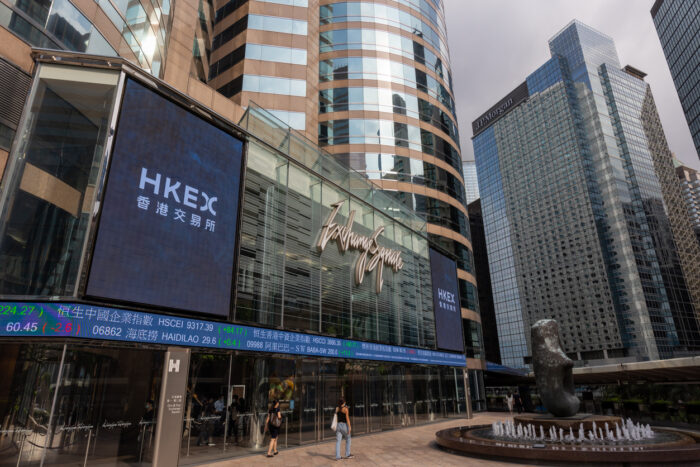
Hong Kong’s Hang Seng Index weakened again during Wednesday’s trading session (November 18, 2026), falling by approximately 0.6% to the 23,370 level. This decline left the Hong Kong market trailing behind several other Asian stock exchanges, which began to show signs of recovery—particularly within the technology sector, following a stronger-than-expected earnings report from Nvidia. However, optimism surrounding the prospects of the artificial intelligence (AI) industry failed to lift market sentiment in Hong Kong, as trade tensions between the United States and China—specifically regarding technology—continued to escalate. Investors have adopted a cautious stance toward stocks with close ties to the semiconductor industry and AI development.
The primary pressure stems from the expansion of U.S. restrictions on the export of high-end AI chips and access to remote computing services for Chinese firms. These policies have raised concerns regarding the ability of Chinese tech companies to secure the computing infrastructure necessary for developing and operating large-scale AI models. Internet giants such as Alibaba and Baidu are under particular scrutiny, given their ambitious plans for advancing artificial intelligence technology. Restricted access to hardware and computing services could drive up development costs, slow down expansion, and dampen growth expectations for China’s technology sector.
Investor attention has now shifted to the Asia-Pacific Economic Cooperation (APEC) leaders' meeting, taking place in Shenzhen, China, from November 18–19, 2026. The gathering is expected to provide an opportunity for dialogue on trade and technology relations between the United States and China, especially in light of the tightening restrictions on access to advanced semiconductor technology. Market participants will be closely watching to see whether discussions between the two nations signal a potential easing of tensions or, conversely, an intensification of the global technological rivalry. Diplomatic progress could potentially support a recovery in Chinese tech stocks, while persistent uncertainty may keep the Hong Kong market under pressure.
Regarding individual stock movements, several major Hong Kong-listed companies saw declines, weighing on the index. Shares of AIA fell 1.2%, Techtronic Industries weakened by 1.1%, and Akeso corrected by 2.5%, while JD Health faced the heaviest pressure, dropping 12.9%. Shares of semiconductor manufacturer SMIC also slipped 1.2% amid concerns over the impact of U.S. technology restrictions. Beyond geopolitical factors, investors are awaiting Tencent’s third-quarter earnings report, scheduled for release on Wednesday. These results will serve as a key indicator for assessing the resilience of China’s tech sector, particularly as it navigates rising investment requirements for AI and intensifying digital competition.