
Trending
US Dollar
Source: Newsmaker.id
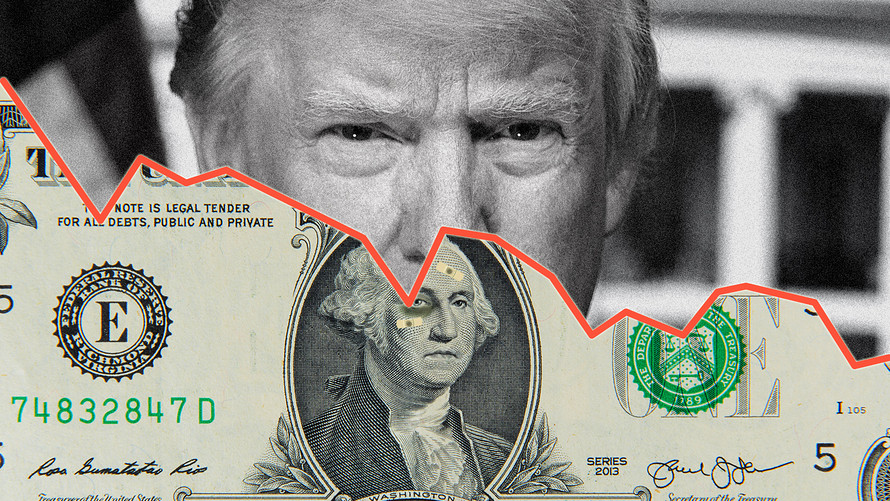
The US dollar fell to a one-month low against several major currencies on Wednesday (November 4) after the Democratic Party secured control of both the Senate and the House of Representatives in the US midterm elections. This outcome is expected to limit President Donald Trump’s room to maneuver in advancing his administration’s agenda for the remainder of his term.
The US Dollar Index (DXY) dipped to 101.245, its lowest level since late September. This decline is significant, especially when compared to the mid-October peak of 102.945—the highest level seen since April 2025.
The market perceives the Democratic victory as a potential constraint on the administration’s ability to push for additional fiscal stimulus. Should government spending become more restrained, US economic growth could slow, removing one of the key factors that previously bolstered the dollar. A potential slowdown in AI-related investments and data center development is also a point of concern.
Pressure on the dollar is evident across various currency pairs. The dollar fell to 0.8124 Swiss francs, an eight-week low. Meanwhile, the euro strengthened to US$1.1263—its highest level in nearly three weeks—and the British pound climbed to US$1.3486, a seven-week high.
Nevertheless, this weakness in the dollar may not necessarily be long-lasting. Trump retains authority over several critical areas, including foreign policy and trade. Furthermore, the Democratic victory could enhance the predictability of US fiscal policy and reduce the risk of policies that might otherwise expand the deficit over the next two years.
Newsmaker Analysis: In the short term, the midterm results exert additional pressure on the dollar, as the market anticipates that Trump’s fiscal maneuvering room has become increasingly constrained. In the medium term, however, more restrained fiscal policy could actually serve as a positive factor for the dollar. Consequently, the future trajectory of the DXY will depend heavily on the response of Treasury yields, Federal Reserve policy, and US economic data once the post-election euphoria subsides. (arl)
Source: Newsmaker.id