Asian Stocks Drop After US Selloff, Dollar Steady
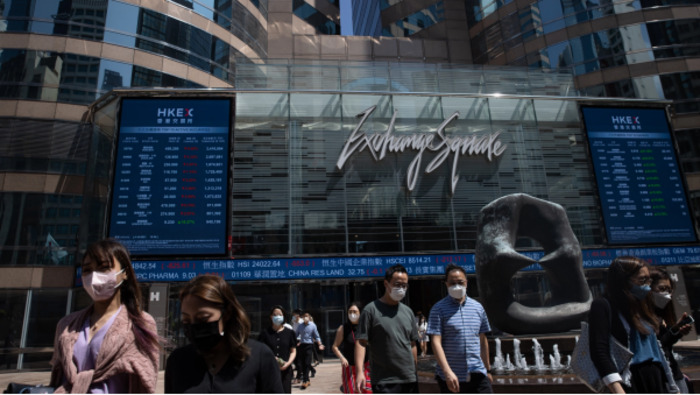
Asian stocks fell slightly at the open after President Donald Trump stepped up his criticism of Federal Reserve Chairman Jerome Powell, raising concerns about the central bank’s independence and triggering a selloff in US assets.
Asian stock indexes retreated while equity futures for US stocks rose slightly, suggesting stocks may bounce back after the S&P 500 dropped more than 2% on Monday. The greenback gauge was steady in early trade, after weakening to a 15-month low. Gold jumped to another record on safe-haven demand.
Trump’s assurances that tariff talks were underway did little to boost optimism as concerns mounted that he may be preparing to fire Powell for refusing to cut interest rates faster. The mood on Wall Street has shifted from optimism to ‘Sell America’ mode as Trump upends the global trade order by raising tariffs to the highest in a century, a move economists say will spike inflation and tip the US into recession.
“The crisis of confidence in US markets is deepening as Trump’s policies shake, if not destroy, the global economic order,” wrote Kyle Rodda, senior market analyst at Capital.com.
The president took to Truth Social on Monday, ratcheting up the pressure on the Fed chairman by insisting that there is “virtually” no inflation and that it’s time for a “preemptive cut.” The latest reading of the Fed’s preferred inflation gauge remained above the central bank’s target, and a new reading is due next week.
National Economic Council Director Kevin Hassett said Friday that Trump is studying whether he could fire Powell. The comments raise new questions about whether the Fed can maintain its longstanding independence with the president increasingly venting his displeasure that the central bank is not moving more quickly to cut interest rates.
“If Powell is fired, the initial reaction would be a massive injection of volatility into financial markets, and the most dramatic pullback in U.S. assets imaginable,” said Michael Brown, senior research strategist at Pepperstone. “Not only is the Fed’s independence clearly under threat, but the prospect of de-dollarization and a move away from U.S. hegemony is increasingly realistic.”
Trump’s tirades against the U.S. have forced a fundamental reassessment of assets for U.S. economic dominance. The dollar and Treasury bonds, traditional safe havens in times of stress, suddenly look a lot less attractive. The concerns are also being voiced by hedge fund elites. Paul Singer, founder of Elliott Investment Management, recently warned at a private event in Abu Dhabi that the U.S. dollar could lose its reserve currency status, according to people who attended. Meanwhile, Bank of Japan officials see little need to change their current stance of gradually raising interest rates for now despite the uncertainty stemming from U.S. tariffs, according to people familiar with the matter.
Source: Bloomberg