Asian Stocks Open Calm on Fed Disappointment
Asian stocks were set for a cautious open on Friday after U.S. equities posted weekly losses amid disappointment over Jerome Powell’s rejection of the Federal Reserve’s idea of supporting markets.
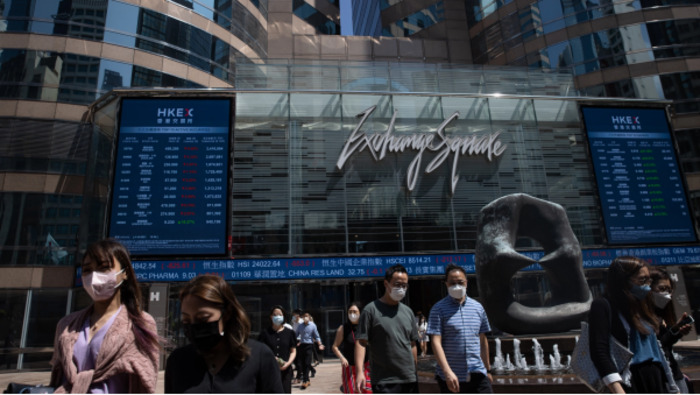
Japanese equity index futures pointed to a slight gain at the open, while those in Hong Kong showed losses with other markets closed for a holiday. The S&P 500 closed slightly higher on Thursday, but has fallen 1.5% over the four-day span. The tech-heavy Nasdaq 100 ended the week down 2.3% even as Netflix Inc. reported first-quarter earnings that beat estimates.
Treasuries fell on Thursday to pare a weekly gain, while the dollar slid and headed for a third weekly loss.
Fed Chair Powell on Wednesday soured sentiment by indicating he would take a wait-and-see approach to how the trade war would affect inflation, dampening hopes for immediate intervention. U.S. President Donald Trump criticized Powell on social media on Thursday, saying the Fed chairman’s removal from office couldn’t come soon enough, arguing that the central bank should have cut interest rates this year. Trump later told reporters that he could force Powell out if he wanted.
“Continued confidence in the Fed amidst a loss of confidence in governance has shaped the market response so far: higher real rates/real term premiums, lower dollar, less U.S. idiosyncrasy in equity markets — but well-behaved inflation expectations and no stagflation panic,” Krishna Guha, a strategist at Evercore ISI, wrote in a note to clients.
The S&P briefly pared some of its losses after Trump said there would be a trade deal with the European Union, without providing details or a timeline for when a deal would be reached. He was more assertive on a key U.S.-Ukraine minerals deal, saying a deal would be signed next week.
After the chaos sparked by the announcement of broad U.S. tariffs earlier this month, investors have been more focused on developments in country-specific trade negotiations. The main question is China, after Beijing indicated on Wednesday that it has some conditions for agreeing to talks with the Trump administration.
Trump has said he is reluctant to continue raising tariffs on China because it could hamper trade between the two countries, and has insisted that Beijing has repeatedly reached out in an effort to broker a deal.
“Continued confidence in the Fed amidst a loss of confidence in the administration has shaped the market response so far: higher real rates/real term premiums, a lower dollar, less U.S. exceptionalism in equity markets — but well-behaved inflation expectations and no stagflation panic,” Krishna Guha, a strategist at Evercore ISI, wrote in a note to clients.
The S&P briefly pared some of its losses after Trump said there would be a trade deal with the European Union, without providing details or a timetable for when it would be reached. He was more assertive on a key U.S.-Ukraine minerals deal, saying it would be signed next week.
Following the chaos sparked by the announcement of broad U.S. levies earlier this month, investors have been more focused on developments in country-specific trade negotiations. The main question is China, after Beijing indicated Wednesday that it has some conditions for agreeing to talks with the Trump administration.
Trump has said he is reluctant to continue raising tariffs on China because it could hamper trade between the two countries, and has insisted that Beijing has repeatedly reached out in an effort to broker a deal.
Source: Bloomberg