

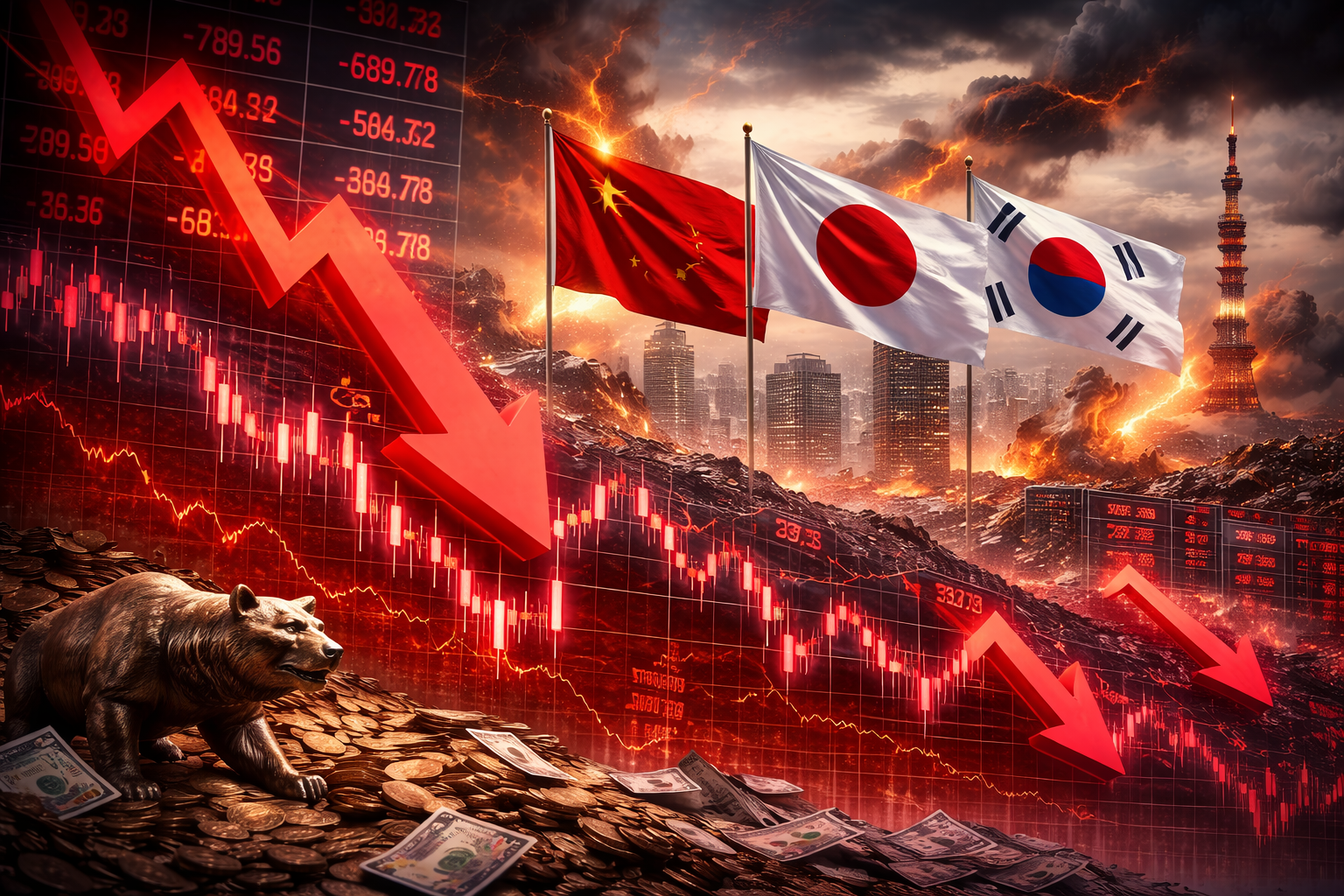
Asian Stocks Fall After Wall Street and Bonds Stabilize
Asian stocks retreated on Wednesday, following a selloff on Wall Street as the US-Europe trade conflict over Greenland and turmoil in bond markets rattled investors. Gold hit a new record.
Stocks opened lower in Japan, South Korea, and Australia after the S&P 500 posted its steepest loss since October, erasing this year's gains. The VIX volatility gauge jumped above 20 for the first time since November. Futures for US benchmarks rose slightly Wednesday morning.
Investors will also be closely monitoring Japanese bonds after Finance Minister Satsuki Katayama called for calm among market participants following a selloff that pushed yields to all-time highs.
Government bonds were stable in Asian trading on Wednesday. Long-term US Treasury yields hit a four-month high in the US session, with the 30-year yield rising eight basis points as investors reacted to a sharp decline in Japanese bonds and news that a Danish pension fund plans to exit US government bonds. The Bloomberg Dollar Index was slightly lower on Wednesday.
These movements underscore growing investor unease over erratic US foreign policy, with global funds withdrawing from American assets. President Donald Trump's threat to impose tariffs on European countries that reject his proposal to buy Greenland has helped inject new volatility into markets, forcing investors to reassess the stability of the US as a safe haven.
“Tariff War 2.0, or Turf War 1.0 if you will, is underway and has the potential to cause significant short-term market disruption,” said Victoria Greene of G Squared Private Wealth. “Much depends on how the next few weeks unfold. So, we are not ‘panic selling,’ but are watching closely and preparing for volatility.”
The global market decline on Tuesday was first triggered by domestic issues in Japan, where 30-year bond yields surged more than a quarter of a percentage point on concerns about Prime Minister Sanae Takaichi’s plans to cut taxes and increase spending. The surge threatens to dismantle the so-called carry trade—which involves buying global assets with low-interest loans in Japan—and is helping to push up bond yields elsewhere.
Japan's Finance Minister called on market participants to remain calm, pointing to the country's lowest reliance on debt issuance in 30 years, rising tax revenues, and the smallest fiscal deficit among the Group of Seven nations as evidence to support the government's view that its fiscal policy is responsible and sustainable.
Elsewhere, Danish pension fund AkademikerPension said it would exit US government bonds by the end of the month amid concerns that the Trump administration has created credit risks too large to ignore.
"The US is fundamentally not a country with a good credit rating, and in the long term, US government finances are unsustainable," Anders Schelde, chief investment officer at AkademikerPension, told Bloomberg on Tuesday.
Finance Minister Scott Bessent also urged calm, comparing the uproar over Greenland to what he called the "hysteria" that followed Trump's April announcement of massive tariffs. Trump is expected to arrive in Davos for the World Economic Forum on Wednesday.
While traders have managed to look past a series of other unexpected developments this year—including the White House's arrest of Venezuela's leader and renewed attacks on the Federal Reserve—the magnitude of the moves suggests that investors' willingness to overlook previous shocks is eroding.
Meanwhile, South Korea will delay fulfilling a pledge to invest up to $20 billion in the U.S. this year due to pressure on the country's currency, according to a person familiar with the matter.(asd)
Source: Newsmaker.id








