

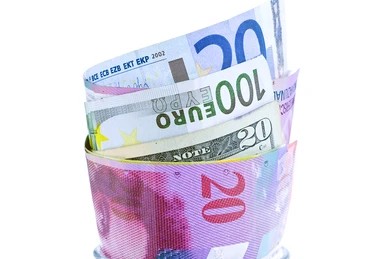
The Euro and Franc Strengthen, as the Dollar Comes Under Pressure from Ceasefire Concerns
The U.S. dollar weakened for a second straight session on Wednesday, slipping against major peers including the euro and Swiss franc as markets weighed growing signs of a possible ceasefire in the Middle East conflict. The shift has begun to unwind safe-haven positioning that had supported the greenback since hostilities started in late February.
President Donald Trump told Reuters the U.S. would end its war on Iran “fairly soon” and could return for “spot hits” if needed. He had earlier said in a Truth Social post that Iran’s new leader asked for a ceasefire. Trump is scheduled to address the nation at 9 p.m. EDT on Wednesday (0100 GMT on Thursday) to provide an update on Iran.
In price action, the euro rose 0.27% to $1.1584, its strongest level in a week and on track for a second consecutive session of gains. Sterling climbed 0.56% to $1.33015. The dollar fell 0.58% versus the Swiss franc to 0.7947, also heading for a second day of losses. The dollar index, which tracks the greenback against a basket of major currencies, edged down 0.07% to 99.67.
Against the yen, the dollar was up 0.09% at 158.85, after retreating from this year’s high of 160.47 and moving back below the psychologically important 160 level that had revived intervention concerns. The dollar also weakened 0.13% to 6.878 versus the offshore Chinese yuan, while the Australian dollar gained 0.26% to $0.6918.
Markets also monitored signs that the conflict remains active. Reports included drones hitting fuel tanks at Kuwait’s international airport, and Qatar saying an oil tanker was struck by an Iranian cruise missile in Qatari waters.
Oil prices nonetheless fell, with Brent crude futures sliding 2.7% to settle at $101.16. The pullback in crude has complicated the market’s recent narrative that the geopolitical shock would force a more hawkish Federal Reserve. Eugene Epstein of Moneycorp said the energy move may raise inflation in the near term, but as a supply shock it can ultimately weigh on growth, arguing the Fed is unlikely to raise rates into a potential slowdown.
Attention now turns to U.S. data, led by Friday’s March jobs report, expected to show payrolls rose 60,000 after an unexpected 92,000 decline in February, based on a Reuters poll. Goldman Sachs also flagged next Friday’s March CPI data as a key read on how the energy shock is filtering into broader inflation.
For FX markets, the near-term focus remains on ceasefire developments and Trump’s remarks, alongside oil’s direction, U.S. labor and inflation releases, shifting Fed rate expectations, and whether dollar-yen moves reawaken intervention risks.
Source : Newsmaker.id








