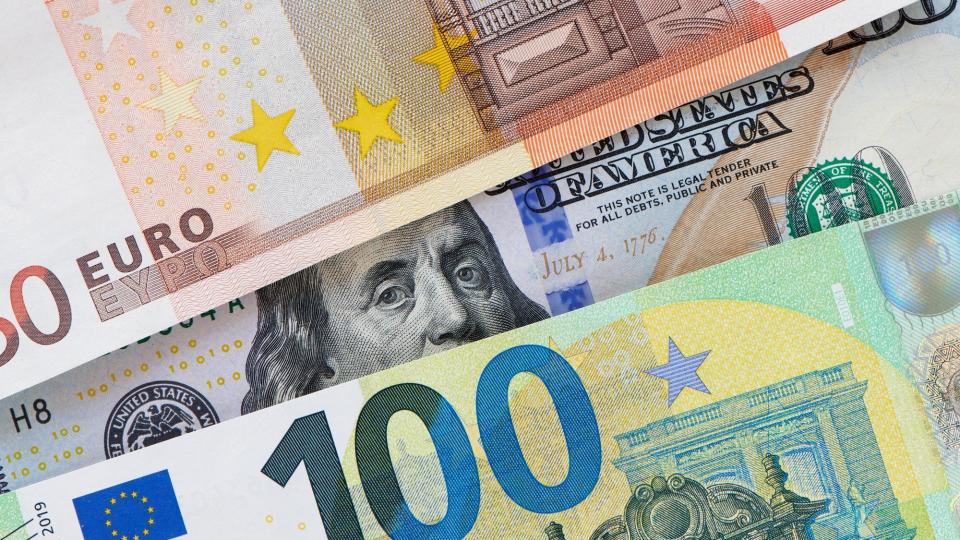
EUR/USD Rises Above 1.0400 Ahead Of Inflation Data
EUR/USD halted its three-day losing streak, trading around 1.0410 during Asian hours on Monday (3/3). The pair’s recovery was driven by a weaker US Dollar (USD) following the release of January Personal Consumption Expenditures (PCE) inflation data on Friday, which came in line with estimates and eased concerns about an unexpected spike in inflation in the United States (US).
The US PCE inflation report met expectations, with the monthly headline PCE remaining steady at 0.3%. Core PCE rose slightly to 0.3% from 0.2% in December, while the annual headline PCE came in at 2.6%, slightly beating projections but unchanged from December’s reading. Core PCE fell to 2.6%, down from a revised 2.9% in December. The US Dollar Index (DXY), which tracks the USD against a basket of six major currencies, weakened after three consecutive sessions of gains, hovering around 107.30 at the time of writing. However, the greenback’s downside could be limited as the US Treasury yields improved, with the 2-year and 10-year Treasury yields currently standing at 4.02% and 4.24%, respectively.
Meanwhile, escalating US-China trade tensions could support the haven flow into the US dollar, potentially limiting EUR/USD’s upside. Over the weekend, US President Donald Trump announced an additional 10% tariff on Chinese imports starting Tuesday, adding to the initial 10% tariff imposed last month. On Thursday, Trump also stated on Truth Social that a 25% tariff on Canadian and Mexican goods would take effect on March 4.
The euro (EUR) strengthened against its major peers following stronger-than-expected Harmonized Index of Consumer Prices (HICP) data from Germany for February, released on Friday. Despite the higher inflation report, the European Central Bank (ECB) is expected to continue easing monetary policy at its meeting on Thursday. Investors now await the Eurozone HICP inflation data, due later today.
Source: FXStreet