Oil’s Collapse Deepens Below $60 as China Hikes Tariffs on US
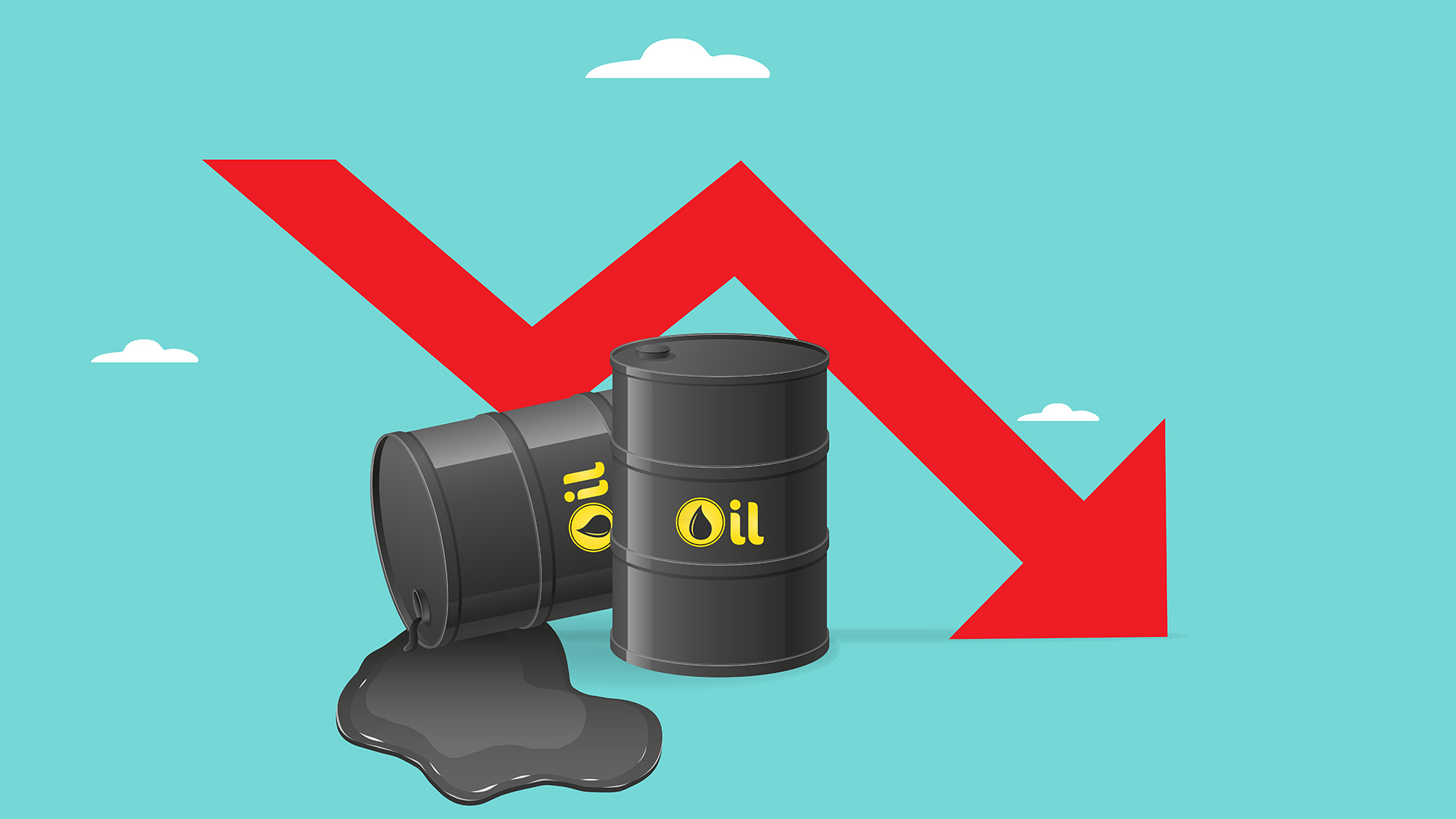
Oil plunged to a four-year low as an intensifying trade war endangered energy demand, with a fresh wave of US and Chinese levies menacing the global economy.
Brent futures tumbled below $60 a barrel for the first time since 2021 as copper and other commodities also slid. West Texas Intermediate futures traded near $57 a barrel. Shares of BP Plc, Shell Plc, Exxon Mobil Corp. and Chevron Corp. slumped.
Crude futures neared session lows briefly as official US data showed domestic inventories climbed to the highest since July, adding to worries about oversupply.
The declines echoed wider turmoil across global markets, with investors fleeing stocks and bonds around the world in recent days after US President Donald Trump’s tariffs took effect and China retaliated with higher levies of its own.
The oil market’s forward curve has also dramatically repriced, pointing to an emerging oversupply just a few months down the line, though market participants warn it’s challenging to read into future balances.
“It’s hard to know how to value oil into the end of the year with the tariff headlines,” said Scott Shelton, an energy specialist at TC ICAP. “It’s probably a buying opportunity, but until the trade war gets settled, it’s pointless to try and make sense of these numbers.”
Oil’s losses have been compounded by a decision by the OPEC+ alliance to loosen output curbs at a faster clip than previously expected. The one-two punch has spurred concerns that a previously anticipated oil glut will now be even bigger.
“My worry with this market is we actually haven’t priced in the worst,” Amrita Sen, founder and director of research at consultant Energy Aspects said in a Bloomberg TV interview. “We’ve been saying prices can absolutely trade with a five-handle, perhaps even with a four-handle.”
As midnight passed in the eastern US, the Trump administration pushed ahead with higher duties on roughly 60 trading partners. Most critically, the moves included what amounts to a 104% duty on many Chinese goods, imposed after Beijing hit back at the US with its own charges.
China raised tariffs on US goods again on Wednesday, from 34% to 84% staring April 10.
Other key metrics point to fast-loosening conditions in the oil market. Crude options are at their most bearish since late 2021, as of Tuesday’s close, while a gauge of implied volatility has rocketed higher.
At the same time, a key pipeline that ferries Canadian crude to US markets was shut after a spill, potentially tightening supplies at Cushing, Oklahoma, the delivery point for benchmark US futures.
“We have now entered a new and dangerous crisis phase,” said Arne Lohmann Rasmussen, chief analyst at A/S Global Risk Management. “This means that fundamental factors in the oil market are irrelevant.”
WTI for May delivery fell 3.9% to $57.23 a barrel at 11:59 a.m. in New York.
Brent for June settlement slid 3.7% to $60.48 a barrel.
Source: Bloomberg