Israel Attacks Iran’s Nuclear Sites, Kills Senior Commanders
Israel launched strikes across Iran on Friday morning, targeting nuclear facilities and killing top military commanders in a major escalation against its chief adversary that risks sparking a broad war in the Middle East.
The strikes were far more extensive than those Israel carried out against Iran last year and underscored the country’s growing assertiveness, as well as its military and intelligence capabilities.
US President Donald Trump urged Iran to accept a nuclear deal with Washington to avoid further attacks, which Prime Minister Benjamin Netanyahu vowed would probably happen over the coming days as Israel looks to deal a severe blow to Tehran’s nuclear program.
“There is still time to make this slaughter, with the next already planned attacks being even more brutal, come to an end,” Trump said on Truth Social. Tehran must make a deal “before it is too late,” he said.
Israel said it struck around 100 targets across Iranian cities on Friday morning, using 200 planes. The attacks caused oil to surge as much as 13%, though it later pared its gains, and investors to buy havens such as gold and US Treasuries.
Explosions were heard across Tehran, Natanz — home to a key atomic site — and other cities, according to local and social media. Loud explosions were also observed near Iran’s Fordow nuclear site, where the country was enriching uranium to near-bomb grade, according to Fars News. Israeli Prime Minister Benjamin Netanyahu said Israel “struck at the heart of Iran’s nuclear-enrichment program.”
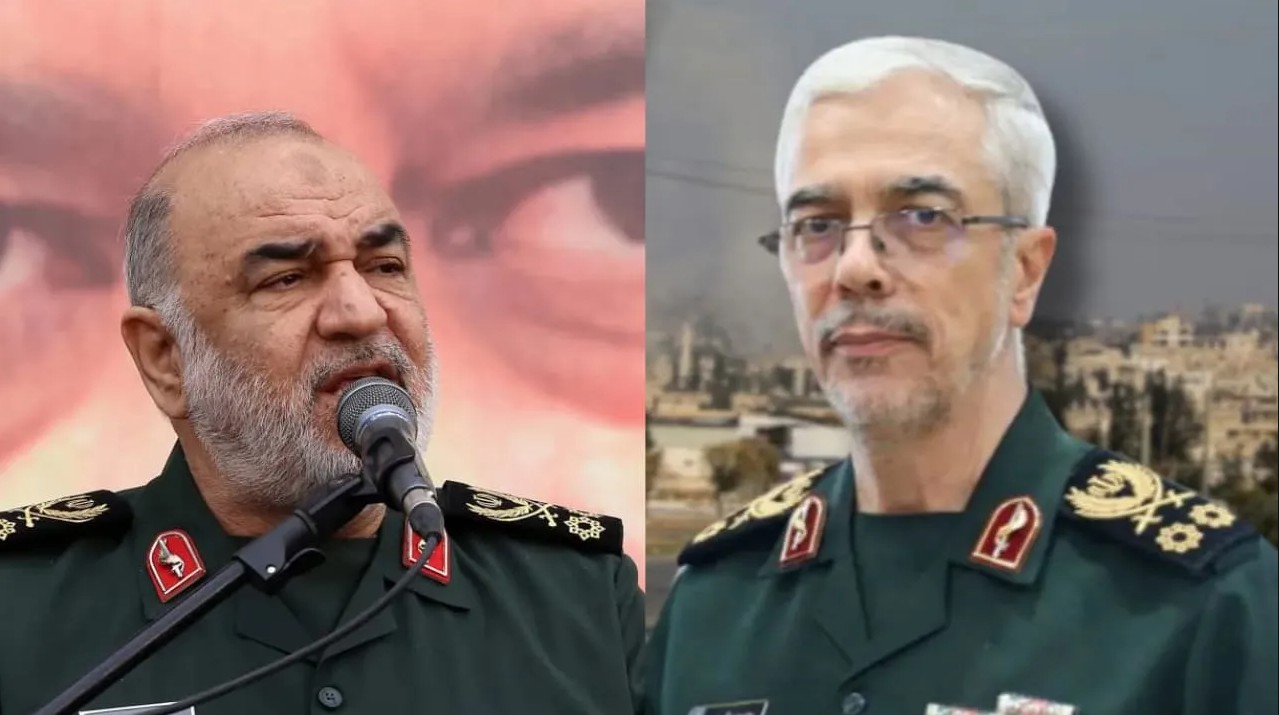
The head of the Islamic Revolutionary Guard Corps, Hossein Salami, and the military’s chief of staff, Mohammad Bagheri, were both killed, according to Iranian media. At least two other senior IRGC members also died.
Iran quickly responded by sending a wave of drones toward Israel, though it was unclear if they caused any damage. Some were intercepted over Jordan.
Israel expects Iran to retaliate with more drone strikes and also by firing ballistic missiles, according to a military official speaking on condition of anonymity.
“The risk of this conflict expanding is real,” said Bilal Bassiouni, head of risk forecasting at advisory firm Pangea-Risk. “Iran is under intense pressure to respond beyond drones, and a strike on Israeli military or strategic infrastructure, including energy or nuclear-linked facilities, is plausible.”
The UN’s atomic watchdog said there were no indications of increased radiation levels at Iran’s main uranium-enrichment site of Natanz, an early sign the strikes haven’t penetrated the layers of steel and concrete protecting the Islamic Republic’s nuclear stockpile.
The Israeli Air Force said the Natanz strike hit an underground multi-story chamber with centrifuges and other infrastructure, causing “significant damage.”
Netanyahu said the strikes “will continue for as many days as it takes to remove this threat.” Israel’s UN ambassador said it was possible that the operation takes weeks.
Beyond nuclear facilities, the initial phase of the strikes targeted Iran’s air defenses and missile-production facilities.
Iranian media said at least 95 people were wounded and that several residential buildings in the capital’s suburbs were hit. Iran hasn’t yet released an official death toll.
Netanyahu said Friday’s strikes were “very successful,” adding that Israelis would need to prepare for a retaliation and prepare to spend long periods in shelters.
Iran’s Supreme Leader Ayatollah Ali Khamenei said Israel will “pay a very heavy price” and should “expect a severe response from Iran’s armed forces.”
Trump, in an interview with Reuters, said he “knew everything” about the attack, despite saying as recently as Thursday he’d suggested he was against strikes and that his administration remained “committed to a Diplomatic Resolution to the Iran Nuclear Issue!”
Source : Bloomberg